
Planting
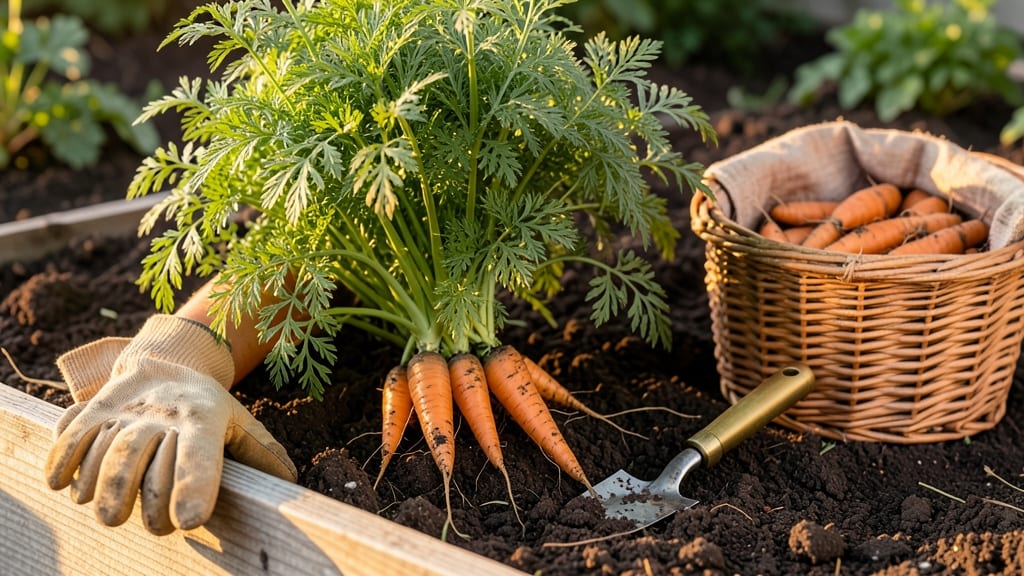
Growing Parisian Market carrots means your garden will taste like a Parisian bistro. 🌱 These heirloom varieties deliver the sweet, crisp roots you'd pay top dollar for at a French market—but right from your backyard.
The secret lies in loose, stone-free soil and consistent watering, which prevents the forked roots and tough textures that ruin store-bought carrots.
Start seeds indoors 6-8 weeks before your last frost, then transplant seedlings into well-drained beds when soil reaches 60°F. Space them 2 inches apart in rows 12 inches apart—crowding leads to stunted, misshapen carrots.
A light mulch keeps soil even and discourages weeds, while regular, deep watering (about 1 inch per week) ensures those signature sweet flavors.
By late summer, you'll be pulling roots with deep orange color and a satisfying crunch. The flavor peaks when roots are 3-4 inches thick, but they'll keep growing if left in the ground—just thin them to avoid competition.
These carrots store beautifully too, making them a year-round harvest for your kitchen.
Perfect for gardeners who want restaurant-quality produce without the fancy price tag. Whether you're growing for market sales or your own table, these carrots deliver the taste and texture that make them a French market favorite. Let's get those seeds in the soil!
📚 In This Guide
- What you need
- Instructions
- Tips and common mistakes
- Wrapping up and next steps
What you need
- ● Seeds: Parisian market carrot seeds (e.g., 'Paris Market,' 'Autumn King,' or 'Nantes' varieties) – 1–2 tbsp per 10 sq ft
- ● Soil: Well-draining, loose soil (sandy loam ideal) – amend with compost or aged manure (2–3 inches mixed in)
- ● pH level: 6.0–7.0 (test with a soil kit if unsure)
- ● Fertilizer: Balanced organic fertilizer (5-5-5 or 10-10-10) – 1 tbsp per plant at planting
- ● Watering tools: Watering can or hose with a gentle spray nozzle
- ● Garden tools: Trowel or hand fork (for sowing seeds)
- ● Rake (to smooth soil)
- ○ Garden twine & stakes (optional, for trellising if growing long varieties)
- ○ Protective gear (optional but helpful): Gloves (to keep hands clean)
- ● Knee pads (for comfort)
- ● A sunny spot with at least 6–8 hours of direct sunlight daily.
- ● Well-prepared soil (remove rocks/weeds for straight, unblemished carrots!).
- ● Timing: Sow seeds 2–3 weeks before your last frost date (or in spring/early summer for fall harvests).
Step-by-Step guide to cultivating Parisian market carrots
Growing these heirloom varieties is simpler than you think—just follow these precise steps for sweet, tender roots.
🌱 Step 1: Select the Right Variety and Prepare the Soil
Parisian market carrots thrive with loose, stone-free soil that prevents forking. Choose varieties like 'Paris Market' or 'Parisian'—these short, cylindrical roots grow best in deep beds or containers. Amend your soil with 2-3 inches of compost and work in a handful of sand or perlite to improve drainage. The ideal texture should resemble cake batter: light enough for roots to push through but firm enough to hold moisture.
Test your soil's readiness by squeezing a handful—it should crumble easily without sticking to your fingers. If your soil is heavy clay, create raised beds or use containers at least 12 inches deep. I always add a thin layer of fine gravel at the bottom to prevent root circling, which is a common issue with container-grown carrots.
💧 Step 2: Sow Seeds at the Correct Depth and Spacing
Carrot seeds are tiny and slow to germinate, so precision matters. Scatter seeds ¼ inch deep in rows spaced 12-18 inches apart. To avoid overcrowding, I use the "pinch method": sprinkle seeds along a row, then gently press them into the soil with your fingertip. Space seeds 1-2 inches apart—thinning later prevents root competition and ensures uniform growth.
Keep the soil consistently moist but never soggy during germination, which takes 2-3 weeks. Cover the bed with a light layer of straw mulch to retain moisture and deter weeds. You'll know seeds have sprouted when thin, grass-like shoots appear—resist the urge to water from above, as it can wash away delicate seedlings.
☀️ Step 3: Thin Seedlings and Maintain Even Moisture
When seedlings reach 2 inches tall and have their first true leaves, thin to 3-4 inches apart using sharp scissors to avoid disturbing roots. I pull a few at a time and use the thinned seedlings as microgreens—waste not! Maintain even moisture by watering deeply 1-2 times per week, depending on rainfall. The soil should feel damp 1 inch below the surface but not waterlogged.
Consistent moisture is critical—fluctuations cause bitter flavor and uneven growth. If your garden soil dries out quickly, install a drip irrigation system or water early in the morning to reduce evaporation. Avoid overhead watering, which can spread fungal diseases like Alternaria leaf spot.
⏰ Step 4: Harvest at Peak Sweetness and Store Properly
Parisian carrots are ready to harvest 50-60 days after sowing, when roots reach 6-8 inches long and tops are about 12 inches tall. Gently loosen soil around the base with a fork, then grasp the greens and pull upward—roots should slip free easily. If soil is stubborn, water the area first to soften it.
For long-term storage, trim the tops to ½ inch above the root and store in a plastic bag with a paper towel in the refrigerator. They’ll keep for 2-3 weeks this way. To extend freshness, blanch and freeze—this preserves their sweetness for up to 6 months. I always harvest a few extra to share at farmers' markets; their uniform size and vibrant color make them a standout.
Tips & tricks for perfect Parisian market carrots
Between us, these heirloom varieties are finicky—get the soil and spacing just right, and you'll end up with sweet, uniform roots that look like they came straight from a Parisian market. Here's what nobody tells you about growing them successfully.
Soil Texture is Everything: The 2-3 inches of compost and handful of sand aren't just suggestions—they're non-negotiable for preventing those dreaded forked carrots. I've learned the hard way that skipping this step leads to uneven growth. Press your finger into prepared soil: if it holds its shape but crumbles easily, you're golden. For container growing, that 12-inch depth matters—any shallower and roots will circle like spaghetti, making harvest a nightmare.
Seed Spacing Precision: That ¼-inch depth and 1-2 inch spacing in Step 2 might seem fussy, but it's the difference between uniform harvests and a patchwork of sizes. I use a toothpick to mark planting lines—it saves time and ensures consistent spacing. And for the love of gardening, don't skip the thinning! Those 2-inch-tall seedlings need 3-4 inches of space to develop properly. I've seen gardens where people skipped thinning and ended up with carrots the size of pencils.
Moisture Management: The 2-3 week germination window is where most people fail. Keep that soil damp like a wrung-out sponge—never soggy, never dry. I set up a simple drip irrigation system on a timer for my carrot beds, and it's made all the difference. And that 1-inch dampness check? Use your finger—it's the only reliable way to monitor without overwatering. Fluctuations here lead to bitter flavor and stunted growth, and nobody wants that when they're going for market-quality sweetness.
Harvest Timing: Those 50-60 days are critical—wait too long and you'll get woody roots. I check for harvest readiness by gently tugging on the greens when they reach 12 inches tall. If the root slips free easily, it's ready. For stubborn soil, a quick watering first softens it up. And here's a pro move: harvest in the morning when roots are crispest, then store immediately to preserve that fresh-picked quality.
Pro Tips for Parisian Market Carrots
- Between us, these heirloom varieties are finicky—get the soil and spacing just right, and you'll end up with sweet, uniform roots that look like they came straight from a Parisian market.
- Soil Texture is Everything: The 2-3 inches of compost and handful of sand aren't just suggestions—they're non-negotiable for preventing those dreaded forked carrots.
- Seed Spacing Precision: That ¼-inch depth and 1-2 inch spacing in Step 2 might seem fussy, but it's the difference between uniform harvests and a patchwork of sizes.
Frequently asked questions
Got questions about growing Parisian market carrots?
Whether you're a seasoned gardener or a beginner, these answers will help you cultivate the perfect crunchy, sweet harvest—just like the ones found in bustling French markets!
What’s the best time to plant Parisian market carrots?
For the sweetest, most tender carrots, plant them in early spring (as soon as the soil reaches 50°F (10°C)) or late summer (8–10 weeks before your first frost). Avoid planting in hot weather—they’ll bolt or turn woody. In warmer climates, opt for winter varieties to extend your harvest.
How long does it take for Parisian market carrots to mature?
Most varieties take 60–80 days to reach maturity, but for baby carrots (harvested at 1–2 inches), you can pull them in as little as 40–50 days. Check seed packets for exact timelines—some heirloom types (like Paris Market) may need a few extra weeks for full sweetness.
Why are my carrots growing green and leafy but not thickening?
This usually means poor soil conditions or overcrowding. Carrots need loose, stone-free soil to grow straight and plump. Try these fixes:
- Loosen soil with a fork or compost before planting.
- Thin seedlings to 2–3 inches apart when they’re 2 inches tall.
- Add sand or perlite to heavy clay soil for better drainage.
Can I grow Parisian market carrots in containers?
Choose deep containers (at least 12 inches deep) with well-draining soil. Varieties like Paris Market (short and round) are ideal for pots. Use a 50/50 mix of potting soil and compost, and keep them consistently moist. Just avoid overcrowding—space seedlings 3–4 inches apart.
What’s the best way to store harvested Parisian market carrots?
For maximum freshness, store carrots in a cool, humid place (like a root cellar or fridge). Trim the greens, leave the roots intact, and wrap them in a damp paper towel inside a plastic bag. They’ll stay crisp for 2–3 weeks. For long-term storage, freeze blanched carrots or pickle them in vinegar for a Parisian market twist!
Wrapping up and next steps
Growing your own Parisian market carrots is a rewarding journey that brings sweet, vibrant harvests straight to your table—just like the fresh produce you’d find in a bustling French market! 🥕 With the right varieties, soil prep, and care, you’ll enjoy crisp, flavorful carrots that rival (or even beat) store-bought.
Whether you’re a beginner or a seasoned gardener, this guide gives you all the tools to succeed.
Ready to savor the fruits of your labor? Start small—plant a few rows this season—and let your green thumb (and taste buds!) flourish. Next up: Mark your calendar, grab those seeds, and get growing—your future carrot harvest is waiting! 🌱