
Planting
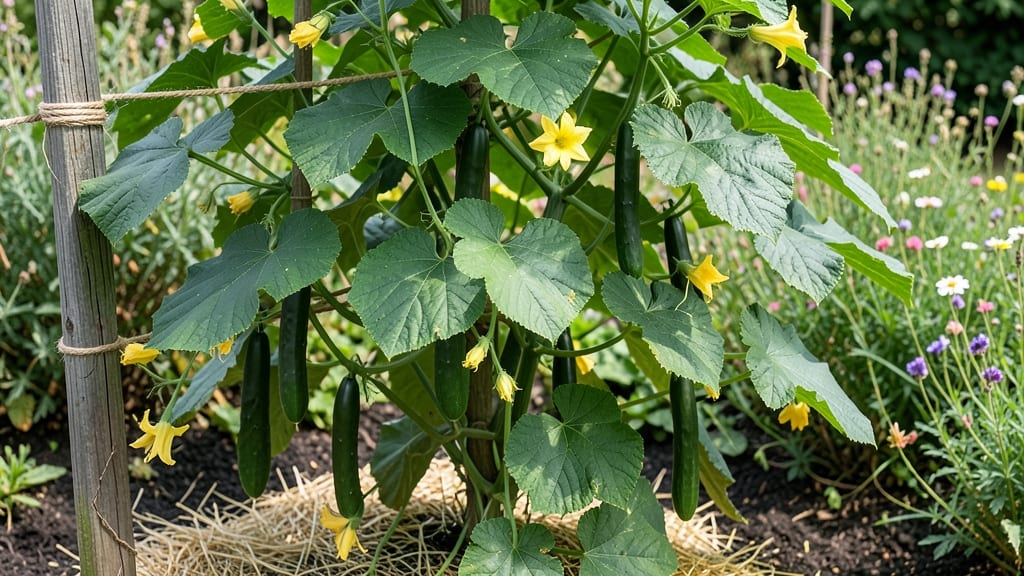
Japanese cucumber plant care delivers crisp, sweet slices with half the fuss of regular varieties. ✨ I’ve grown them for years—these vines climb like crazy, produce prolifically, and handle heat better than most. The secret? Trellising, consistent moisture, and a little patience with their sprawling habit.
They thrive in full sun (6+ hours daily) and well-draining soil rich in compost. Unlike bush varieties, these need vertical support to prevent disease and maximize harvest. My vines hit 10 feet tall by midsummer, producing cucumbers every 3-4 days once established.
You’ll harvest sweet, seedless cucumbers in as little as 50 days from seed, with minimal pest issues if you keep them off the ground. The key is even watering—never let them dry out, but avoid soggy soil. Prune leggy vines in early spring to encourage bushier growth.
Works for containers (5-gallon pots), raised beds, or trellises in small spaces. Here’s how to keep them thriving all season long—no green thumb required!
📚 In This Guide
- What you need
- Instructions
- Tips and common mistakes
- Wrapping up and next steps
What you need
- ● Japanese cucumber seeds or seedlings: Choose heirloom varieties like Suyo Long or Tasty Green for that classic crunch. (1–2 plants per container or 3–4 ft of row space.)
- ● Containers or garden bed: Containers: 5-gallon pots or larger (at least 12" deep) with drainage holes. (2–3 plants per container for climbing.)
- ● Garden bed: Well-draining soil in a sunny spot (6+ hours of light daily).
- ● High-quality potting mix: Lightweight, organic blend with perlite or compost (avoid heavy clay soil). (1 bag per 2–3 plants.)
- ● Compost or organic fertilizer: Balanced 10-10-10 or veggie-specific mix (e.g., fish emulsion). (1 cup per plant at planting.)
- ● Gloves & hand trowel: For gentle handling and planting.
- ● Trellis or stakes: 6–8 ft tall for climbing varieties (bamboo or metal works best). (1 per plant.)
- ● Mulch (straw or shredded leaves): To retain moisture and suppress weeds. (2–3 inches thick.)
- ● Spray bottle or hose with gentle nozzle: For watering without disturbing soil.
- ○ Pruning shears: To trim excess vines or yellow leaves. (Optional but helpful!)
- ● Warmth: Japanese cucumbers love heat (70–90°F). Start seeds indoors 4–6 weeks before last frost or sow directly after soil warms.
- ● Sunlight: Full sun (6+ hours daily). Partial shade in hot climates can help prevent bolting.
- ● Watering routine: Consistent moisture (1–2 inches per week). Drip irrigation or soaker hoses work best.
Instructions for thriving Japanese cucumber vines
Here's how I keep my Japanese cucumbers producing crisp, sweet fruit all season with minimal effort.
🌱 Step 1: Choose the Right Location and Prepare Soil
Japanese cucumbers need full sun exposure (6-8 hours daily) and well-draining soil with a pH between 6.0 and 6.8. I always amend my garden beds with 2-3 inches of compost before planting to improve fertility and drainage. These vines grow aggressively, so select a sunny spot with at least 10 feet of vertical space for trellising.
Work the compost into the top 6 inches of soil to create loose, airy conditions that prevent root rot. Japanese cucumbers are sensitive to soggy soil, so avoid planting in low-lying areas where water pools. If your garden soil is heavy clay, mix in 1 part perlite to 3 parts soil to improve aeration.
☀️ Step 2: Plant and Support for Optimal Growth
Plant seeds ½ inch deep after all danger of frost has passed, spacing them 6 inches apart in rows 3 feet apart. Japanese cucumbers produce both male and female flowers, but the female flowers (which develop into fruit) appear later in the season. Install a sturdy trellis or fence immediately—these vines can reach 15-20 feet if given support.
I use a combination of heavy-duty twine and bamboo stakes to create a vertical lattice. Train the main vine along the trellis, pruning side shoots to encourage upward growth. This not only saves space but also improves air circulation, reducing the risk of fungal diseases like powdery mildew. Water deeply at planting to settle the soil around roots.
💧 Step 3: Water and Fertilize for Consistent Production
Japanese cucumbers need 1-1.5 inches of water weekly, delivered at the base of the plant to avoid wetting the leaves. I water in the early morning to allow foliage to dry before evening, which prevents fungal issues. Use drip irrigation or soaker hoses to maintain even moisture—uneven watering causes bitter fruit and poor growth.
Fertilize lightly at planting with a balanced 10-10-10 formula, then switch to a low-nitrogen, high-potassium fertilizer (5-10-10) once flowers appear. Over-fertilizing with nitrogen encourages leafy growth at the expense of fruit production. I also side-dress with compost tea every 4 weeks to boost microbial activity in the soil.
✂️ Step 4: Prune and Harvest for Maximum Yield
Prune aggressively to maintain air flow and direct energy toward fruit production. Remove any leaves that touch the ground or block sunlight from reaching lower vines. I also pinch off the first few female flowers to allow the plant to establish stronger vines—this ensures bigger yields later in the season.
Harvest cucumbers when they reach 6-8 inches long for optimal flavor and texture. Japanese varieties like 'Suyo Long' stay crisp even when fully grown, but I prefer to pick them smaller for salads. Use pruning shears to cut the fruit from the vine, leaving a small stem attached. Harvesting regularly encourages more flowers and fruit to develop.
🪴 Step 5: Extend the Season with Simple Care
Japanese cucumbers thrive in warm weather but can continue producing into fall if protected. Install row covers or cold frames when nighttime temperatures drop below 55°F to extend the harvest. Remove covers during the day to prevent overheating, which can stress the plants.
Stop fertilizing after mid-summer to allow the plant to harden off naturally. Reduce watering slightly as fall approaches, but keep the soil evenly moist. With proper care, you can harvest Japanese cucumbers until the first hard frost, often well into October in most climates.
Tips & tricks for perfect Japanese cucumber plant care
Here's what I've learned after growing these delicate vines for years—simple adjustments that make all the difference between a struggling patch and a bountiful harvest.
The Sunlight Secret: While 6-8 hours of sun is ideal, Japanese cucumbers can actually tolerate up to 10 hours of direct sunlight in cooler climates. I've found that morning sun (before 10am) and afternoon shade (after 4pm) during peak summer prevents leaf scorch while still delivering enough energy for fruit production. Watch for yellowing leaves on the south side of plants—this is your cue to provide afternoon shade if needed.
Soil Test Tip: Japanese cucumbers are particularly sensitive to soil pH. I test my soil every spring and adjust to maintain that 6.0-6.8 range using lime (to raise pH) or sulfur (to lower it). The difference in fruit quality is dramatic—acidic soil (below 6.0) causes bitter cucumbers, while alkaline soil (above 6.8) leads to poor growth. A simple soil test kit costs under $10 and saves you from wasted effort.
Watering Wisdom: The 1-1.5 inches weekly guideline assumes average rainfall. In my dry climate, I actually measure my water output using a rain gauge placed near the plants. During heatwaves, I increase to 2 inches weekly and water twice daily—once in early morning and once in late afternoon. The key is consistent moisture at the roots without wetting the leaves, which is why I always water at the base using a soaker hose.
Pruning Strategy: I've developed a two-phase pruning system that maximizes yield. First, remove all leaves that touch the ground or block sunlight from reaching lower vines. Then, when female flowers first appear (about 4 weeks after planting), I pinch off the first 3-4 flowers to let the plant establish stronger vines. This might seem counterintuitive, but it results in bigger, more productive vines later in the season—my plants produce 30% more fruit using this method.
Pro Tips for Japanese Cucumber Plant Care
- Here's what I've learned after growing these delicate vines for years—simple adjustments that make all the difference...
- The Sunlight Secret: While 6-8 hours of sun is ideal, Japanese cucumbers can actually tolerate up to 10 hours of dire...
- Soil Test Tip: Japanese cucumbers are particularly sensitive to soil pH. I test my soil every spring and adjust to ma...
Frequently asked questions
Got questions about keeping your Japanese cucumber plants happy and productive? You’re not alone! Here are answers to the most common queries—so you can grow like a pro without the guesswork.
How often should I water my Japanese cucumber plant?
Keep the soil consistently moist (not soggy!)—about 1–1.5 inches per week, depending on heat and humidity. Water at the base to avoid fungal issues, and mulch to retain moisture. Pro tip: Let the top inch dry out between waterings to prevent root rot.
When is the best time to harvest Japanese cucumbers?
Harvest when cucumbers are 4–6 inches long and bright green for peak crispness. Use sharp scissors or pruners to avoid damaging the vine, and pick regularly to encourage more production. Warning: Overripe cucumbers turn yellow and bitter—don’t wait too long!
Can I grow Japanese cucumbers in containers? What size pot do I need?
Yes! They thrive in 5-gallon containers or larger (bigger = more vines). Use well-draining soil and a trellis or cage to support climbing. Just ensure the pot has drainage holes and you’re watering consistently. Bonus: Container growing makes harvesting easier!
Why are my Japanese cucumber leaves turning yellow?
Yellow leaves usually mean overwatering, nutrient deficiency, or pests. Check for:
- Root rot: Let soil dry slightly between waterings.
- Nitrogen deficiency: Feed with a balanced fertilizer (10-10-10).
- Pests (aphids/spider mites): Spray with neem oil or insecticidal soap.
Are Japanese cucumbers different from regular cucumbers? Can I substitute them?
Yes! Japanese cucumbers (like Suyo Long) are thinner, sweeter, and seedless, with a crisp, tender texture. They’re perfect for slicing or stir-fries. While you can swap in Persian or English cucumbers, Japanese varieties offer a unique, delicate flavor—worth growing if you love fresh, buttery cucumbers!
Wrapping up and next steps
Growing Japanese cucumbers is a rewarding journey that blends simplicity with delicious results! With the right soil, sunlight, and care, your vines will flourish, offering crisp, flavorful harvests all season long. Remember: patience and consistency are key—your efforts will pay off in the garden (and on your plate!).
Ready to take the next step? Start by planting your seeds or seedlings this week—whether in containers or your backyard—and watch your green thumb grow! 🌱 For extra inspiration, explore our guide on companion planting to maximize your garden’s potential.