Planting
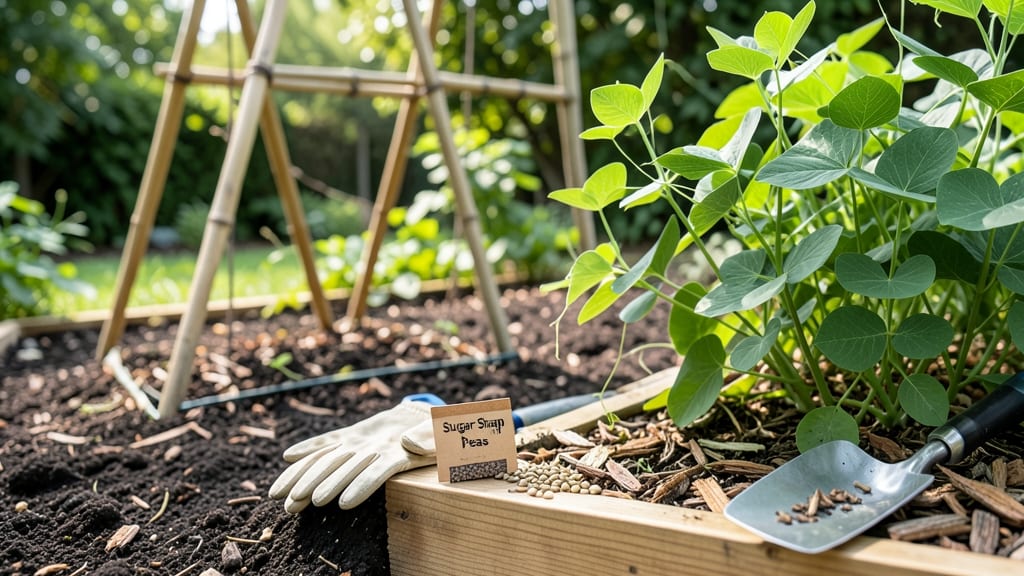
Planting sugar snap peas in a raised bed turns a small space into a vertical harvest goldmine. 🌱 I learned the hard way that proper spacing and support make all the difference—my first attempt had tangled vines and fewer pods.
The secret lies in combining rich soil with a sturdy trellis that lets those climbing plants shine.
Start with a 6-inch-deep bed filled with compost-amended soil—snap peas love loose, fertile ground. Plant seeds 1 inch deep, 2 inches apart, in early spring when soil reaches 40°F.
A 4-foot-tall trellis along one side lets vines climb instead of sprawl, maximizing your bed's tiny footprint while keeping pods easy to pick.
Within 60 days, you'll be snapping fresh pods straight from the vine—crisp, sweet, and far superior to store-bought. The vertical trick doubles your yield in the same space, and the trellis keeps plants off the ground where slugs can't reach.
Plus, the lush green canopy shades soil below, keeping roots cool.
This method works for any raised bed size—even 4x4-foot boxes. Just adjust trellis height to match your bed's depth. The only mistake I made? Waiting too long to thin seedlings. Do it early, and you'll avoid competition for sunlight and nutrients. Ready to grow your own pea harvest?
📚 In This Guide
- What you need
- Instructions
- Tips and common mistakes
- Wrapping up and next steps
What you need
- ● Sugar snap pea seeds: 2–3 lbs (enough for a 4’x8’ raised bed; plant 4–6 seeds per foot of row spacing). Choose a variety like ‘Sugar Sprint’ or ‘Super Sugar Snap’ for quick harvests!
- ● Raised bed (minimum 6” deep): Ensure it’s at least 12” wide for easy access. Wood, cedar, or composite beds work great.
- ● Compost or well-aged manure: 2–3 inches mixed into the soil for nutrients (snap peas love nitrogen!).
- ● Garden soil or potting mix: 2–3 bags (1 cubic foot each) for filling the bed. Aim for loose, fertile soil with good drainage.
- ● Vertical trellis or stakes: Option 1: 6–8 ft tall bamboo stakes (3–4 stakes spaced 12–18” apart).
- ● Option 2: Wire mesh trellis (4’x8’ panel) or A-frame trellis for a space-saving climb.
- ● Option 3: Jute twine or zip ties to secure vines to stakes.
- ● Watering can or hose with nozzle: A gentle spray setting helps avoid disturbing seeds.
- ● Gardening trowel or transplant tool: For digging small holes (1” deep).
- ○ Row marker or sticks: To mark planting lines (optional but helpful for beginners!).
- ● Seed starter kit: If sowing indoors 4–6 weeks before last frost.
- ● Mulch (straw or grass clippings): To retain moisture and suppress weeds.
- ● Plant labels: To track varieties (especially if testing multiple types).
- ● Organic fertilizer (balanced 10-10-10): A light sprinkle at planting time for a boost.
- ● Shade cloth (lightweight): For hot climates to protect seedlings from scorching.
Step-by-step instructions for planting sugar snap peas in a raised bed
Here's how to get a bountiful harvest using the vertical trellis trick that doubles your yield.
🪴 Step 1: Prepare the Raised Bed and Trellis System
Start with a 4-foot wide x 8-foot long raised bed that's at least 10 inches deep—snap peas need room for roots to spread. I always mix in 2-3 inches of compost into the top 6 inches of existing soil to give those hungry pea plants a nutrient boost right away. The key here is drainage: if your bed holds water after rain, add a 1-inch layer of coarse sand or perlite to the bottom before filling with fresh soil.
For the trellis, I use 3-foot tall bamboo stakes placed every 2 feet along the bed's length. Drive them 6 inches deep into the soil so they don't topple when vines get heavy. You can also use chicken wire or netting stretched between sturdy posts—just make sure it's tall enough for vines to climb 4-5 feet without bending. The vertical space is what makes this trick work.
🌱 Step 2: Plant Seeds at the Right Depth and Spacing
Sugar snap peas need cool soil—wait until 2-3 weeks before your last frost date when nighttime temperatures stay above 40°F. Plant seeds 1 inch deep and 2 inches apart in rows that are 12 inches apart from each other. I like to use a seed tape for precision, but if you're planting individual seeds, space them carefully—crowding leads to weak stems and poor yields.
Here's the trick: plant two rows of seeds at the base of each trellis stake, about 3 inches away from the stake itself. The vines will naturally climb upward, creating a lush curtain of peas that produces more pods than flat planting. Water gently after planting so the soil settles around the seeds without disturbing them.
☀️ Step 3: Provide Support and Monitor Growth
Once seedlings emerge (7-14 days depending on your climate), watch for the first true leaves—those are the little round leaves that appear after the initial seed leaves. When they're about 2 inches tall, gently weave the vines through the trellis or tie them loosely with soft twine. Don't pull too tight; you want the vines to grow into the support naturally.
Peas thrive in cool weather but need full sun (6+ hours daily). If your bed gets afternoon shade, plant early-maturing varieties like 'Sugar Sprint' to avoid long, leggy vines. Water 1 inch per week, keeping soil consistently moist but never soggy—peas hate wet feet. You'll know you're doing it right when new leaves unfurl every 3-5 days and vines climb eagerly toward the trellis.
✂️ Step 4: Maintain and Harvest for Continuous Production
The real magic happens when you harvest regularly. Sugar snap peas produce best when pods are picked every 2-3 days—look for pods that are 3-5 inches long and still bright green. If you wait too long, they'll turn fibrous and tough. I always harvest in the morning when pods are crispest, and I cut them with scissors to avoid damaging the plant.
To keep production going, fertilize lightly with balanced 10-10-10 fertilizer 4-6 weeks after planting—just sprinkle a handful around the base and water it in. Peas fix their own nitrogen, so don't overdo it. If you notice yellowing leaves, it's usually a sign of too much nitrogen or poor drainage. Keep an eye out for pea aphids too; a strong spray of water usually knocks them off before they cause damage.
Tips & tricks for perfect sugar snap pea planting
These little tricks will help you maximize your harvest using the vertical trellis method.
Soil Prep Secret: Before mixing in that 2-3 inches of compost, test your soil's moisture retention. If it drains too quickly, add a thin layer of coconut coir along with the coarse sand—it holds moisture better than perlite while still improving drainage. This keeps roots consistently happy without waterlogging, which is especially important in raised beds that dry out faster.
Trellis Stability Tip: When driving those 3-foot bamboo stakes 6 inches deep, use a rubber mallet instead of a hammer to avoid compacting the soil around the roots. If you're using chicken wire, secure it with U-shaped staples rather than nails—they're gentler on the soil and easier to remove later. Stability matters when vines get heavy, and this prevents leaning stakes that can snap under pressure.
Seed Placement Hack: The two-row trick at each stake works best when you stagger the rows slightly—plant one row closer to the stake and the other a few inches farther out. This creates a denser curtain of vines that produces more pods without overcrowding. Mark the spacing with small wooden stakes or rocks before planting to keep everything straight.
Harvest Timing: Those 3-5 inch pods are sweetest when harvested in the morning after the dew has dried but before the sun gets too hot. Use clean, sharp scissors to snip pods just above the leaf node—this encourages more production and prevents disease from ragged cuts. I always harvest a few pods from each plant every 2-3 days to keep the vines producing continuously.
Pro Tips for Plant Sugar Snap Peas In A Raised Bed
- These little tricks will help you maximize your harvest using the vertical trellis method.
- Soil Prep Secret: Before mixing in that 2-3 inches of compost, test your soil's moisture retention. If it drains too ...
- Trellis Stability Tip: When driving those 3-foot bamboo stakes 6 inches deep, use a rubber mallet instead of a hammer...
Frequently asked questions
Got questions about growing sugar snap peas in your raised bed? You’re not alone! Here are answers to the most common queries—so you can grow like a pro.
When is the best time to plant sugar snap peas in a raised bed?
Sugar snap peas thrive in cool weather, so plant them early spring (as soon as soil is workable, around 4–6 weeks before your last frost date) or late summer (8–10 weeks before your first fall frost). Avoid planting when temps hit 85°F+—they’ll bolt or produce poorly. For extended harvests, stagger plantings every 2 weeks!
How long does it take for sugar snap peas to grow after planting?
From seed to harvest, sugar snap peas take about 60–70 days, depending on the variety. You’ll see tiny pods in 55–65 days if conditions are ideal (cool temps, consistent moisture, and a sturdy trellis). Check pods daily—they’re sweetest when crisp and bright green!
Can I plant sugar snap peas with other vegetables in a raised bed?
Sugar snap peas are excellent companions for:
- Carrots (they deter pests)
- Radishes (they grow fast and don’t compete for space)
- Spinach or lettuce (shade-tolerant greens thrive under their vines)
Avoid planting near onions, garlic, or potatoes, as they can stunt pea growth. Use the vertical trellis to maximize space and keep beds organized!
What should I do if my sugar snap peas get pests or diseases?
Common issues include:
- Aphids: Spray with soapy water or introduce ladybugs.
- Powdery mildew: Improve airflow, water at the base, and avoid overhead sprinklers.
- Pea weevils: Handpick eggs/larvae or use row covers early in the season.
Rotate crops yearly and keep beds weed-free to prevent problems. Healthy soil = happy peas!
Do sugar snap peas need full sun, or can they grow in partial shade?
While they prefer 6–8 hours of sunlight daily, sugar snap peas can tolerate 4–6 hours in partial shade—especially in hot climates. If growing in shade, prioritize:
- Well-draining soil (add compost!)
- Consistent moisture (dry soil = bitter pods)
- Dwarf or bush varieties (like ‘Sugar Sprint’)
Just expect slightly lower yields compared to full-sun beds.
Wrapping up and next steps
Planting sugar snap peas in a raised bed with a vertical trellis is a rewarding way to maximize space and yield—plus, you’ll enjoy a fresh, sweet harvest in no time! 🌱 With the right prep, soil, and support, your peas will thrive, offering crisp pods straight from your garden.
Now that you’re ready to plant, why not take the next step and sketch your trellis design or order seeds? Your future snack stash is just a few weeks away!