
Planting
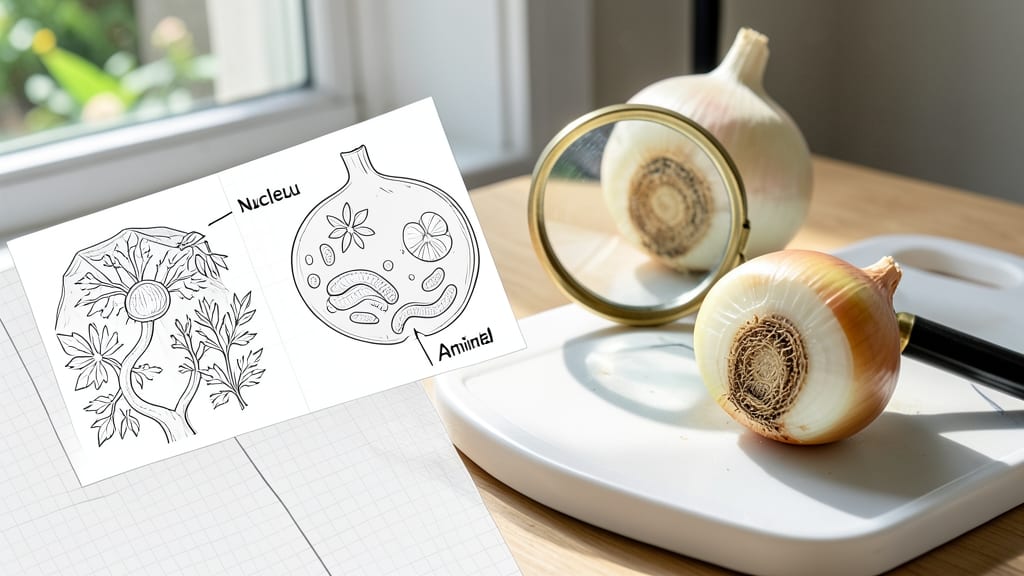
A nucleus is found in both plant and animal cells, serving as the control center that stores genetic material (DNA) and regulates cell functions. Both cell types are eukaryotic, meaning they share this defining organelle.
A nucleus is the command center of every living plant and animal cell, containing the blueprint for growth and function. 🌱 While both types of cells share this essential structure, plant cells often have a larger nucleus due to their unique cell walls and polyploid nature—meaning they sometimes carry multiple copies of chromosomes.
This difference helps explain why plants can grow faster under certain conditions or recover more resiliently from damage.
The nucleus's role extends beyond just storing DNA—it actively controls which genes get turned on or off, directly impacting everything from photosynthesis in plants to muscle development in animals.
For example, when a seed germinates, the nucleus orchestrates the rapid cell division needed to form roots and shoots, while in animals, it regulates specialized cell functions like nerve signaling or hormone production.
Understanding this shared foundation helps explain why plant and animal biology share fundamental principles despite their outward differences.
💡 In This Article
- How Plant and Animal Cell Nuclei Compare Structurally
- Key Functions of the Nucleus in Plant Growth and Development
How plant and animal cell nuclei compare structurally
The nucleus in both plant and animal cells follows the same basic blueprint: a double-layered nuclear membrane (envelope) that separates the genetic material from the cytoplasm, with tiny pores regulating what enters and exits.
These pores act like gatekeepers, allowing molecules like RNA to pass through while keeping DNA safely contained. In plant cells, the nuclear membrane often appears slightly thicker due to the cell's rigid cell wall, which exerts outward pressure on the nucleus.
One striking structural difference lies in the nucleolus, a dense region within the nucleus where ribosome assembly begins. Plant cells frequently have a larger, more prominent nucleolus—sometimes occupying 10-20% of the nucleus—because they produce more ribosomes to support rapid growth and photosynthesis.
Animal cells, meanwhile, tend to have a smaller nucleolus relative to their nucleus size. The chromatin (DNA-protein complex) also organizes differently: plant cells often exhibit more condensed chromatin during growth phases to accommodate their larger genome sizes, especially in polyploid species like bananas or strawberries.
Size matters too. Plant cell nuclei can be 2-3 times larger than animal cell nuclei, partly because plant cells store extra DNA copies (polyploidy) to handle environmental stresses.
For example, a typical human liver cell nucleus measures about 6-7 micrometers, while a maize (corn) root tip cell nucleus can reach 20-30 micrometers. This extra space allows plant nuclei to manage complex gene regulation for processes like drought resistance or flowering cycles.
The nuclear membrane in plant cells also interacts uniquely with the cell's cytoskeleton, forming a more dynamic interface that helps position the nucleus near chloroplasts for efficient photosynthesis signaling.
In animal cells, the nucleus often sits centrally, supported by microtubules, while plant nuclei can shift positions as the cell wall expands during growth. This mobility helps explain why plant cells can adapt their internal organization more flexibly to changing light conditions or nutrient availability.
Consider the nuclear pore complex: these protein structures regulate traffic between the nucleus and cytoplasm, but plant cells often have more pores per unit area to handle the increased molecular traffic needed for photosynthesis and cell wall synthesis.
In animal cells, pore density adjusts more dynamically based on metabolic needs, like during muscle cell contraction or nerve signaling. 🌟
Finally, plant nuclei frequently contain specialized structures called nuclear bodies, such as Cajal bodies or PML bodies, which play roles in RNA processing and stress responses. These are less prominent in animal cells, reflecting the unique challenges plants face, like UV radiation or pathogen attacks.
The nucleus isn't just a storage unit—it's a dynamic hub tailored to each cell's environment.