
Plants
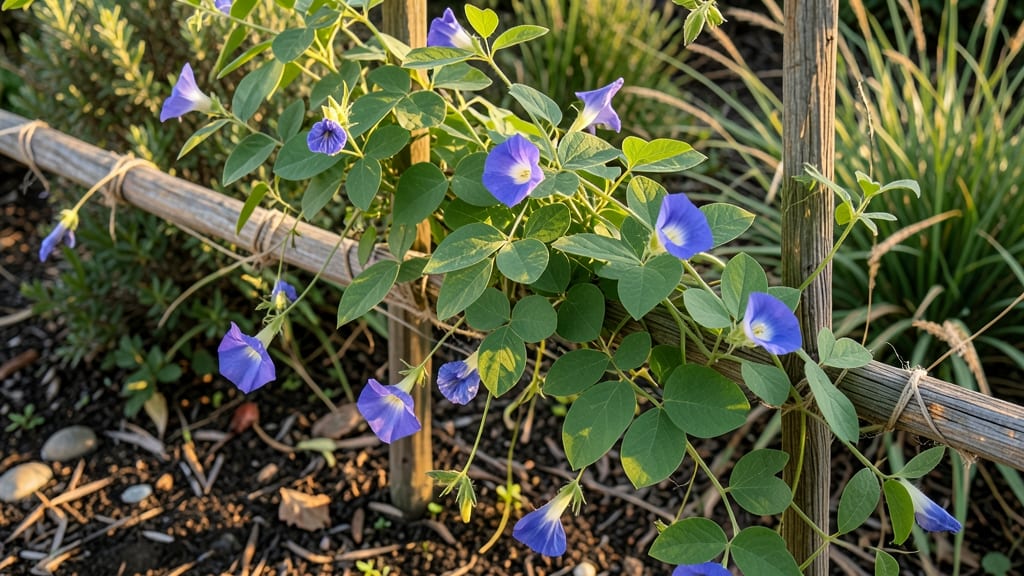
The lifespan of butterfly pea plants spans 1-3 years as perennials in warm climates but is often shorter when grown as annuals in cooler areas, depending on seasonal conditions and proper maintenance. Their striking blue blooms can regrow yearly with frost protection and strategic pruning.
Butterfly pea plants thrive longest in tropical regions where they naturally grow back season after season. 🌿 In cooler climates, their lifespan shrinks because frost kills the above-ground growth, forcing gardeners to treat them as annuals.
The key to extending their life lies in protecting their roots during winter and providing consistent care throughout the growing season.
What many don't realize is that these plants actually develop a deep root system that can survive winter dormancy if insulated properly. I've seen butterfly pea plants in containers overwintered indoors with mulch around their roots, then replanted outdoors in spring to bloom again.
Their ability to adapt makes them surprisingly resilient with the right conditions.
💡 In This Article
- Factors Influencing Butterfly Pea Plant Longevity
- Extending Butterfly Pea Plant Life Through Care
Factors influencing butterfly pea plant longevity
The butterfly pea plant's lifespan hinges on its native tropical origins, where temperatures rarely drop below 50°F. In these climates, the plant thrives as a perennial, producing vibrant blue flowers for 1-3 years because its underground rhizomes remain active year-round.
The key mechanism here is the plant's ability to photosynthesize continuously, fueled by 12-14 hours of sunlight daily and warm soil temperatures that stay above 60°F.
When grown in cooler regions, frost becomes the primary lifespan limiter. Even a light freeze (32°F) can kill the above-ground foliage, but the real damage occurs when temperatures drop below 28°F—this is when the delicate root system begins to suffer.
The plant's natural defense is entering dormancy, but without protection, the roots can die back completely, forcing gardeners to replant annually. This is why butterfly pea plants behave like annuals in zones 7 and colder.
The plant's root system plays a crucial role in its longevity. Butterfly pea plants develop a fibrous root network that can extend 12-18 inches deep, allowing them to access moisture and nutrients even during dry spells.
In tropical conditions, these roots continue growing throughout the year, while in temperate climates, they enter a semi-dormant state during winter. The deeper the roots establish before winter, the better their chance of surviving cold snaps.
Another critical factor is the plant's natural growth cycle. Butterfly pea plants experience a 6-8 week flowering period after establishing, followed by seed production. In perennial climates, they can rebloom if deadheaded properly, while in annual climates, the energy goes entirely into seed production before dying back.
This biological difference explains why tropical plants live longer—they're not expending all their energy on reproduction each season.
Light exposure also affects longevity. These plants require full sun (6+ hours daily) to maintain vigorous growth, but too much intense afternoon sun in hot climates can stress them.
In my experience, they handle partial shade (4-6 hours of sun) better in zones 8-9, where afternoon shade prevents heat stress while still allowing enough light for flowering. This balance is key to extending their lifespan in marginal climates.
Finally, soil quality makes a surprising difference. Butterfly pea plants prefer well-draining soil with a pH between 6.0-7.0, rich in organic matter. Compacted or waterlogged soil restricts root development, limiting the plant's ability to store nutrients for winter survival.
In containers, this becomes especially critical—using a 50/50 mix of potting soil and perlite helps prevent root rot while allowing proper drainage.