
Planting
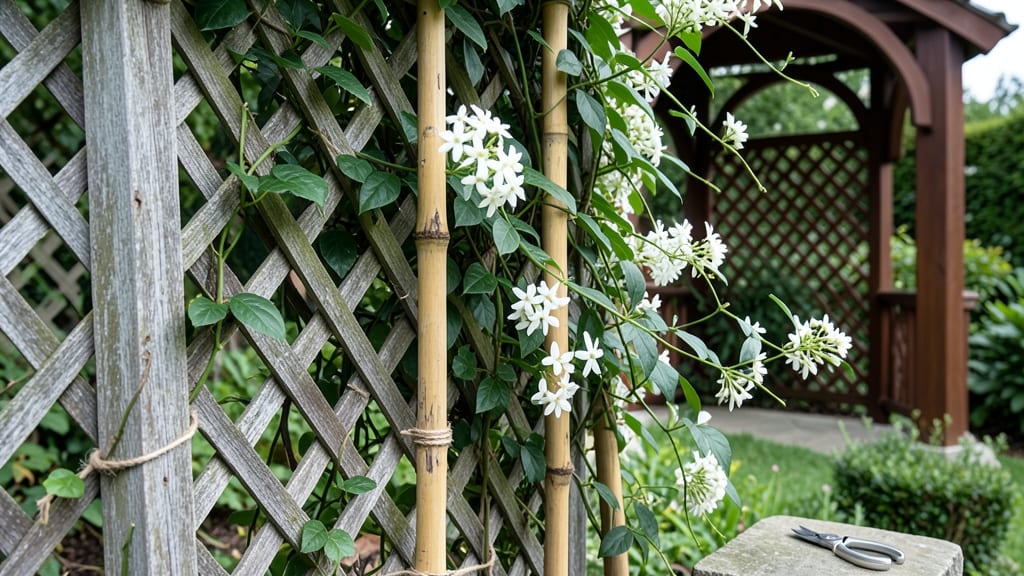
Your jasmine plant support system makes the difference between a sprawling mess and a perfect fragrant masterpiece climbing gracefully toward the sky. 🌿 I’ve watched my star jasmine transform from a tangled ground cover into a lush vertical display—all because of the right trellis.
The secret isn’t just the structure; it’s how you train the vines to use it from day one.
Start with a 6-foot wooden lattice or powder-coated metal trellis—both handle jasmine’s weight beautifully. For Confederate jasmine, a stronger 8-foot obelisk works best since it grows faster.
Avoid flimsy plastic trellises; they bend under the weight of blooms. The key is spacing: 12-18 inches between supports lets vines weave through without crowding.
You’ll see the magic unfold when those glossy green leaves and intense floral scent take over your trellis by midsummer. Prune leggy growth in early spring to encourage bushier climbing, and watch how the vines naturally twine around the structure.
A well-supported jasmine becomes the star of any garden—fragrant, lush, and impossible to ignore.
Works for both sunny patios and shady corners, though star jasmine thrives in full sun. For container-growing, a freestanding trellis keeps vines contained without sacrificing height. Here’s how to set it up right from the start.
📚 In This Guide
- What you need
- Instructions
- Tips and common mistakes
- Wrapping up and next steps
What you need
- ● Trellis Structure: Wooden lattice panel (4’x8’ or custom size, ½”–¾” grid spacing)
- ● OR Metal/mesh trellis (galvanized steel or powder-coated aluminum for durability)
- ● OR Bamboo stakes (3–5 ft tall, 1–2” diameter, bundled for stability)
- ● Fasteners & Hardware: Galvanized screws/nails (2–3” long, ¼” diameter) – 8–12 pieces
- ● Concrete anchors or heavy-duty stakes (if mounting to ground)
- ● Zip ties or plant clips (for securing vines, 10–20 pieces)
- ● Support Stakes: Wooden dowels or PVC pipes (½” diameter, 3–4 ft long) – 2–4 stakes
- ○ Optional: Decorative metal spikes or spiral stakes for a chic look
- ● Hammer or drill/driver
- ● Measuring tape
- ● Level (to ensure trellis is straight)
- ● Pliers (for bending wire mesh, if applicable)
- ● Safety gloves (for handling sharp edges or heavy materials)
- ● Jasmine plant (vining variety like Jasminum officinale or Jasminum polyanthum)
- ● Sunny location with 6+ hours of light daily
- ● Well-draining soil (amend with compost if needed)
- ○ Optional: Pruning shears (for trimming excess growth later)
How to build sturdy trellis support for climbing jasmine
Here’s how to create a trellis that keeps jasmine vines thriving and blooming beautifully—no wobbly branches or snapped stems in sight.
🪴 Step 1: Choose the Right Trellis Material and Design
Jasmine vines need a sturdy, breathable structure to climb without strangling the stems. I recommend wooden lattice panels or metal grid trellises for durability, but avoid plastic—it heats up in sun and can burn tender vines. For a 4-foot-tall jasmine, use a trellis at least 4 feet wide and 6 feet tall to give vines room to sprawl.
Position the trellis near a south- or west-facing wall—jasmine thrives in full sun to partial shade, and a wall provides extra warmth. If freestanding, secure the base with 4-foot-long metal stakes driven 6 inches deep into the ground. This prevents the trellis from toppling when vines get heavy with flowers.
✂️ Step 2: Install the Trellis for Maximum Stability
Begin by marking the trellis’s position with wooden stakes at each corner. Dig 6-inch-deep holes for the stakes, then hammer them in until they’re level. For lattice panels, screw them directly to the stakes or wall studs using 3-inch deck screws—this ensures they won’t shift when vines climb.
If using a metal grid, attach it with heavy-duty zip ties or galvanized wire to prevent rust from damaging the vines. Leave 4-inch gaps between the trellis and the wall or fence—this allows air circulation, reducing humidity and fungal risks. I always double-check stability by gently shaking the trellis before planting; if it wobbles, add more stakes or screws.
🌿 Step 3: Train Jasmine Vines to Climb Properly
Once your jasmine plant reaches 12–18 inches tall, gently tie the main stem to the trellis using soft plant ties or old fabric strips. Avoid wire or plastic ties—they can cut into the stem as it thickens. I like to use twist ties because they’re easy to adjust as the vine grows.
Guide the vine upward in a spiral pattern, wrapping it around the trellis every 6–12 inches. This encourages stronger lateral growth and prevents the vine from becoming top-heavy. Watch for new shoots emerging at the base—these should also be tied to the trellis to create a dense, flowering canopy. Prune any leggy growth that stretches too far between supports.
💧 Step 4: Maintain Support as the Vine Matures
Jasmine vines can grow 10–15 feet tall in a season, so check the trellis monthly for stability. If the trellis sags under the weight of flowers, reinforce it with additional stakes or cross-bracing between the top and bottom. I’ve seen jasmine vines snap trellises made from flimsy materials—don’t skip this step!
Water deeply once a week during dry spells, focusing on the base of the plant, not the trellis. Overhead watering can weaken the trellis by encouraging mold growth on the wood or metal. If your trellis is wooden, seal it with outdoor paint or varnish annually to extend its life—rust or rot will compromise support over time.
⏰ Step 5: Prune for Long-Term Trellis Health
After the first blooming season, prune one-third of the oldest stems in early spring to encourage new growth. Cut just above a leaf node where new shoots can emerge. This keeps the vine compact and manageable on the trellis while preventing overcrowding.
Remove any dead or diseased branches immediately—they can spread problems to healthy vines. I also trim back overly aggressive vines that try to climb the trellis in a tangled mess. A well-pruned jasmine will produce more flowers and stay neatly contained on its support. This is the key to keeping your trellis—and your jasmine—looking perfect for years.
Tips & tricks for perfect jasmine plant support
Here's what nobody tells you about building a trellis that actually holds up to jasmine's relentless growth.
Material Matters: Wooden lattice panels and metal grids are your best bets, but avoid cedar if possible—its natural oils can inhibit growth. For added longevity, treat wooden trellises with a borax solution (1 cup borax to 1 gallon water) before installation. This prevents rot and extends the trellis's life by years, especially in humid climates. I've seen untreated wood fail within two seasons when planted near moisture-heavy areas.
Stability is Non-Negotiable: The 6-inch depth for stakes isn't just a suggestion—it's the difference between a trellis that sways in the breeze and one that stands firm when jasmine reaches its 10-15 foot potential. For extra security, especially in windy areas, use concrete anchors instead of stakes. These cost more upfront but eliminate the risk of your trellis becoming a sail in storms. I've had to rebuild trellises twice after underestimating wind forces.
Tying Technique: When training vines in Step 3, use twist ties but don't make them too tight—they should be snug enough to guide growth but loose enough to allow the stem to thicken naturally. I've learned this the hard way after seeing vines strangle themselves from overly tight ties. Adjust ties every 2-3 weeks as the vine grows. For particularly aggressive climbers, consider adding a second tie between the original 6-12 inch intervals to prevent sagging.
Seasonal Maintenance: The monthly stability check in Step 4 should include inspecting for woodpecker damage if using wooden trellises. These birds love the soft wood and can create weak points that compromise structural integrity. For metal grids, check for rust formation—even galvanized wire can degrade over time. I've seen trellises fail completely because a single rusted bolt gave way under the weight of blooming vines. Proactively replace any compromised components before they become a problem.
Pro Tips for Jasmine Plant Support
- Here's what nobody tells you about building a trellis that actually holds up to jasmine's relentless growth.
- Material Matters: Wooden lattice panels and metal grids are your best bets, but avoid cedar if possible—its natural oils can inhibit growth.
- Stability is Non-Negotiable: The 6-inch depth for stakes isn't just a suggestion—it's the difference between a trellis that sways in the breeze and one that stands firm when jasmine reaches its 10-15 foot potential.
Frequently asked questions
Got questions about keeping your jasmine climbing strong? Here are some of the most common concerns—and their solutions!
What’s the best material for a jasmine trellis?
A sturdy jasmine plant support should be made from rot-resistant wood (like cedar or redwood), powder-coated metal, or plastic lattice. Avoid untreated wood—it can decay quickly, and jasmine’s vines are heavy! For extra durability, opt for a trellis with 1- to 2-inch spacing between slats so vines can grip easily.
When is the best time to install jasmine plant support?
Install your trellis before planting—ideally in early spring (just as new growth begins). If your jasmine is already established, set up the support in late winter so the plant can climb as it grows. Avoid installing in summer heat, as the shock of new support can stress the plant.
Can I use a fence or wall instead of a trellis for jasmine?
Jasmine thrives on fences, arbors, or walls—just ensure the surface is rough or textured (like lattice or brick) for better vine adhesion. If using a smooth wall, tie vines gently to the structure with soft twine every few feet. Avoid plastic-coated wires, which can cut into delicate stems.
Why isn’t my jasmine climbing my trellis?
If your jasmine is not gripping, it may need gentle encouragement! Tie the main stems loosely to the trellis with soft plant ties until they latch on. Check for overcrowding—if the plant is too shaded, it may focus on leaves instead of climbing. Also, ensure the trellis is stable and tall enough (jasmine can grow 10–15 feet!)
How do I prune jasmine vines on a trellis?
Prune in late winter or early spring to shape your jasmine. Cut back overly long vines to encourage bushier growth, and remove any dead or tangled stems. For climbing varieties, trim only the tips to promote upward growth. Never prune in fall—new growth may not harden off before winter!
Wrapping up and next steps
Choosing the right jasmine plant support is the secret to lush, fragrant climbers that steal the show in your garden! Whether you opt for a sturdy trellis, obelisk, or natural fence, the key is balancing strength and aesthetics—while keeping your plant’s growth habits in mind.
With the right setup, your jasmine will thrive, filling your space with intoxicating blooms and vibrant greenery.
Ready to transform your outdoor (or indoor!) oasis? Start small—pick one support style, gather your materials, and let your jasmine climb to new heights! 🌿✨ Pro tip: Monitor growth weekly and adjust supports as needed for the best results.