
Planting
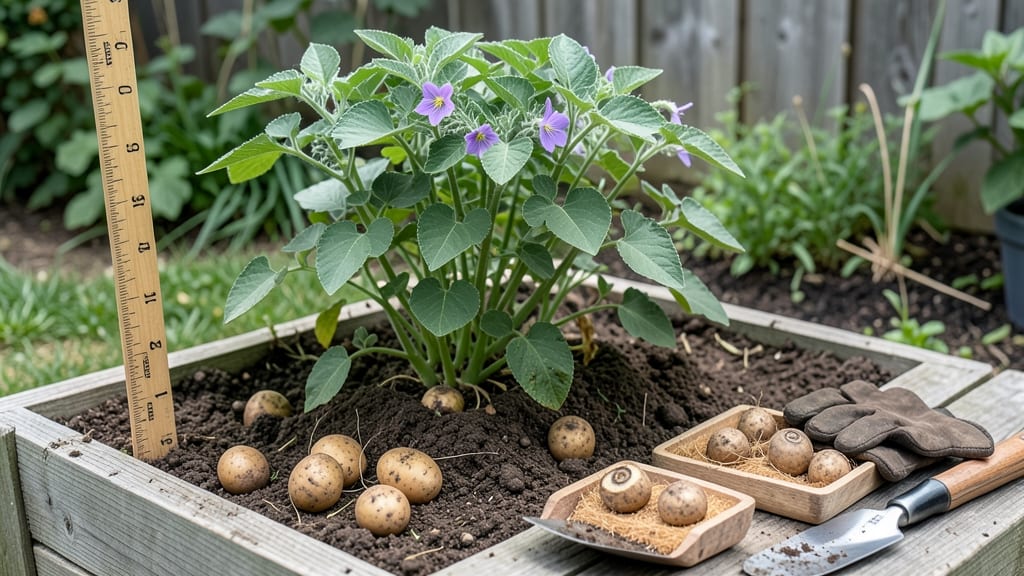
A raised bed for potatoes should be at least 12 inches deep—but the real magic happens when you layer soil and space tubers to maximize yield, not just depth.
Picture this: you’ve spent weeks planting your 🥔 potatoes, only to dig up a harvest of tiny, knobby spuds instead of the plump harvest you dreamed of.
That’s what happens when depth and soil quality don’t align. The right setup turns your raised bed into a tuber factory, not just a planting box.
Potatoes need room to grow—both above and below ground. A 12-inch minimum gives roots space to spread, while deeper beds (up to 24 inches) can boost yields for larger varieties. But here’s the catch: depth alone isn’t enough.
Soil layers, drainage, and spacing play just as big a role in whether your harvest will feed the family or just the compost pile.
In this guide, you’ll learn the exact soil science behind potato depth, how to adjust for different varieties, and the 3 biggest mistakes that waste space—and how to fix them. Ready to dig into the details?
Ideal raised bed depth for potatoes: soil science breakdown
Potatoes thrive in raised beds because they offer superior drainage and soil aeration compared to in-ground planting. But the depth of your raised bed directly impacts tuber development. Most gardeners swear by a 12-18 inch minimum depth, but why? The answer lies in how potatoes grow underground.
Potatoes produce tubers along their stolons (horizontal stems) that form in the upper 6-12 inches of soil. Below that, the soil acts as a storage zone where tubers swell and mature.
If your bed is too shallow, tubers will crowd or form near the surface, leading to green, toxic skin from sunlight exposure.
| Soil Zone | Depth Range | Function | Key Consideration |
|---|---|---|---|
| Root Zone | 0-6" | Stolon growth | Loose, fertile soil |
| Tuber Formation | 6-12" | Tuber initiation | Well-draining, aerated |
| Storage Zone | 12-18" | Tuber maturation | Moisture retention |
| Buffer Zone | 18-24" | Root extension | Only for deep varieties |
For most potato varieties, an 18-inch deep bed provides the perfect balance. This depth accommodates the primary tuber development zone (6-12 inches) while offering 6+ inches of buffer for root expansion.
Shallow-rooted types like fingerlings or new potatoes can thrive in beds as little as 12 inches deep, but deeper beds reduce surface tubers and improve yield.
Deeper isn't always better. Beds exceeding 24 inches risk poor drainage at the bottom, leading to rotten tubers. Excess depth also wastes soil and resources. Instead, focus on soil quality—layering compost and sand in the lower zones improves aeration and drainage without adding unnecessary height.
The soil composition matters just as much as depth. Use a mix of 50% garden soil, 30% compost, and 20% perlite or coarse sand to prevent compaction. Test your soil’s drainage rate: If water pools after 30 minutes, add more sand or organic matter to improve airflow.
One common misconception is that deeper beds always mean bigger potatoes. In reality, tuber size depends more on soil fertility and spacing than depth. For example, Russet potatoes, which grow deep roots, benefit from 20-24 inch beds, while Yukon Golds thrive in 16-18 inch beds.
Always match your bed depth to the variety’s root habit.
If you’re repurposing an existing raised bed, consider layering instead of digging deeper. Add a 6-inch layer of compost and sand to the bottom, then fill the rest with your standard mix.
This creates an ideal root-friendly environment without overbuilding. For container growing, use 5-gallon buckets with 12+ inches of soil—just ensure they have drainage holes.
Finally, harvesting depth affects tuber quality. Shallow beds force you to harvest earlier, often yielding smaller, less mature potatoes.
Deeper beds let tubers fully develop, but check for harvest readiness by gently brushing soil away from stems—if tubers are 2+ inches wide with brown skin, they’re ready to pull.
Remember, the ideal depth isn’t one-size-fits-all. Start with 18 inches for most varieties, monitor your plants’ progress, and adjust based on soil health and potato type. With the right setup, your raised bed will become a tuber-producing powerhouse! 🥔🌱
How to adjust raised bed depth for different potato varieties
Not all potatoes are created equal—and neither are their root systems! Fingerling potatoes and new potatoes thrive in shallow beds, while Russet potatoes and Yukon Golds need deeper soil to develop their signature large tubers. The key is matching your raised bed depth to the variety’s natural growth habits.
For example, fingerlings only need 8–12 inches of soil, while Russets demand 18–24 inches to prevent stunted growth. Let’s break down the science so you can customize your bed for maximum harvests.
Why does depth matter? Potatoes form tubers along their stolons (underground stems) in the top 12–18 inches of soil. Shallow beds restrict tuber formation, while overly deep beds waste space and can lead to waterlogging in the lower layers. The solution?
Adjust your bed’s depth based on the variety you’re growing. For instance, red potatoes (like Kennebec) prefer 14–16 inches, while purple potatoes (like All Blue) thrive in 12–14 inches. Let’s dive into the specifics with a tailored guide.
| Variety Type | Root Depth Needs | Recommended Raised Bed Depth | Soil Layering Tip | Best For |
|---|---|---|---|---|
| Fingerling Potatoes | 6–10 inches | 8–12 inches | Use 50% compost, 30% garden soil, 20% sand | Containers, small gardens, early harvests |
| New Potatoes (e.g., Yukon Gold) | 10–14 inches | 12–16 inches | Add 2 inches of straw mulch after planting | Quick harvests, buttery texture |
| Russet Potatoes | 18–24 inches | 20–24 inches | Layer with 6 inches of coarse sand at bottom | Baking, large tubers, long storage |
| Red Potatoes (e.g., Kennebec) | 12–16 inches | 14–18 inches | Mix in 10% perlite for drainage | Salads, boiling, storage |
| Purple Potatoes (e.g., All Blue) | 10–14 inches | 12–14 inches | Add 1 cup bone meal per square foot | Antioxidant-rich, roasting |
For deep-rooted varieties like Russets, consider building a two-tiered raised bed. Start with a 12-inch base layer of coarse sand or gravel for drainage, then add 18 inches of loamy soil mixed with compost. This mimics the natural depth of in-ground planting while preventing root rot.
If you’re short on space, opt for container growing with 5-gallon buckets for fingerlings—just ensure they have drainage holes and are filled with lightweight potting mix.
Pro tip: Test your soil’s drainage by filling a hole with water and timing how long it takes to drain. If it takes more than 2 hours, add perlite or vermiculite to improve aeration.
For heavy clay soils, mix in peanut hulls or coconut coir to create air pockets. Remember, well-draining soil is non-negotiable for potatoes—even in raised beds. Overwatering in deep beds can suffocate roots faster than you’d think!
Don’t forget to hill soil around stems as plants grow. This encourages more tuber formation and prevents green skin (which is toxic). For shallow-rooted varieties, hill up to 6 inches; for deep-rooted types, go up to 12 inches.
Mulch with straw or grass clippings to retain moisture and regulate soil temperature. With the right depth and care, you’ll harvest plump, disease-free potatoes that rival store-bought—without the chemicals.