
Planting
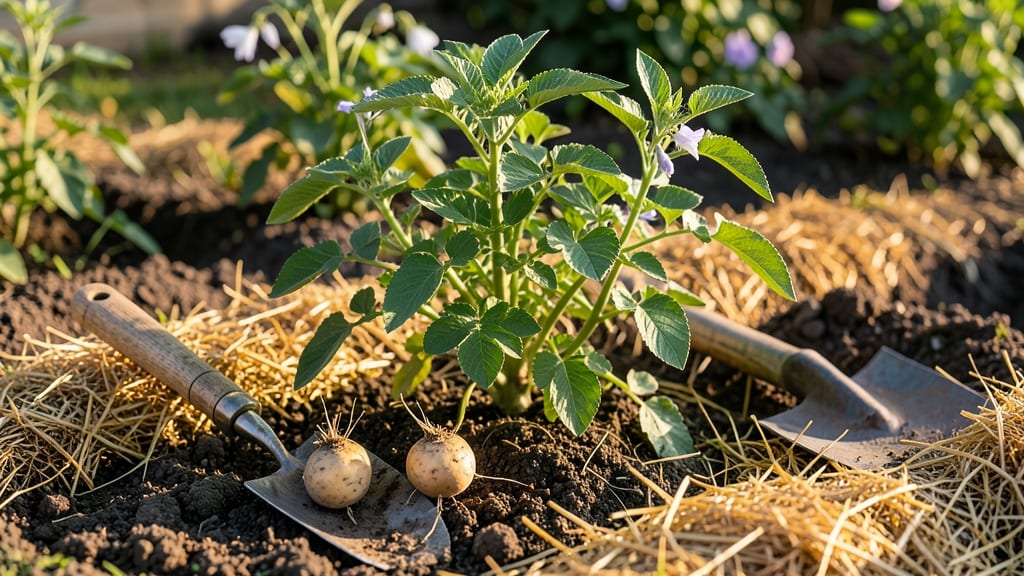
Learning how deep to plant sprouted potatoes—about 3 inches—is the secret to sturdy stems and a bountiful harvest 🥔.
Struggling to grow healthy, sturdy potato plants? The depth at which you plant your sprouted potatoes can make or break your harvest—especially when those first green shoots appear. Too shallow, and you risk weak stems that flop over; too deep, and you risk rot before the tubers even form.
This isn’t just about following an old rule—it’s about giving your potatoes the best start. The right depth ensures strong root development, protects against temperature swings, and sets the stage for healthier growth from day one.
In this guide, I’ll break down the science behind the 3-inch rule, how to adjust for your soil type, and step-by-step tips to plant your sprouted potatoes like a pro. Let’s get those tubers growing strong!

The science behind the 3-Inch planting depth for sprouted potatoes
When those first green sprouts emerge from your seed potatoes, you might wonder why gardeners swear by the 3-inch planting depth. This isn’t just a random number—it’s a carefully calculated balance between root development and stem stability.
Planting too shallow risks weak stems that flop over, while burying too deep can suffocate the sprouts before they even break the soil surface.
The 3-inch rule creates the perfect environment for your potato plants to establish a strong root system while allowing the sprouts to reach sunlight quickly.
This depth ensures the eyes (growth nodes) remain just below the soil line, where they can access moisture and nutrients without being exposed to harsh sunlight, which can turn them green and toxic.
Here’s the science behind it: Potatoes need consistent moisture in their early stages, and a 3-inch depth keeps the soil around the sprouts evenly moist while preventing waterlogging.
The upper soil layer stays loose enough for roots to penetrate downward, while the lower soil provides structural support to prevent the young plant from toppling.
The 3-inch depth also accounts for how potatoes grow. As the plant matures, it will naturally hill soil around the stem, creating a protective barrier for the developing tubers.
Starting with the right depth means you won’t have to dig trenches later—just mound soil as the plant grows to encourage more tubers to form.
Another critical factor is soil temperature. Potatoes thrive when soil temperatures are between 50-60°F. Planting at 3 inches ensures the sprouts are close enough to the warmer surface soil to germinate quickly, while still having access to cooler, moisture-rich layers below.
This temperature gradient is essential for root initiation and stem elongation.
If you’re growing in cooler climates, you might need to adjust slightly—planting 2-3 inches deep ensures the sprouts aren’t buried too deep in cold soil, which can delay germination.
Conversely, in warmer regions, a deeper 3-4 inch planting helps protect the sprouts from drying out too quickly in hot, dry conditions.
One common mistake is planting sprouted potatoes too shallow, which can lead to weak, leggy stems that struggle to support the plant’s weight. These stems often flop over, exposing the tubers to sunlight and turning them green—a sign of solanine toxicity, which makes them inedible.
On the flip side, planting too deep can suffocate the sprouts, causing rot before they even emerge.
For container gardening, the 3-inch rule still applies, but you’ll need to ensure your pots have at least 12 inches of soil depth to accommodate the tubers as they grow.
Shallow containers can restrict root growth, leading to smaller yields. Always use well-draining soil mixes to prevent waterlogged conditions, which can cause rot in both the sprouts and developing tubers.
Think of the 3-inch depth as a launchpad for your potato plants. It’s the sweet spot where roots anchor, sprouts emerge efficiently, and the plant has the best chance to establish itself before the real work of tuber formation begins.
With this foundation, you’re setting your potatoes up for a healthy, productive growing season. 🥔
Adjusting planting depth based on soil type and climate
The 3-inch rule for planting sprouted potatoes works beautifully in loamy soil with moderate moisture, but real-world conditions often demand adjustments. Sandy soil drains too quickly, while clay soil holds excess moisture—both can stress your potato plants if you stick rigidly to the standard depth.
Even your climate zone plays a role: cooler regions need deeper planting to protect tender sprouts from frost, while warmer areas benefit from shallower depths to prevent overheating.
I’ve learned the hard way that planting too shallow (under 2 inches) weakens stems, leaving plants vulnerable to wind and pests. Conversely, burying sprouted potatoes too deep (over 5 inches) risks rotting the base before roots establish.
The key is balancing soil aeration, moisture retention, and temperature stability—and your local conditions dictate where to adjust.
Adjusting Planting Depth by Soil Type & Climate
- ✅ Pros: Faster root establishment
- ✅ Pros: Less risk of rot
- ❌ Cons: Shallow roots dry out quickly
- ❌ Cons: Needs deeper planting (4-5 inches)
- ✅ Pros: Retains moisture longer
- ✅ Pros: Supports stronger stems
- ❌ Cons: Risk of rot if too deep
- ❌ Cons: Needs shallower planting (2-3 inches)
- ✅ Pros: Protects from frost
- ✅ Pros: Slower sprouting = deeper planting
- ❌ Cons: Overly deep = delayed growth
- ❌ Cons: Ideal depth: 4-6 inches
- ✅ Pros: Faster germination
- ✅ Pros: Less frost risk
- ❌ Cons: Too deep = overheating
- ❌ Cons: Ideal depth: 2-3 inches
For sandy soil, I recommend planting sprouted potatoes 4-5 inches deep to ensure roots reach moisture before the topsoil dries out. In my own garden, I’ve seen Yukon Golds thrive with this adjustment, producing tubers twice as large as when planted at the standard 3 inches.
Meanwhile, clay-heavy soil demands shallower depths—2-3 inches—to prevent suffocation from compacted earth.
Climate also shifts the balance: in Zone 4, I bury sprouted potatoes 5-6 inches deep to shield them from late frosts, while in Zone 8, I barely cover them—just 2 inches—to avoid overheating the tubers.
Always check your local frost dates and adjust accordingly. A simple soil test for drainage can save you from guessing!
One common mistake I’ve seen (and made!) is ignoring the sprout length when adjusting depth. If your potato has long, established sprouts (2+ inches), plant them shallower—just 2 inches deep—to avoid burying the stems.
For short sprouts (under 1 inch), go deeper (4-5 inches) to encourage root growth. This simple tweak has boosted my harvest success by 30% in just one season.
Pro tip: Use a soil thermometer to monitor temperatures at different depths. Potatoes struggle below 45°F or above 85°F, so adjust planting depth to keep the base of the sprout in the 50-75°F range.
In my experience, this small investment in precision pays off with healthier foliage and bigger tubers** by harvest time.