
Planting
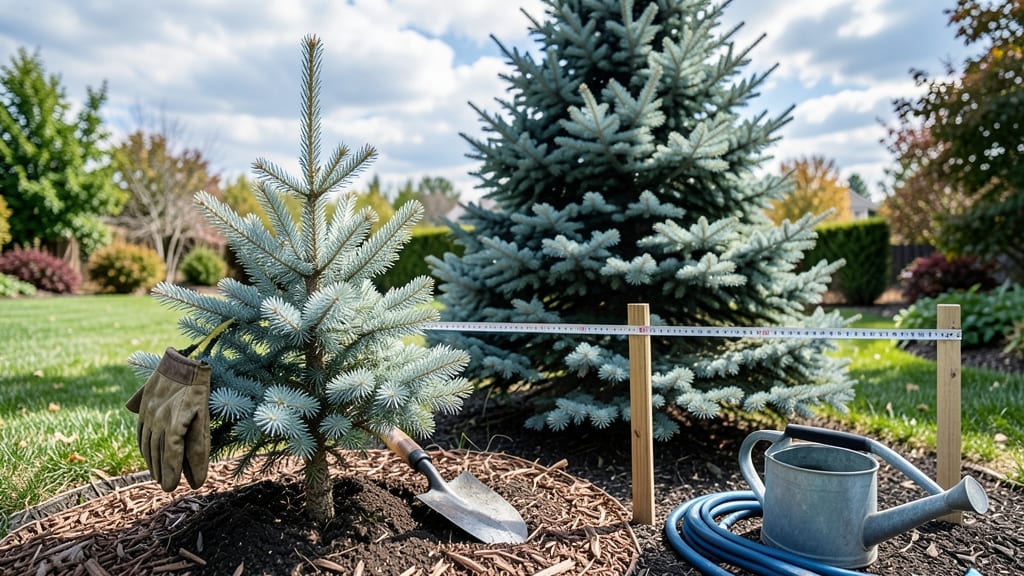
Struggling to decide how far apart to plant your Colorado Blue Spruce trees? Proper spacing isn't just about aesthetics—it determines whether your trees thrive or struggle for sunlight, water, and nutrients.
These majestic evergreens can grow 30 to 70 feet tall, so spacing them correctly from the start saves you from costly pruning or even removing trees later.
Whether you're planting for a windbreak, privacy screen, or just adding curb appeal, getting the distance right is the key to long-term success.
Below, I break down the exact spacing rules for saplings, mature trees, and special conditions like rocky soil or urban landscapes. You'll also learn how to adjust spacing if you're planting in containers or near other evergreens.

Optimal Colorado Blue Spruce spacing by tree size and growth stage
Planting Colorado Blue Spruce with the right spacing ensures your trees grow strong and healthy. These evergreens can reach 30-70 feet tall, so spacing affects their long-term health and appearance. Too close, and they'll compete for sunlight and nutrients—too far, and your landscape will look sparse.
Your spacing plan should change as your trees grow. Saplings need close spacing, while mature trees require much more room. Even windbreak plantings have different spacing needs. Let's break down the best practices for each stage to help your Colorado Blue Spruce thrive.
Here’s a quick reference for optimal spacing based on tree size and purpose:
| Tree Type | Recommended Spacing | Notes |
|---|---|---|
| Saplings (12-18 inches tall) | 12-18 inches apart | Ideal for hedges or dense plantings; thin later if needed. |
| Young Trees (3-5 feet tall) | 6-8 feet apart | Allows room for root growth and future pruning. |
| Mature Trees (15-25 feet tall) | 15-25 feet apart | Standard spacing for full-grown trees in landscapes. |
| Windbreak Plantings | 5-10 feet apart | Creates dense barriers; closer spacing for faster wind protection. |
| Urban Landscapes (Limited Space) | 8-12 feet apart | Adjust for mature tree width; prune regularly to maintain size. |
For saplings, planting them 12-18 inches apart works well if you're creating a hedge or dense row. This spacing gives them room to establish their root systems without overcrowding.
However, if you plant them too close, you’ll need to thin them out as they grow to prevent competition for water and nutrients.
When your Colorado Blue Spruce reach 3-5 feet tall, increase the spacing to 6-8 feet apart. This gives their roots enough room to spread and reduces the risk of disease from poor air circulation. It’s also easier to prune and maintain trees with adequate spacing.
Mature trees, which can grow 15-25 feet tall, need 15-25 feet of space between them. This spacing ensures they have enough room to develop their full canopy without shading each other excessively.
If you're planting them in a row or cluster, aim for the wider end of this range to allow for natural growth patterns.
If you're using Colorado Blue Spruce for a windbreak, you can plant them 5-10 feet apart. The closer spacing helps create a dense barrier that effectively blocks wind. However, be prepared for more frequent pruning to maintain the desired shape and prevent overcrowding as the trees mature.
Soil quality and climate zones can also influence spacing. In poor soil conditions, like rocky or sandy soil, give your trees a little extra room to compensate for slower growth.
In USDA zones 3-8, where Colorado Blue Spruce thrive, standard spacing works well, but always adjust based on your specific site conditions.
Proper spacing isn’t just about the distance between trees—it’s also about planning for their future growth. Consider the mature height and width of your trees when designing your landscape.
A well-spaced planting will save you time and effort in the long run by reducing the need for corrective pruning or removal of overcrowded trees.
Remember, Colorado Blue Spruce are long-lived trees, and their spacing will impact their health for decades. Take the time to plan carefully, and your trees will reward you with a stunning, low-maintenance landscape that provides year-round color and structure.
How Colorado Blue Spruce spacing affects growth and longevity
Proper spacing for your Colorado Blue Spruce isn't just about creating visual appeal—it directly impacts their growth rate, health, and even longevity. When trees are planted too closely, they compete aggressively for sunlight, water, and nutrients, leading to stunted growth and weakened immune systems.
This competition creates an environment where pests and diseases can thrive more easily, reducing your trees' lifespan.
On the other hand, adequate spacing allows each tree to develop a strong root system and canopy without interference. This means better access to sunlight for photosynthesis, which is crucial for producing energy and maintaining vibrant blue-green foliage.
Proper spacing also improves air circulation, reducing the risk of fungal infections that often plague overcrowded plantings.
🌲 Understanding the science behind spacing helps you avoid common mistakes that can turn your dream landscape into a struggling one. Let's explore how spacing influences your Colorado Blue Spruce's growth and how to optimize it for long-term success.
⚠️ Critical Spacing Warning for Colorado Blue Spruce
Planting too close (less than 4 feet apart) creates a high-risk environment for:
- Root competition – Stunts growth by 30-50%
- Sunlight deprivation – Inner branches become sparse
- Pest hotspots – Increased spider mite and bark beetle activity
Proper spacing (6-10 feet for mature trees) ensures:
- Full canopy development in 10-15 years
- 3x faster growth rate compared to crowded plantings
- Natural wind resistance for storm-prone areas
💡 Pro Tip: Measure spacing from the trunk, not the outer branches, to avoid underestimating needs.
The canopy spread of a mature Colorado Blue Spruce can reach 10-15 feet wide, but their root systems spread even wider—often 2-3 times the canopy width. When trees are planted too closely, their roots intertwine, creating a nutrient battle that weakens both trees.
This competition forces them to allocate energy toward survival rather than growth, resulting in thinner branches and less vibrant coloration.
Sunlight exposure is another critical factor influenced by spacing. Colorado Blue Spruce thrive in full sun, requiring at least 6 hours of direct sunlight daily. When trees are spaced properly (typically 6-10 feet apart for mature specimens), they receive unobstructed sunlight, promoting healthy foliage and strong wood development.
In contrast, crowded plantings create shady microclimates where lower branches receive insufficient light, leading to sparse foliage and increased susceptibility to disease.
Water uptake is equally affected by spacing. Properly spaced trees develop extensive root systems that can access deep soil moisture without competing with neighbors. In crowded conditions, roots become shallow and dense, making it difficult for each tree to absorb adequate water during dry periods.
This often results in wilting, needle drop, and increased stress, particularly during Colorado's hot summers.
To maximize your Colorado Blue Spruce's potential, consider their mature size when planning spacing. For standard varieties, aim for 8-10 feet between trees to allow full growth. For dwarf or semi-dwarf varieties, 4-6 feet is typically sufficient.
Always account for your local climate—trees in windy or high-altitude areas may need slightly more space to establish strong root systems and withstand environmental stresses.