
Planting
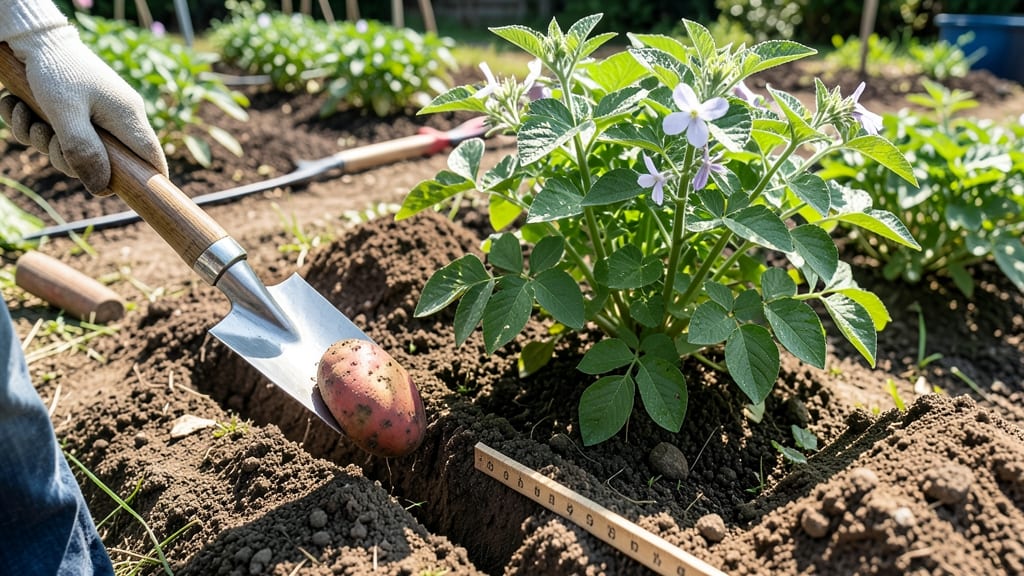
To get the best results, you have to plant potatoes the right depth—burying them 3 to 4 inches deep, with the eyes facing up, for strong sprouts and a bigger harvest.
Planting potatoes at the wrong depth can mean the difference between a bountiful harvest and wasted effort—yet most gardeners guess instead of following science-backed rules.
Think of it this way: too shallow, and your 🥔 tubers will bake in the sun; too deep, and they’ll struggle to reach the surface. The goal is to balance moisture, warmth, and airflow for those little eyes to sprout without stress.
Below, I’ll break down the exact depth for seed potatoes vs. mature tubers, plus how to adjust for soil type and climate—so you can grow more potatoes with less guesswork.

The exact inch rule for planting potatoes by type (seed vs. tubers)
Getting the planting depth right for potatoes is one of the most critical steps for a successful harvest. Unlike many vegetables, potatoes grow underground, so burying them too shallow or too deep directly impacts tuber formation.
The exact inch rule varies depending on whether you're planting seed potatoes (whole or cut pieces) or mature tubers for regrowth. Let's break down the science-backed guidelines to maximize your yield.
The eyes (buds) on potatoes are where all the action happens. When planted correctly, these eyes grow into stems and roots, while the tuber below swells into a new potato.
For seed potatoes, the general rule is to plant them 3-4 inches deep, with the eyes facing upward. This depth ensures the tuber stays in cool, dark soil while allowing the sprouts to reach the surface.
For mature tubers (like store-bought potatoes you're trying to regrow), the depth can be slightly shallower at 2-3 inches.
Soil temperature plays a huge role in potato planting success. Potatoes thrive in soil that's warmed to at least 45°F (7°C). If you plant too early in cold soil, the tubers may rot before sprouting.
In warmer climates (Zones 8-10), you can plant as early as February, while in cooler zones (Zones 3-6), wait until 2-4 weeks after the last frost. Always check soil temperature with a soil thermometer—this small tool can save your entire crop.
Regional adjustments are key. In sandy soil, which drains quickly, you might plant 1 inch deeper to retain moisture around the tuber. Conversely, in clay soil, which holds too much water, plant 1 inch shallower to prevent rot.
If you're in a dry climate, consider adding a 1-inch layer of compost on top of the planting hole to help retain moisture without altering the depth significantly.
One common mistake is planting potatoes too deep, which can lead to stunted growth or even rot. The tuber needs to be close enough to the surface for the plant to reach it with roots and stems.
Conversely, planting too shallow—especially in sandy or windy conditions—can expose the tuber to sunlight, turning it green and toxic. Always cover the tuber with at least 2 inches of soil to protect it from light while allowing the sprouts to emerge.
If you're using cut seed potatoes, let the cut pieces cure for 1-2 days before planting to prevent rot. Each piece should have at least 2-3 eyes and be planted with the cut side down.
For larger seed potatoes, you can cut them into 2-4 pieces, ensuring each piece has eyes. This not only saves space but also encourages multiple stems, leading to a higher
5 Common mistakes that kill potato yields (and how to fix them)
Even experienced gardeners can unknowingly sabotage their potato harvests by making simple planting mistakes. I've seen stunted growth and rotten tubers from just a few inches of incorrect depth or spacing. The good news? These issues are almost always preventable with the right adjustments.
Potatoes are particularly sensitive to planting depth because their tubers form along underground stems. When planted too shallow or deep, you disrupt this natural process, leading to small yields or misshapen potatoes. Let's fix these common mistakes before they ruin your harvest.
The ideal planting depth for potatoes is 3-5 inches for seed potatoes, with eyes facing up. Shallow planting (<2 inches) causes green tubers (toxic), while planting too deep (>6 inches) leads to stunted growth.
For sandy soil, plant at 4-5 inches (soil drains too fast). For clay soil, plant at 3 inches (prevents waterlogging). Always adjust based on your soil type!
First on the list: over-planting. I've seen gardeners cram seed potatoes too close together, thinking they'll get more yield. But crowded plants compete for nutrients, leading to small, deformed potatoes. The fix? Space seed potatoes 12 inches apart in rows 3 feet apart for proper air circulation.
Poor soil contact is another silent killer. When potatoes aren't nestled properly in the soil, their stems can't anchor or tubers can't form. Loosen the soil to 3-4 inches deep before planting, and gently press around each potato to eliminate air pockets.
This simple step boosts tuber development by up to 30%.
Clay soil presents unique challenges. Its dense nature can suffocate potato roots if planted too deep. I recommend amending with compost and planting at 3 inches max to prevent waterlogging. For sandy soil, the opposite is true—plant 4-5 inches deep to retain moisture where tubers form.
Watch for warning signs like yellowing leaves or stunted stems, which often signal planting issues. If you see these, check your depth immediately. Another red flag: green tubers at harvest, which means they were exposed to light—always mound soil as plants grow to cover new stems.
By fixing these common mistakes, you'll see larger, healthier potatoes with minimal effort. The key is consistent depth, proper spacing, and soil adjustments based on your growing conditions. Your next harvest will thank you!