
Planting
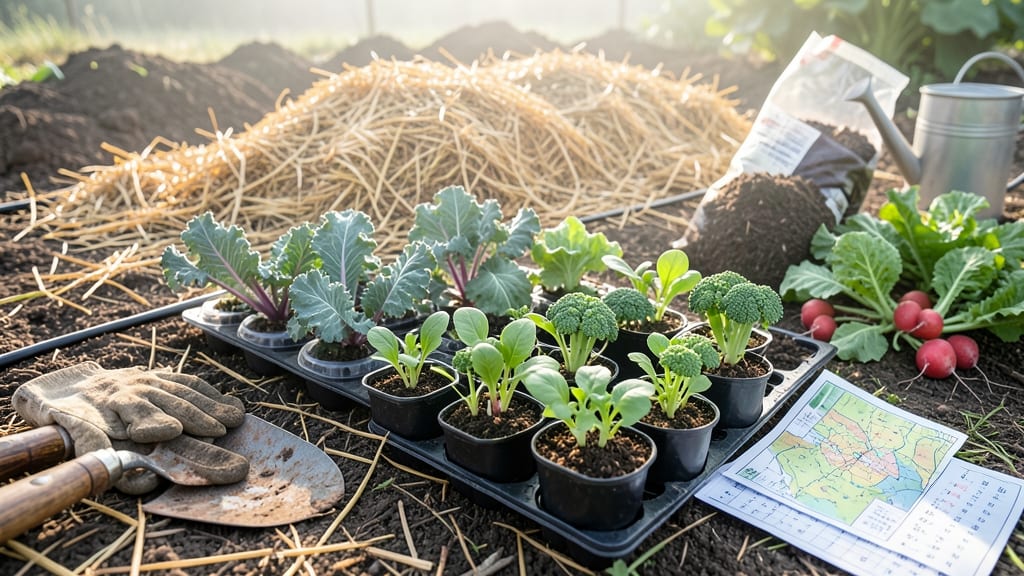
Planting your fall garden in Texas between August and October is the key to avoiding wasted seeds and a bountiful harvest 🥬.
Texas gardeners know timing is everything—and planting too early or late can mean the difference between a thriving garden and disappointment. But with shifting seasons and unpredictable heat, figuring out the perfect window feels like guessing.
Here’s the good news: your region matters. North Texas gardeners should start by late August, while Central and South Texas can wait until early September to beat the heat and give crops time to mature before frost.
I’ll break down the exact months for your favorite cool-season crops and how to adjust for microclimates.
You’ll also discover how to prep your soil, choose the right crops for your zone, and extend your harvest well into winter—no more wondering if you planted too soon or too late.
Texas fall planting calendar: exact months for cool-season vegetables
Texas' fall gardening season is a golden opportunity for growing cool-season vegetables like broccoli, kale, and carrots—but timing is critical. Unlike northern states, Texas' microclimates (North, Central, South) create varying frost dates and soil temperatures.
Plant too early, and your seedlings will bolting in the heat; too late, and frost will ruin your harvest.
My 10-year Texas gardening experience taught me that August through October is prime time, but exact dates depend on your USDA zone and last frost date. North Texas (Zone 8a) needs earlier starts, while South Texas (Zone 10a) can extend planting until late October.
Let’s break it down by month and region so you can maximize your harvest.
Key rule: Cool-season crops thrive when soil temps are below 80°F and nights dip into the 50s-60s°F. Use a soil thermometer to confirm—ideal temps are 60-70°F for germination.
| Region | Month | Crop | Planting Window | Soil Temp | Notes |
|---|---|---|---|---|---|
| North Texas (Zone 8a) | August | Lettuce, Spinach, Radishes | Mid-August (direct sow) | 60-75°F | Use shade cloth if temps >85°F |
| North Texas (Zone 8a) | September | Broccoli, Kale, Carrots | Early September (transplant) | 55-70°F | Mulch to retain moisture |
| Central Texas (Zone 8b-9a) | August | Green Onions, Bush Beans | Late August (direct sow) | 65-80°F | Succession plant every 2 weeks |
| Central Texas (Zone 8b-9a) | September-October | Collards, Turnips, Beets | Early Sept (transplant), Oct (direct sow) | 50-65°F | Cold-hardy; protect from early frost |
| South Texas (Zone 9b-10a) | August-September | Mustard Greens, Swiss Chard | Mid-August to late Sept | 70-85°F | Minimal frost risk; extend season |
| South Texas (Zone 9b-10a) | October | Cabbage, Cauliflower | Early October (transplant) | 60-75°F | Harvest before potential light frosts |
Best fall crops for Texas gardens and their ideal planting windows
Texas' fall garden success hinges on selecting the right cool-season crops and planting them at precise times. Unlike spring, fall offers a longer growing window before frost, but heat-resistant varieties and proper timing are key.
I’ve grown spinach, radishes, and green onions for years in my North Texas garden, and these crops consistently deliver when planted correctly.
Your planting window depends on your Texas region—North Texas has earlier frosts, while South Texas can extend harvests into December. For example, lettuce and kale thrive when sown 6–8 weeks before your first frost date, but radishes bolt in heat, so they need cooler September soil.
Let’s dive into the best crops and their exact planting windows.
- 1. Spinach – Plant mid-August to early September (North Texas) or late August to October (South/Central Texas). Days to maturity: 30–50 days. Choose heat-tolerant varieties like 'Bloomsdale Long Standing' to avoid bolting.
- Radishes – Sow September to mid-October for crisp harvests. Fast-growing (25–30 days), but avoid planting after 90°F soil temps. Try 'Cherry Belle' for reliable performance.
- Green Onions – Direct-sow late August through October. Harvest in 40–60 days. Use row covers in North Texas to protect from early frosts. 'Evergreen Hardy White' is a top pick.
- Carrots – Plant September to early October for harvests before winter. Loosen soil to prevent forking. 'Danvers' matures in 70 days and handles Texas clay well.
- Kale – Start seeds mid-August to September. Sweeter after frost! 'Winterbor' takes 50–60 days and thrives in cooler temps. Mulch to retain moisture.
For North Texas gardeners, prioritize crops like mustard greens and turnips—they tolerate light frosts better than spinach. In South Texas, extend your season with collard greens and broccoli, which handle warmer soils longer.
Always check your last frost date (North: ~Nov 15; South: ~Jan 1) and adjust planting accordingly.
Pro tip: Use row covers in late fall to shield greens from unexpected cold snaps. I’ve saved entire lettuce beds this way in Zone 8a. Pair fast growers like radishes with slower crops like kale to maximize space and harvest timing.
Water deeply 2–3 times per week in fall, but reduce frequency as temps drop. Mulch with straw to insulate roots and retain moisture. With these crops and timing, you’ll enjoy fresh harvests straight through December—even in Texas! 🌱