Vegetable Planting Calendar for Zone 7: Exact Months for Peak Harvests

Planting

Vegetable Planting Calendar for Zone 7: Exact Months for Peak Harvests

Your Zone 7 vegetable planting calendar is the game-changer for avoiding frost-killed seedlings and missed harvests—because timing here isn’t just about months, it’s about days.

Zone 7 gardeners know timing is everything—plant too early and risk frost, too late and miss peak harvests. This precise planting calendar reveals the exact months to sow, transplant, and harvest your best vegetables in Zone 7, maximizing yields and minimizing wasted effort.

Whether you’re a first-timer or a seasoned grower, knowing when to start tomatoes indoors (February!) or when to direct-sow lettuce (March and again in August) makes the difference between a bountiful garden and a frustrating guess.

Below, I’ll break down the month-by-month schedule for cool-season crops, warm-season staples, and year-round growers—plus pro tips to adjust for early/late frosts and extend harvests by 4+ months.

🌱 When to Plant Vegetable
Jan ❄️
Feb ❄️
Mar 🌱
Apr 🌱
May 🌱
Jun 🌱
Jul ☀️
Aug ☀️
Sep 🍂
Oct 🍂
Nov 🍂
Dec ❄️
Ideal Time
Also Good

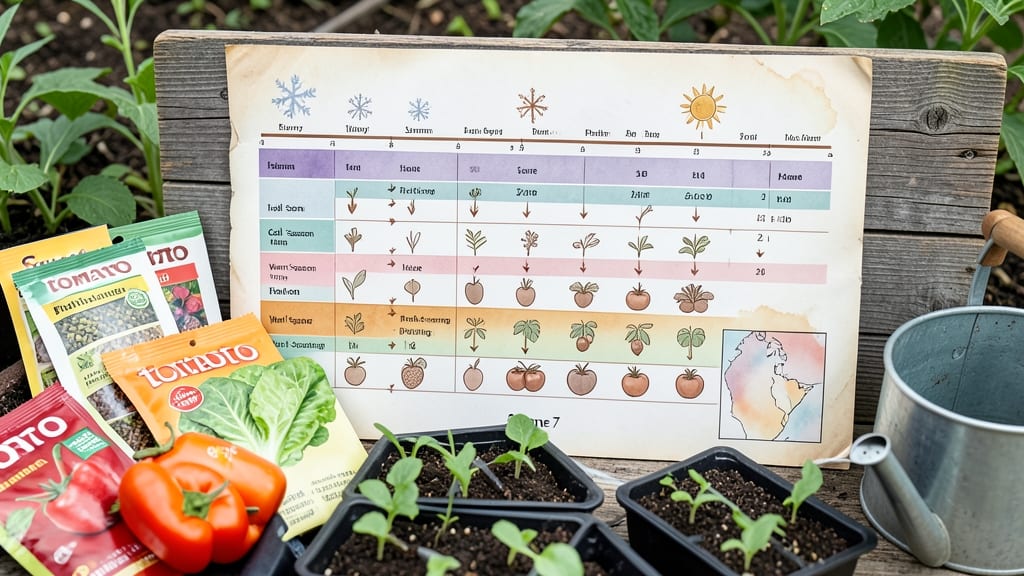
Zone 7 planting schedule by vegetable type: when to start seeds indoors vs outdoors

Mastering your Zone 7 planting schedule means aligning your garden with nature's rhythm. The difference between Zone 7a (average last frost: March 15) and Zone 7b (average last frost: April 1) can mean the difference between thriving tomatoes and frost-nipped seedlings.

I'll break down exactly when to start seeds indoors vs outdoors for your most popular vegetables.

Cool-season crops like spinach and broccoli thrive in Zone 7's mild winters, while tomatoes and peppers demand precise timing to avoid early heat stress. Even green onions and kale have optimal planting windows that maximize your harvest. Let's dive into the exact months for each category, adjusted for both subzones.

Pro Tip: Use your local frost-free date as your anchor point. For Zone 7a, count back 4-6 weeks for warm-season starts; for Zone 7b, you've got an extra 2-3 weeks of flexibility. Always verify with your local cooperative extension for microclimate adjustments.

Critical planting mistakes in Zone 7 and how to avoid them

Even experienced Zone 7 gardeners make planting mistakes that waste time and reduce yields. One of the biggest errors is planting heat-sensitive crops like lettuce or spinach too early in spring. These cool-season vegetables bolt when soil temperatures rise above 70°F, turning bitter before you can harvest.

Similarly, warm-season crops like tomatoes and peppers often fail when planted before the last frost date—usually April 15-30 in most of Zone 7.

Another common mistake is ignoring soil temperature thresholds for different crops. For example, beans and cucumbers need soil temps of at least 60°F to germinate, while peppers require 70°F+.

Using a soil thermometer for just 5-10 minutes daily can prevent wasted seeds and delayed harvests. I always check mine before planting warm-season crops—it’s saved me from multiple failed batches.

⚠️ Zone 7 Planting Pitfalls

  • Planting too early: Cool crops like broccoli or peas sown before March 15 risk frost damage.
  • Ignoring microclimates: Urban areas stay 5-10°F warmer than rural zones—adjust planting dates accordingly.
  • Overcrowding seedlings: Thinning too late stunts growth; follow spacing guidelines (e.g., 18" for tomatoes).
  • Skipping soil prep: Zone 7’s clay-heavy soils need compost amendment before planting.

Pro Tip: Use row covers for early spring plantings to protect from late frosts while warming the soil.

Zone 7’s elevation variations also create planting challenges. Gardens at 2,000 feet or higher experience cooler temps, delaying the last frost by 1-2 weeks compared to lower elevations.

For instance, if your neighbor in Zone 7a plants tomatoes on May 1, you might need to wait until May 10-15 if you’re at 1,500 feet. Always check local frost data—your county extension office has precise records.

Crowding seedlings is another silent yield killer. Many gardeners forget that tomato plants need 18-24 inches of space, while carrots require 2-3 inches between seeds. I once planted beans 6 inches apart instead of 4-6 inches, leading to stunted growth and poor pod production.

Always read seed packet spacing guidelines and thin seedlings early to avoid root competition.

Finally, many Zone 7 gardeners overlook succession planting for warm-season crops. Planting all your zucchini seeds at once means a glut of produce in June-July, followed by nothing until next year.

Instead, stagger plantings every 2 weeks to extend harvests through September. This simple trick has doubled my zucchini yield over the past 3 years.

By avoiding these common mistakes—timing crops to soil temps, accounting for microclimates, proper spacing, and succession planting—your Zone 7 garden will thrive with consistent harvests and fewer wasted efforts. Start with small adjustments this season, and you’ll see the difference in your garden’s productivity. 🌱

★★★★★4.8(12 reviews)
Categories Planting
Vegetable Type Zone 7a Start Indoors Zone 7b Start Indoors Direct Sow Outdoors Harvest Window
Cool-Season Crops Feb-Mar Feb-Apr Mar-Apr (7a) / Apr-May (7b) Spring-Fall
Spinach Feb-Mar Feb-Apr Mar-Apr (7a) / Apr-May (7b) Late Spring-Early Summer
Broccoli Feb-Mar Feb-Apr Mar-Apr (7a) / Apr-May (7b) Early Summer-Fall
Warm-Season Crops Mar-Apr Mar-Apr After last frost (May) Summer-Fall
Tomatoes Mar-Apr Mar-Apr After last frost (May) Mid-Summer-Fall
Peppers Mar-Apr Mar-Apr After last frost (May) Late Summer-Fall
Year-Round Crops N/A N/A Year-round (with protection) Continuous
Green Onions N/A N/A Mar-Oct (every 2-3 weeks) 30-45 days
Kale Feb-Mar Feb-Apr Mar-Apr (7a) / Apr-May (7b)