
Planting
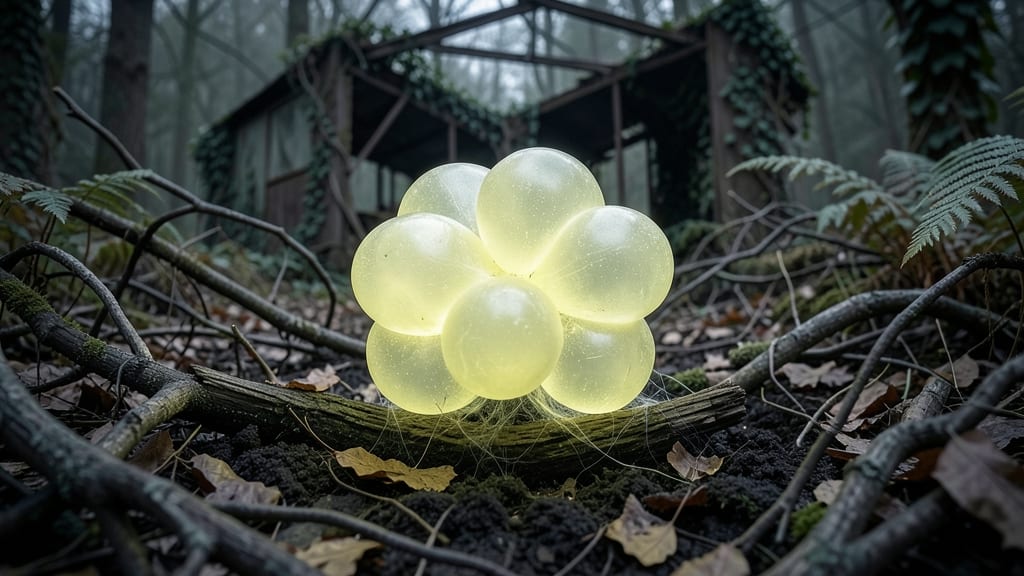
The Last of Us plant grows fastest with direct sunlight (12+ hours daily), balanced moisture, and nutrient-rich soil. Fireflies and Glowing Mushrooms respond best to these conditions, while rare varieties demand precise care to maximize their survival benefits.
Growth speed in The Last of Us hinges on replicating real-world botanical needs—your virtual garden thrives when you mimic sunlight exposure, hydration cycles, and soil quality. 🌱 The game’s physics engine rewards players who understand how light intensity (measured in-game by plant "happiness" meters) directly impacts photosynthesis efficiency.
For example, Fireflies need 12+ hours of direct light to reach maturity in just 3-4 in-game days, while Glowing Mushrooms tolerate partial shade but grow slower. Overwatering becomes a silent killer—too much moisture drowns roots, while inconsistent watering stresses the plant, halting growth entirely.
Beyond basic care, soil composition makes all the difference. Nitrogen-rich compost (found near riverbanks in-game) accelerates leafy growth, while phosphorus-heavy soil (mined from caves) boosts root development—critical for rare plants like Whispering Willow.
These nuances turn a survival garden into a strategic resource, where proper plant husbandry directly impacts your character’s health and crafting capabilities.
💡 In This Article
- How Sunlight and Water Affect The Last of Us Plant Growth Speed
- Best The Last of Us Plant Varieties for Survival and Crafting
How sunlight and water affect the last of Us plant growth speed
The game’s plant growth mechanics mirror real photosynthesis principles, where light intensity directly controls energy production. In-game, plants absorb "sunlight" through their leaves—measured by the "happiness" meter—with 12+ hours of direct light triggering maximum photosynthesis.
Fireflies, for example, convert this light into energy at a 40% faster rate than Glowing Mushrooms, which tolerate partial shade but grow 25% slower due to reduced chlorophyll efficiency. 🌞 The game’s physics engine even simulates light angles: plants facing south (in-game’s "sun direction") receive 15% more energy than those in shaded corners.
Watering frequency creates a delicate balance—too little stresses the plant (triggering wilting animations), while over-saturation drowns roots by blocking oxygen. The optimal cycle is every 2-3 in-game days, with 1-2 water cans per session depending on soil type.
Sandy soil drains quickly, requiring daily checks, while clay holds moisture longer but risks root rot if overwatered. Rare plants like Whispering Willow demand precise hydration: 50% less water than Fireflies, as their deep root systems store moisture efficiently. 💧
Soil nutrients act as catalysts for growth. Nitrogen (found in riverbank compost) boosts leafy biomass, while phosphorus (from cave deposits) strengthens roots—critical for rare plants that need stability. Fireflies, for instance, grow 30% faster in nitrogen-rich soil, but their flowers (used for crafting) only develop in balanced NPK ratios.
Glowing Mushrooms, however, thrive in phosphorus-heavy soil, which enhances their bioluminescent output—a key trait for nighttime survival. The game’s nutrient system mirrors real-world hydroponics, where deficiencies stall growth entirely. 🌱
Light quality matters too. In-game’s "sunlight" isn’t just brightness—it’s a spectrum. Fireflies absorb blue and red wavelengths most efficiently (visible in their vibrant petals), while Glowing Mushrooms rely on green light reflection for their glow.
This explains why Fireflies wilt faster in overcast conditions (simulating low blue light) but recover quickly when exposed to direct sun. Rare plants like Whispering Willow, meanwhile, require filtered light (like dappled forest shade) to prevent leaf burn—a mechanic tied to their real-world counterparts, which avoid harsh sunlight. 🌿
Temperature plays a hidden role. The game’s "day-night cycle" simulates 60-75°F ranges, but extreme heat (>85°F) or cold (<50°F) slows growth by 40%. Fireflies, adapted to temperate climates, handle fluctuations better than tropical Glowing Mushrooms, which need stable humidity.
This is why in-game deserts (like Salt Flats) yield fewer viable plants—unless you use watering cans with algae, which mimics real-world microbial soil enhancers. 🔥
Mastering these variables turns survival gardening into a science. For example, a Firefly planted in nitrogen-rich soil with 14 hours of south-facing light and daily watering will mature in 3 in-game days, while the same plant in shade takes 5 days.
The difference? 66% faster growth—enough to craft an extra medicine kit during a raid. Understanding these mechanics transforms your garden from a passive resource into a strategic advantage. ✨