
Pests and Diseases
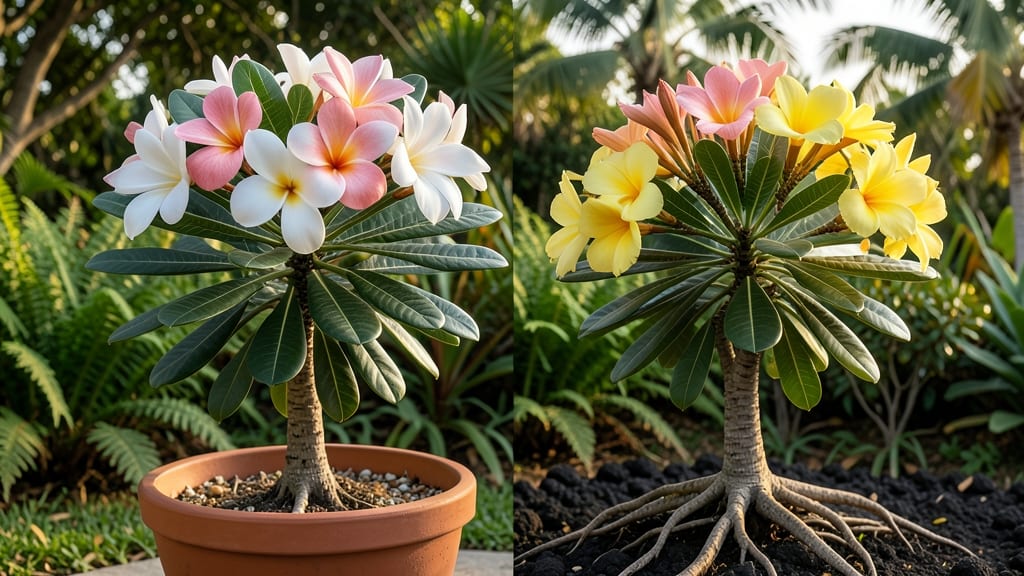
Are plumeria and frangipani the same plant? No—they're closely related but distinct: frangipani specifically refers to Plumeria species within this genus, while "plumeria" is the broader botanical term for these tropical flowering trees known for their waxy blooms and intoxicating scents.
While the terms are often used interchangeably, the key difference lies in their botanical classification. 🌺 Frangipani is a common name for certain Plumeria species, like Plumeria rubra or Plumeria obovata, but not all plumeria varieties are called frangipani.
The genus Plumeria includes over 8 species, each with unique flower shapes, fragrance intensity, and growth habits. For example, Plumeria obtusa has broader leaves and larger blooms compared to the more delicate Plumeria pudica.
This distinction matters for gardeners choosing plants based on specific traits like scent strength or bloom duration.
Understanding this difference helps when selecting plants for your garden or landscape. Many nurseries sell "frangipani" without specifying the exact species, which can lead to unexpected variations in care requirements. For instance, some frangipani varieties thrive in partial shade, while others demand full sun exposure.
Always check the scientific name on plant tags to ensure you're getting the exact variety you want.
💡 In This Article
- Botanical Differences Between Plumeria and Frangipani Species
- Growing and Care Tips for Plumeria vs Frangipani Varieties
Botanical differences between Plumeria and frangipani species
The genus Plumeria contains over eight distinct species, each with unique botanical characteristics that set them apart from the common name "frangipani." 🌿 For example, Plumeria rubra (commonly called frangipani) features elongated, oval leaves with a glossy finish, while Plumeria obtusa exhibits broader, thicker leaves that resemble small paddles.
These differences extend to flower morphology: Plumeria pudica produces delicate, star-shaped blooms with a subtle fragrance, whereas Plumeria acutifolia showcases larger, trumpet-shaped flowers with a more intense sweetness.
The scientific classification matters because it explains why some "frangipani" varieties thrive in specific climates. Plumeria obovata, for instance, originates from Hawaii and prefers humid conditions, while Plumeria alba (the white frangipani) tolerates drier environments. 🌺 The waxy texture of their petals—ranging from creamy yellow to deep pink—is a shared trait, but their scent profiles vary dramatically. Plumeria rubra emits a heavy, sweet perfume, while Plumeria obtusa offers a lighter, citrusy aroma.
These distinctions are rooted in their natural habitats and evolutionary adaptations.
Leaf arrangement is another key identifier. Plumeria species typically display opposite or whorled leaf patterns, unlike many tropical plants that grow in alternate arrangements. 🌿 For example, Plumeria pudica leaves grow in clusters of three, while Plumeria acutifolia leaves emerge singly along the stem.
These structural differences influence how the plants absorb sunlight and water, affecting their care requirements. Gardeners often overlook these details, assuming all "frangipani" varieties have identical needs—a mistake that can lead to poor growth or failed blooming.
Flower structure also varies significantly. Plumeria rubra blooms feature five petals with a prominent central corona, while Plumeria obtusa flowers have a flatter, more open shape. 🌸 The reproductive organs (stamens and pistils) differ in length and visibility, which affects pollination success.
These morphological differences are why some species attract more bees or butterflies than others, influencing their role in local ecosystems. Understanding these nuances helps gardeners select plants that align with their environmental conditions and aesthetic preferences.
Coloration provides another layer of distinction. Plumeria flowers range from pure white (Plumeria alba) to deep magenta (Plumeria rubra), with some hybrids producing bi-color blooms. 🌺 The pigmentation isn't just decorative—it reflects the plant's evolutionary adaptations to attract pollinators.
For instance, darker hues often indicate higher concentrations of anthocyanins, which can influence the plant's resistance to environmental stressors. This biological diversity is why some "frangipani" varieties perform better in urban landscapes, while others excel in tropical gardens.
Finally, growth habits differ across species. Plumeria rubra grows as a sprawling shrub, while Plumeria obtusa develops into a more compact tree form. 🌳 These structural variations impact pruning needs and space requirements.
For example, Plumeria pudica benefits from regular trimming to encourage bushier growth, whereas Plumeria acutifolia requires minimal intervention to maintain its natural shape. Recognizing these differences ensures gardeners provide the right conditions for each variety to thrive.