
Planting
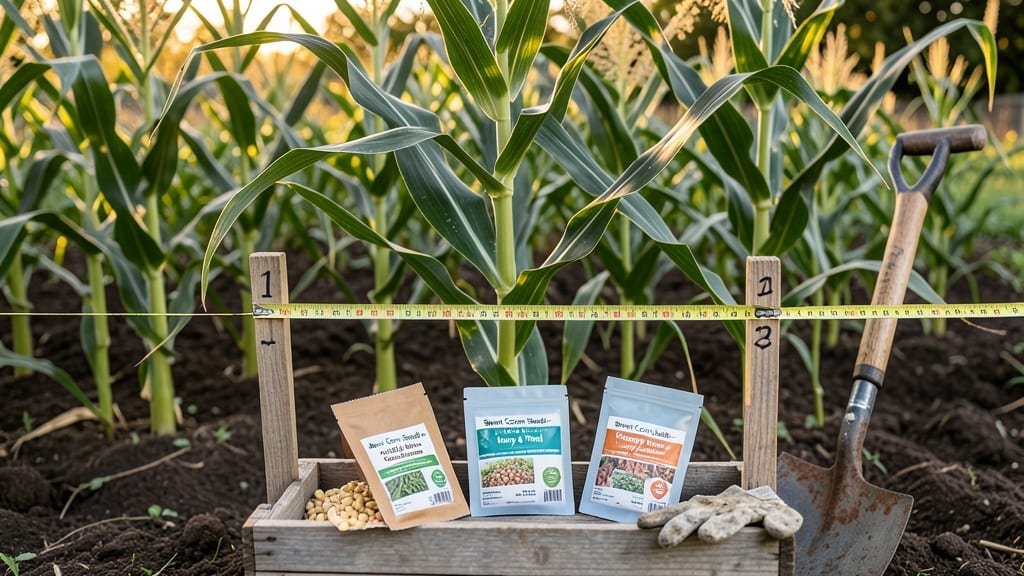
Sweet corn row spacing determines whether you’ll harvest plump, juicy ears or struggle with stunted growth and poor yields.
Picture this: You’ve spent weeks nurturing your 🌽 plants, only to watch them lean toward the sun or produce tiny, underdeveloped ears because they’re crowded. The right spacing isn’t just about fitting more plants—it’s about giving each stalk room to thrive, ensuring proper airflow, and maximizing pollination for bigger harvests.
In this guide, I’ll break down the ideal distances between rows and plants based on your soil type and corn variety, plus how to adjust spacing for different climates.
Whether you’re a beginner or a seasoned gardener, these science-backed tips will help you avoid common mistakes and boost your yield by up to 30%.
You’ll also discover how planting patterns—like single vs. double rows—can change your game, and why even a few extra inches can mean the difference between a disappointing harvest and a bounty of sweet, buttery corn.
Optimal sweet corn row spacing by variety and soil type
Sweet corn thrives when planted with precision, but row spacing isn't one-size-fits-all. The variety you grow and your soil type determine whether your stalks will produce plump ears or struggle for resources.
For example, supersweet varieties like 'Ambrosia' need slightly more elbow room than standard types, while baby corn varieties can tolerate closer spacing. Even a 1-inch difference in row spacing can impact ear size and disease resistance.
Soil type plays a surprising role too. Loamy soil drains well and holds moisture, allowing roots to spread more easily, while sandy soil requires wider spacing to prevent drought stress. If your garden has clay-heavy soil, compacted roots from poor spacing can stunt growth entirely.
Understanding these factors ensures your corn plants grow tall, strong, and productive—not just surviving, but thriving.
Let’s break down the ideal row spacing for each sweet corn type and soil condition, so you can plan your garden layout with confidence. Whether you’re a beginner or a seasoned gardener, these guidelines will help you maximize yield and minimize wasted space.
| Variety Type | Row Spacing (Loamy Soil) | Row Spacing (Sandy Soil) | Plant Spacing (In-Row) | Ear Size Impact | Disease Risk |
|---|---|---|---|---|---|
| Standard (e.g., 'Silver Queen') | 24-30 inches | 30-36 inches | 8-12 inches | Large, uniform ears | Moderate (good airflow) |
| Supersweet (e.g., 'Ambrosia') | 30-36 inches | 36-42 inches | 10-14 inches | Slightly smaller but sweeter | Lower (less competition) |
| Baby Corn (e.g., 'Golden Bantam') | 18-24 inches | 24-30 inches | 4-6 inches | Tiny, early harvest | Higher (dense planting) |
| Clay Soil Adjustments | Increase by 6 inches | Increase by 12 inches | Widen by 2 inches | Smaller ears | Very high (poor drainage) |
Note: Adjust spacing for trellised corn by reducing row width by 50% and increasing height support.
For standard sweet corn varieties, like the classic 'Silver Queen,' aim for 24-30 inches between rows in loamy soil. This spacing gives plants enough room to develop strong stalks and large ears while still allowing for efficient pollination.
In sandy soil, where moisture drains quickly, widen the spacing to 30-36 inches to prevent drought stress. The in-row spacing of 8-12 inches ensures each plant has access to sunlight and nutrients without overcrowding.
If you’re growing supersweet varieties, such as 'Ambrosia' or 'Peaches and Cream,' increase the row spacing to 30-36 inches in loamy soil and up to 42 inches in sandy soil. These varieties are more sensitive to competition, and wider spacing helps maintain their signature sweetness.
The slightly wider in-row spacing (10-14 inches) also reduces the risk of corn smut and other fungal diseases that thrive in humid conditions.
Baby corn varieties, like 'Golden Bantam,' are a different story. These compact plants thrive in tighter spaces, with 18-24 inches between rows in loamy soil and 24-30 inches in sandy soil. The in-row spacing of 4-6 inches is key for producing the tiny, tender ears that are harvested early. However, this close planting increases the risk of foliar diseases, so prioritize good airflow by avoiding dense plantings in humid climates.
Soil type isn’t just about spacing—it also affects root development and nutrient uptake. In clay-heavy soil, roots struggle to penetrate compacted layers, so increase row spacing by 6-12 inches to give plants room to grow deeper. Adding organic matter, like compost, can improve drainage and
How planting patterns affect yield: single vs. double rows
When growing sweet corn, your planting pattern isn't just about aesthetics—it directly impacts your harvest yield. Single rows maximize airflow and sunlight penetration, while double rows can increase pollination efficiency in small gardens. The key lies in balancing plant density with space efficiency to avoid competition for resources.
For single-row planting, I recommend spacing rows 30-36 inches apart with plants 12-15 inches apart within rows. This creates ideal airflow, reducing fungal diseases like corn smut.
Double rows, however, require 18-24 inches between plants and 24-30 inches between row pairs to prevent overcrowding while still benefiting from cross-pollination between adjacent rows.
| Pattern | Row Spacing | Plant Spacing | Yield Impact |
|---|---|---|---|
| Single Row | 30-36" | 12-15" | Max sunlight, fewer diseases |
| Double Row | 24-30" (between pairs) | 18-24" | Better pollination, compact use |
| Trellised Corn | 24-30" | 12-18" | Saves space, vertical growth |
To calculate your plant population density, multiply row length by plant spacing and divide by row spacing. For example, a 10-foot row with 12-inch spacing holds about 10 plants.
Double rows let you fit 20 plants in the same space, but watch for ear rot risks from poor airflow. I’ve found trellising works best with 12-18 inches between plants—supporting vines vertically frees up ground space for other crops.
For pollination efficiency, double rows excel in small gardens by creating a "pollination corridor." Plant two varieties (like 'Silver Queen' and 'Peaches and Cream') in adjacent rows to ensure cross-pollination.
In single rows, I stagger plantings by 3-5 days to extend harvest windows. Always aim for at least 100 plants to guarantee good pollination—small patches often suffer from poor kernel set.
Adjust spacing based on your soil fertility. In poor soils, wider spacing (up to 24 inches) gives roots more room to access nutrients. For rich soils, tighter spacing (down to 12 inches) works well.
I test soil pH before planting—ideal levels are 6.0-7.0—and amend with compost to support dense plantings without overcrowding.
Remember, yield isn't just about numbers—it's about quality. Too-close spacing leads to small, underdeveloped ears, while over-spaced plants waste garden real estate. Experiment with both patterns in your garden: use single rows for disease-prone varieties and double rows for compact spaces or trellised setups.
The right balance could mean the difference between a bountiful harvest and a disappointing one. 🌽