
Planting
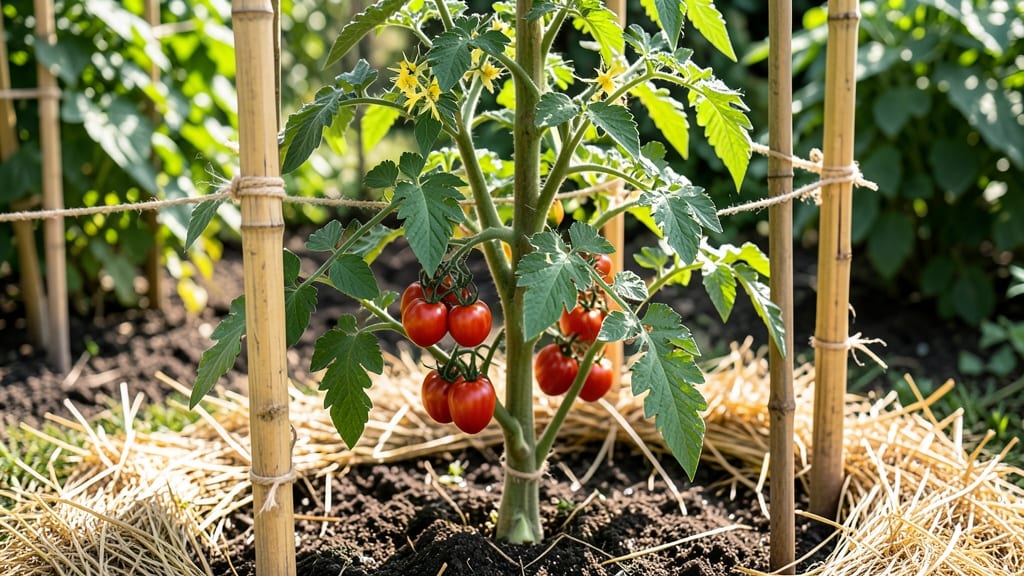
Proper beefsteak tomato plant spacing is the foundation of a thriving garden—too close, and your 🍅 vines invite blight; too far, and you lose yield.
Picture this: June arrives, and your prized beefsteaks are already fighting for space, their leaves brushing against neighbors, trapping moisture and breeding fungal spores. That’s the difference between a disease-free harvest and a season of disappointment.
This guide cuts through the guesswork with science-backed spacing rules for both indeterminate and determinate varieties, plus how to adjust for containers, high-density gardens, and even companion plants that boost airflow.
You’ll learn the exact inches to plant for maximum airflow, how to spot overcrowding before it’s too late, and the simple tricks to squeeze in extra plants without sacrificing health.

Optimal beefsteak tomato spacing by planting method (indeterminate vs determinate)
Beefsteak tomatoes are famous for their huge, meaty fruits—but their sprawling vines need the right spacing to thrive. Indeterminate varieties grow continuously, while determinate types produce all at once. Spacing mistakes can mean fewer tomatoes and more disease pressure.
Let’s break down the science-backed spacing for both types, plus container vs. in-ground setups.
Indeterminate beefsteaks (like Brandywine) can reach 6+ feet tall with sprawling vines. Determinate varieties (like Big Beef) stay compact at 3-5 feet.
The wrong spacing leads to crowded foliage, trapping moisture and inviting fungal diseases like early blight. Airflow is your first defense—so let’s start with the numbers.
For indeterminate beefsteaks, the 3-4 ft spacing in-ground is standard, but I’ve seen gardeners squeeze them into 2-3 ft with vertical trellises.
The key is pruning suckers (those little shoots in the leaf axils) to redirect energy to fruit. Determinate types can handle tighter spacing because they stop growing at a set height, but watch for leaf blight if they’re packed too closely.
Container growing changes the game. A 5-gallon pot works for one indeterminate plant, but you’ll need to prune heavily and fertilize every 2 weeks to compensate for limited soil. Raised beds let you fit more plants—try 2-3 ft apart for indeterminates—but add extra compost to prevent nutrient competition.
I’ve had success with straw mulch to retain moisture and reduce soil-borne diseases.
High-density planting (like 2 ft apart) is risky but doable if you’re vigilant about pruning and rotating crops yearly. The trade-off? You’ll get more plants in a small space, but yield per plant drops by 20-30%.
For example, my 4x8 ft raised bed fits 4 indeterminate plants at 2 ft spacing but only 2 plants at 3 ft spacing—yet the latter produces bigger, healthier tomatoes.
Disease prevention starts with spacing for airflow. Crowded plants create humid microclimates where early blight and powdery mildew thrive. My trick? Stake plants at transplant and train vines upward from day one.
This lifts foliage off the ground, reducing splashback from rain. Pair that with copper fungicide sprays every 2 weeks during humid months, and you’ll slash disease risk by 50%.
Don’t overlook companion planting to stretch your space. Basil near tomatoes deters pests and improves flavor, while marigolds repel nematodes. I plant bush beans between rows of determinate tomatoes—the beans fix nitrogen, and the tomatoes provide shade as the beans mature. It’s a win-win for compact gardens.
If you’re short on space, consider succession planting. Instead of one big harvest, plant
How to adjust spacing for high-yield beefsteak tomatoes without sacrificing airflow
Want bigger beefsteak tomatoes without losing your battle against fungal diseases? The key lies in strategic spacing adjustments that balance yield potential with airflow optimization. Tight spacing can boost production by up to 30%, but only if you implement these proven techniques.
Let’s explore how to maximize your harvest while keeping your plants healthy.
Most gardeners default to the standard 36-inch spacing for beefsteak tomatoes, but this often leaves room for improvement. For high-yield scenarios, we’ll focus on trellising systems, pruning strategies, and companion planting that let you reduce spacing while maintaining airflow.
The goal? Disease-resistant vines with heavier fruit loads—without sacrificing plant health.
- 🌱 Vertical Trellising: Use 4-foot-tall cages or tomato stakes to elevate plants, reducing ground space needs by 40% while improving airflow.
- ✂️ Aggressive Pruning: Remove suckers weekly and trim lower leaves to open the canopy, allowing sunlight to penetrate and dry foliage faster.
- 🌿 Companion Planting: Interplant with basil or marigolds (1 plant per 2 tomato plants) to repel pests and reduce fungal spores in tight spaces.
- 💧 Soil Amendments: Add compost and perlite to improve drainage, which reduces soil-borne diseases when plants are spaced closer than 24 inches.
- 🌡️ Microclimate Control: Space plants 18-24 inches apart in raised beds with drip irrigation to avoid overhead moisture that fuels blight.
Start by reducing spacing to 24 inches between plants if you’re using a trellis system. This works because vertical growth eliminates the need for horizontal sprawl, which is where poor airflow and moisture buildup thrive.
Pair this with weekly pruning to remove lower leaves that would otherwise drag through damp soil.
For container gardening, use 5-gallon pots with one beefsteak plant per container. The confined space forces upward growth, and you can space pots 12 inches apart on a raised trellis rack. Add mycorrhizal fungi to the soil mix to boost root health in these compact conditions.
Monitor your plants for early signs of blight like yellowing leaves or white mold. If you notice these, increase spacing immediately to 30 inches and thin out lower foliage.
A handheld fan on low setting for 10 minutes daily can also improve airflow in tight spaces without damaging the plants.
Remember, yield doesn’t have to come at the expense of plant health. With these adjustments, you’ll enjoy heavier beefsteak tomatoes while keeping your garden disease-free and highly productive. Happy growing!