
Planting
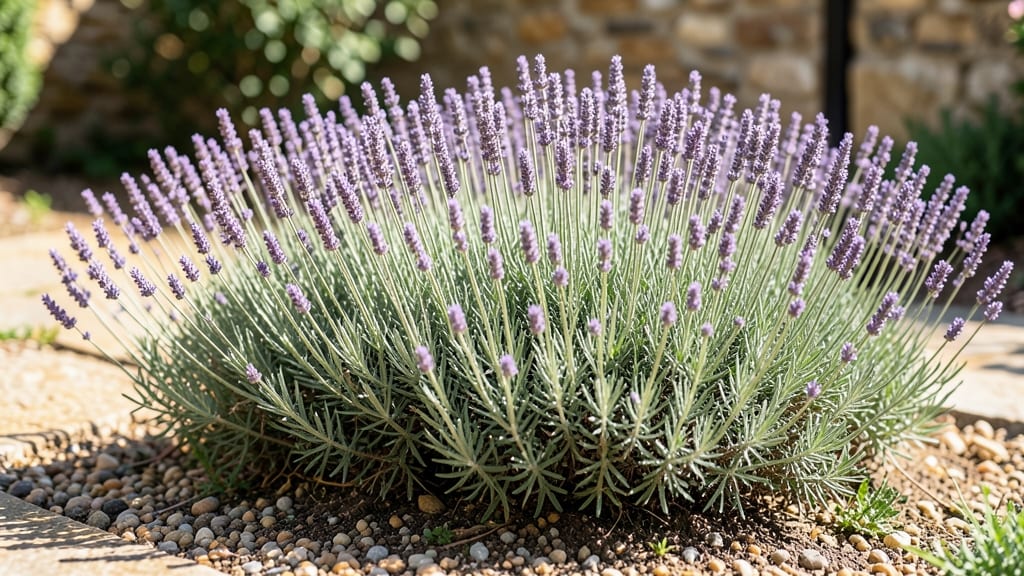
A lavender hedge thrives with the right plant spacing — a 3-foot grid is the gold standard for dense growth and pollinator-friendly borders.
Picture this: fragrant purple blooms stretching seamlessly along your fence line, buzzing with bees and butterflies all summer. That’s the magic of proper spacing—it’s not just about looks, but airflow and long-term health too.
Too close, and your lavender 🌿 will compete for nutrients, leading to sparse growth. Too far apart, and you’ll lose that lush, uniform look. The 3-foot rule balances everything, whether you’re planting French or English varieties.
In this guide, I’ll walk you through the science behind the spacing, step-by-step planting tips, and how to adjust for privacy screens or drought-resistant borders. Let’s get that hedge growing right!

Why a 3-Foot lavender hedge spacing grid maximizes growth & pollinator benefits
A lavender hedge with 3-foot spacing isn’t arbitrary—it’s rooted in science. This grid reduces root competition while maximizing sunlight exposure and airflow, all critical for lavender’s health. When plants crowd too closely, they compete for nutrients, leading to weak stems and sparse blooms.
The 3-foot rule creates an ideal balance for both growth and pollinator access.
Lavender thrives in full sun (6+ hours daily), and spacing ensures each plant gets its share. Without proper spacing, inner stems shade out, weakening the hedge’s structure.
Studies show that French lavender varieties (like 'Grosso') need slightly more room (3-4 feet) than English lavender (like 'Munstead'), which tolerates 2.5-3 feet spacing. This distinction matters for density and fragrance intensity.
Pollinators like bees and butterflies rely on easy access to lavender’s nectar. A 3-foot grid provides ample landing space while keeping plants dense enough to create a continuous blooming border.
Tighter spacing can block pollinators, while wider gaps reduce the hedge’s visual appeal. The sweet spot? 3 feet—enough room for wings to flutter and stems to flourish.
Another key factor is soil drainage. Lavender hates soggy roots, and proper spacing prevents water pooling between plants. In clay-heavy soils, the 3-foot rule becomes even more critical, as it allows roots to spread without suffocating.
Amend soil with gravel or sand to further improve drainage—this combo ensures your hedge stays healthy year-round.
Let’s break down the science behind the 3-foot spacing with a quick comparison of lavender types and their ideal spacing:
| Lavender Type | Mature Size | Optimal Spacing | Pollinator Benefit |
|---|---|---|---|
| French Lavender (e.g., 'Grosso') | 2.5–3 ft tall | 3–4 ft apart | High nectar access for bees |
| English Lavender (e.g., 'Munstead') | 1.5–2.5 ft tall | 2.5–3 ft apart | Butterfly-friendly blooms |
| Dwarf Varieties (e.g., 'Hidcote') | 8–12 in tall | 2–2.5 ft apart | Edge plantings for pollinators |
Beyond spacing, pruning techniques play a role in maintaining hedge density. Lightly trim back one-third of new growth in early spring to encourage bushier stems. Avoid heavy pruning, as lavender resents aggressive cuts—this can stress plants and reduce blooms.
The 3-foot grid makes pruning easier, as you can reach inner stems without damaging outer growth.
For pollinator benefits, timing matters. Plant lavender in early spring (March–April) to give roots time to establish before summer heat. By mid-summer, your hedge will be a buzzing hub for bees and butterflies.
Pro tip: Pair lavender with thyme or rosemary in the same 3-foot grid—these herbs attract pollinators too and share similar care needs.
One common mistake? Skipping the 3-foot spacing to fit more plants in a tight space. While this might seem like a shortcut, it leads to crowded, leggy stems with fewer flowers.
Instead, think of your hedge as a living tapestry—each plant needs room to shine. The 3-foot rule ensures your lavender hedge stays lush, fragrant, and full of life for decades.
Soil prep is just as critical as spacing. Lavender craves well-draining, slightly alkaline soil (pH 6.5–7.5). Mix in compost and coarse sand to improve drainage, especially in heavy clay soils. A 3-foot grid with amended soil sets the stage for a thriving hedge that’s both beautiful and functional.
Ready to plant? Start by marking your 3-foot grid with stakes or a garden hose. Dig holes twice as wide as the root ball but only as deep as the container.
Water deeply after planting to settle the soil, and avoid fertilizing for the first 6–8 weeks—lavender prefers lean soil. With the right spacing, your hedge will reward you with years of fragrance and pollinator joy.
Step-by-step guide to planting lavender hedges with perfect spacing
A lavender hedge thrives when planted with precision—especially that 3-foot spacing that ensures airflow and sunlight reach every plant. Before you dig, gather your tools: a garden spade, measuring tape, stakes, and gravel for drainage.
Lavender hates soggy roots, so prioritize well-draining soil with a sandy loam mix. If your soil is heavy clay, amend it with compost and coarse sand to mimic its Mediterranean homeland.
Mark your 3-foot grid before planting—this is non-negotiable for a dense, uniform hedge. Use wooden stakes or a garden flag to outline each planting spot. For a 6-foot-wide hedge, you’ll need 2 rows of plants, spaced 3 feet apart in both directions.
This creates the perfect balance between root competition and pollinator access, ensuring bees and butterflies can weave through without trampling your plants.
Planting Lavender Hedges: Step-by-Step
After planting, resist the urge to fertilize lavender—it’s a low-maintenance perennial that thrives in poor soil. Over-fertilizing leads to leggy growth and fewer flowers. Instead, focus on pruning in late winter to shape your hedge and remove dead wood.
This keeps the plants compact and encourages dense flowering in spring and summer.
Avoid these common mistakes that ruin lavender hedges: planting too deeply (burying the crown), overwatering (root rot risk), or using high-nitrogen fertilizer (promotes foliage over flowers). If your hedge looks sparse after a year, consider top-dressing with compost in early spring—but keep it light.
Lavender’s beauty lies in its fragrant simplicity, not lush greenery.
With the right 3-foot spacing and minimal care, your lavender hedge will reward you with years of fragrance and pollinator visits. Plant a few extra lavender plants now—you’ll thank yourself when your hedge fills in beautifully by next summer. 🌿✂️🐝