
Planting
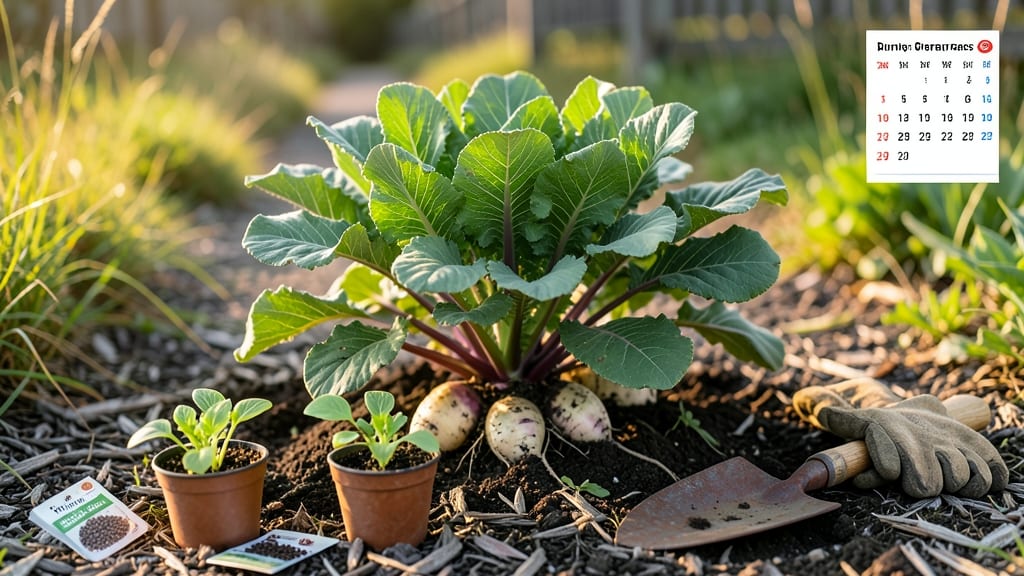
Is it too late to plant turnip greens 🥬? Not if you time it right and pick the right varieties—late-season planting isn’t just possible, it’s a smart move.
If you’ve been eyeing your garden plot and wondering whether late-season turnip greens still have a chance, the answer is a resounding yes—with the right approach.
These cold-hardy greens can handle frosts that would send other crops running, but the key is knowing your last frost date, choosing fast-maturing varieties, and using a few simple tricks to protect them from early chills.
In this guide, I’ll show you exactly how to plant turnip greens for a fall harvest, which varieties hold up best in cooler weather, and how to stretch your growing season with row covers or containers.

When is the last safe window to plant turnip greens for fall harvest?
Turnip greens are one of the most frost-tolerant vegetables you can grow, making them perfect for late-season planting. Unlike delicate greens like lettuce, they won’t bolt or turn bitter when temperatures dip.
However, timing still matters—plant too late, and your harvest may shrink before winter arrives. The last safe window depends on your USDA zone, first frost date, and soil conditions.
For most regions, aim to plant 60-70 days before your average first frost. This gives turnip greens enough time to mature while still benefiting from cool weather. In Zone 5, where first frosts often hit mid-October, your last planting window is typically late August to early September.
Meanwhile, in Zone 9, where frost arrives later, you might push it to mid-October.
To calculate your exact window, check your local frost dates (use the National Weather Service or Old Farmer’s Almanac) and subtract 70 days. For example, if your first frost is November 1, plant by August 31.
Adjust for short-season varieties like ‘Tokyo Cross,’ which mature in 30-40 days, allowing for later plantings.
Soil temperature also plays a critical role. Turnip greens germinate best in soil between 45°F and 85°F, but they thrive in cool weather (50°F-65°F). If your soil is still warm in late summer, wait until temperatures drop below 80°F to avoid slow germination.
In hot climates, plant in partial shade or use shade cloth to protect seedlings until soil cools.
For northern regions (Zones 3-4), prioritize fast-maturing varieties like ‘Seven Top’ or ‘Just Right.’ These can be planted as late as early August and still yield before frost.
In southern zones (Zones 9-10), where winters are mild, you can even plant a second crop in late fall for a winter harvest, though growth will slow after 32°F frosts.
Adjust your planting window based on microclimates. Gardens near large bodies of water or in low-lying areas may experience earlier frosts, while elevated spots or urban heat islands might delay them.
Test your soil’s drainage—turnip greens hate soggy roots, so amend heavy clay with compost or sand before planting.
If you’re unsure about your local frost dates, err on the side of earlier planting. Turnip greens tolerate light frosts and often taste sweeter after a 28°F-32°F chill.
Use mulch (straw or leaves) to insulate roots and protect seedlings from temperature swings. With the right timing, you’ll enjoy fresh turnip greens well into November or December!
Pro tip: Plant a succession crop every 2-3 weeks in late summer to ensure a steady harvest. Even if frost arrives early, you’ll still get weeks of greens before the ground freezes. Happy planting!
Top 5 frost-resistant turnip green varieties for late planting success
When late-season planting looms, choosing the right turnip green variety can mean the difference between a thriving harvest and bolted disappointment. These cold-hardy varieties are specifically bred to handle fall frosts while delivering sweet, tender leaves even in cooler temperatures.
Let’s explore the top five performers that will keep producing well into autumn’s chill.
Not all turnip greens are created equal—some bolt quickly in heat, while others tolerate light frosts and even improve in flavor after a cold snap. The varieties below were handpicked for their bolt resistance, hardiness, and yield potential in late plantings.
Whether you’re in Zone 4 or Zone 8, these picks will help you extend your harvest window.