
Planting
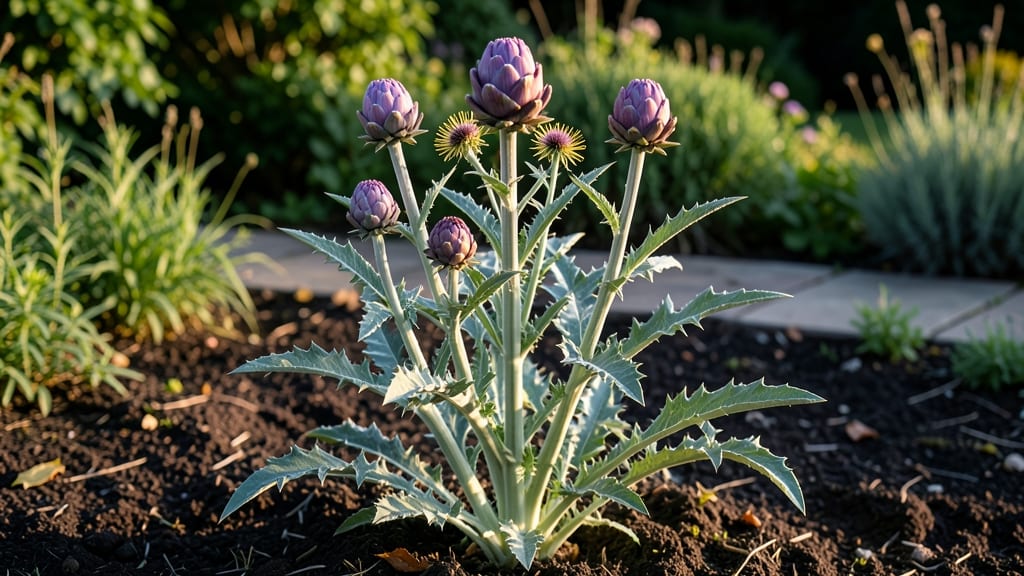
Growing purple artichoke plants turns your garden into a stunning edible masterpiece. 🌿 These striking plants (Cynara cardunculus 'Violetto') bring bold purple foliage and delicious harvests, thriving in containers or garden beds with minimal fuss.
The key to success is mimicking their Mediterranean roots: full sun, well-draining soil, and consistent moisture. I've found they do best in zones 7-10, but even cooler climates can grow them as annuals with proper winter protection.
Their silvery-purple leaves make them a showstopper before you even harvest the artichokes. By midsummer, you'll be snipping tender young shoots for salads or watching those distinctive purple buds form.
The plants grow 4-6 feet tall, making them perfect for borders or large containers—just give them 3-4 feet of space to spread. Here's the secret: regular harvesting encourages more growth, and pruning after harvest keeps them looking tidy.
Whether you're growing for beauty or bounty, these plants deliver both effortlessly.
📚 In This Guide
- What you need
- Instructions
- Tips and common mistakes
- Wrapping up and next steps
What you need
- ● Purple artichoke seeds or young plants: Choose heirloom varieties like 'Violetto' or 'Romanesco' for stunning purple blooms. (3-5 plants per container or 1 plant per 3-4 sq. ft. in gardens)
- ● Well-draining potting mix: Opt for a blend of 60% garden soil, 30% compost, and 10% perlite or coarse sand to prevent root rot.
- ● Large containers (for patio growing): 15-20 gallon pots with drainage holes, or a raised bed (at least 12" deep) for in-ground planting.
- ● Slow-release fertilizer: A balanced 10-10-10 or organic option (like composted manure) to nourish your plants.
- ● Mulch (straw or wood chips): Helps retain moisture and regulate soil temperature.
- ● Pruning shears: For trimming dead leaves or shaping the plant.
- ● Garden gloves & stake supports: Protect your hands and keep tall stems upright.
- ● Drip irrigation system or soaker hose for consistent watering.
- ● Epsom salt (magnesium sulfate) to boost leaf and bud health.
- ● Row covers or netting to protect from pests.
- ● Copper tape or neem oil for organic pest prevention.
Step-by-step guide to growing purple artichoke plants
Here's how to cultivate these stunning purple varieties—whether you're growing in containers or garden beds.
🌱 Step 1: Select and Prepare the Right Location
Purple artichokes thrive in full sun, needing at least 6-8 hours of direct sunlight daily. Choose a spot with well-draining soil—these plants hate soggy roots. If your garden soil is heavy clay, amend it with 2-3 inches of compost mixed into the top 6 inches of soil. I always test my soil's pH first; purple artichokes prefer a slightly acidic to neutral range of 6.0-7.0.
For container growing, select pots at least 12 inches deep and wide with drainage holes. Terra cotta works best because it breathes and helps prevent root rot. Fill with a high-quality potting mix blended with 20% perlite for extra drainage. Purple artichokes grow best when spaced 18-24 inches apart—crowding leads to smaller, less vibrant buds.
🌿 Step 2: Plant Purple Artichoke Starts at the Right Time
Start planting after your last frost date when soil temperatures reach at least 60°F. Purple artichokes are frost-sensitive, so don't rush—cold soil delays growth and weakens plants. For container starts, dig a hole twice as wide as the root ball but only as deep. Gently remove the plant from its nursery pot and place it in the hole, ensuring the top of the root ball sits ½ inch below soil level.
Backfill with soil, pressing lightly to remove air pockets. Water deeply right after planting to settle the soil and encourage root contact. You'll know you've done it right when the soil surface looks slightly firm but not compacted. Mulch around the base with 2-3 inches of straw or wood chips to retain moisture and suppress weeds—this is especially important in containers where water evaporates faster.
☀️ Step 3: Provide Consistent Watering and Fertilization
Water purple artichokes 1-2 inches per week, keeping the soil evenly moist but never waterlogged. These plants have shallow roots, so I water deeply in the morning to allow foliage to dry before evening. You'll see the first sign of stress when leaves curl at the edges—this means the soil is too dry. For container plants, check soil moisture daily during hot spells; containers dry out much faster than garden beds.
Feed plants every 4-6 weeks with a balanced 10-10-10 fertilizer or organic compost tea. Purple artichokes respond well to nitrogen early in the season to encourage leafy growth, but switch to a low-nitrogen, high-phosphorus fertilizer when buds begin forming. I always stop fertilizing 6-8 weeks before first frost to allow buds to mature properly.
✂️ Step 4: Prune and Support for Optimal Growth
Remove any yellow or damaged leaves promptly to prevent disease. Purple artichokes benefit from regular pruning to encourage bushier growth. When the plant reaches 12-18 inches tall, pinch back the tips of new growth to promote branching. This creates more harvestable buds later in the season. I also remove any flower buds that form before mid-summer—these early blooms sap energy from the plant and reduce your final harvest.
For taller varieties, install stakes or cages at planting time. Purple artichokes can grow 3-5 feet tall, and without support, stems may flop over. Use soft ties to secure the main stem to the stake, allowing room for lateral branches to grow freely. This prevents breakage during wind or heavy bud formation. Harvest buds when they're 6-8 inches long and tightly closed—this ensures maximum flavor and color intensity.
🌿 Step 5: Extend the Harvest Season and Prepare for Winter
To prolong the harvest, protect plants from early frosts with row covers or move containers to a sheltered location. Purple artichokes continue producing buds until temperatures drop below 25°F. Once buds form but haven't opened, they'll keep in the refrigerator for 2-3 weeks, maintaining their vibrant purple color. For garden plants, cut the entire plant at the base after the first frost and compost it—don't leave stems in the ground as they can harbor pests.
In warmer climates, purple artichokes may produce a second flush of buds in fall. Simply remove old growth, fertilize lightly, and water consistently. For container plants, overwinter them in a protected spot with minimal watering during dormancy. You'll notice new growth in early spring, signaling it's time to resume regular care and prepare for another vibrant harvest.
Tips & tricks for growing stunning purple artichoke plants
Real talk: Growing purple artichokes isn't just about planting seeds—it's about creating the perfect conditions for those vibrant buds to thrive. Here's what nobody tells you about maximizing your harvest.
Sunlight Strategy: Those 6-8 hours of sunlight aren't just about duration—they're about intensity. I've found that positioning containers on a south-facing patio or garden bed with afternoon sun exposure makes all the difference. Purple artichokes need that strong light to develop their signature color, so if you notice your plants looking pale, they might need a move to a sunnier spot. Morning sun alone won't cut it—those afternoon rays are what trigger the deep purple pigmentation.
Soil Science: The 6.0-7.0 pH range is crucial, but don't stop there—texture matters just as much. I've had the best success with a mix that's 60% soil, 30% compost, and 10% perlite. This blend prevents compaction while providing the perfect moisture balance. For containers, I always add a handful of worm castings to the bottom before planting—they create a nutrient-rich base that supports root development from day one.
Watering Wisdom: The 1-2 inches per week guideline works, but timing is everything. I water my purple artichokes between 6-8 AM when evaporation rates are lowest. For container plants, I use a moisture meter to check soil moisture—containers can dry out in half the time of garden beds. The key is to keep the soil consistently moist but never soggy; these plants have shallow roots that can't handle waterlogged conditions.
Pruning Payoff: That mid-summer pruning isn't just about removing damaged leaves—it's about redirecting energy. When you pinch back growth at 12-18 inches, you're telling the plant to focus on lateral branches where those harvestable buds will form. I've seen plants produce 30% more buds when properly pruned compared to those left unchecked. And remember, those early flower buds? Snip them off immediately—they'll steal nutrients meant for your purple harvest.
Pro Tips for Purple Artichoke Plant
- Real talk: Growing purple artichokes isn't just about planting seeds—it's about creating the perfect conditions for those vibrant buds to thrive.
- Sunlight Strategy: Those 6-8 hours of sunlight aren't just about duration—they're about intensity.
- Soil Science: The 6.0-7.0 pH range is crucial, but don't stop there—texture matters just as much.
Frequently asked questions
Got questions about growing purple artichoke plants? You’re not alone! Here are some of the most common queries—plus quick, practical answers to help you thrive with these stunning edibles.
How long does it take for purple artichoke plants to produce edible buds?
Patience is key! Purple globe artichokes (like ‘Violetto’ or ‘Romanesco’) typically take 100–140 days from transplanting to harvest, depending on your climate. In warmer zones, you might see buds ready in 8–10 weeks. Start seeds indoors 8–10 weeks before your last frost for a head start.
Can purple artichoke plants survive winter? Are they frost-tolerant?
These Mediterranean natives are hardy to USDA Zone 7–10, but they hate freezing temps. In colder climates, grow them as annuals or use row covers in late fall. If you’re in Zone 8+, mulch heavily and protect plants with burlap wraps during light frosts (below 25°F).
Why are my purple artichoke leaves turning yellow or brown?
Yellowing leaves often signal overwatering or nutrient deficiencies. Brown edges? Likely underwatering or salt buildup (common in container gardens). Check soil moisture—it should stay consistently moist but not soggy. Feed with balanced fertilizer (10-10-10) every 4–6 weeks for vibrant growth.
Can I grow purple artichokes in containers? What’s the best pot size?
These plants thrive in 5-gallon containers or larger (at least 12–18 inches deep). Use well-draining potting mix with compost, and ensure pots have drainage holes. Place containers in full sun (6+ hours/day) and fertilize regularly. Just watch for root-bound stress—repot if roots circle the bottom.
Are purple artichokes sweeter or more flavorful than green ones?
Purple varieties like ‘Violetto’ are milder and slightly sweeter than green artichokes, with a nutty, almost asparagus-like flavor. Their vibrant color fades when cooked, but the texture remains tender. Try them grilled, steamed, or in salads for a unique twist!
What can I do if my purple artichoke buds flower instead of forming?
Don’t panic! Artichokes will flower—but the buds (not flowers) are edible. To encourage more buds, harvest regularly and avoid over-fertilizing with nitrogen (which promotes leaves over buds). If buds are small or sparse, try pinching back side shoots to redirect energy to the main stem.
Wrapping up and next steps
Growing a purple artichoke plant is a rewarding journey that brings bold color and delicious harvests to your garden or container! With the right soil, sunlight, and care, you’ll enjoy vibrant blooms and edible buds that stand out in any kitchen.
Whether you’re a seasoned gardener or a beginner, this unique plant adds flair and flavor to your space—so roll up your sleeves and get planting! 🌱
Ready to take the next step? Start by selecting your favorite variety, gathering supplies, and marking your calendar for planting season. Before you know it, you’ll be savoring homegrown artichokes straight from your purple harvest!