
Planting
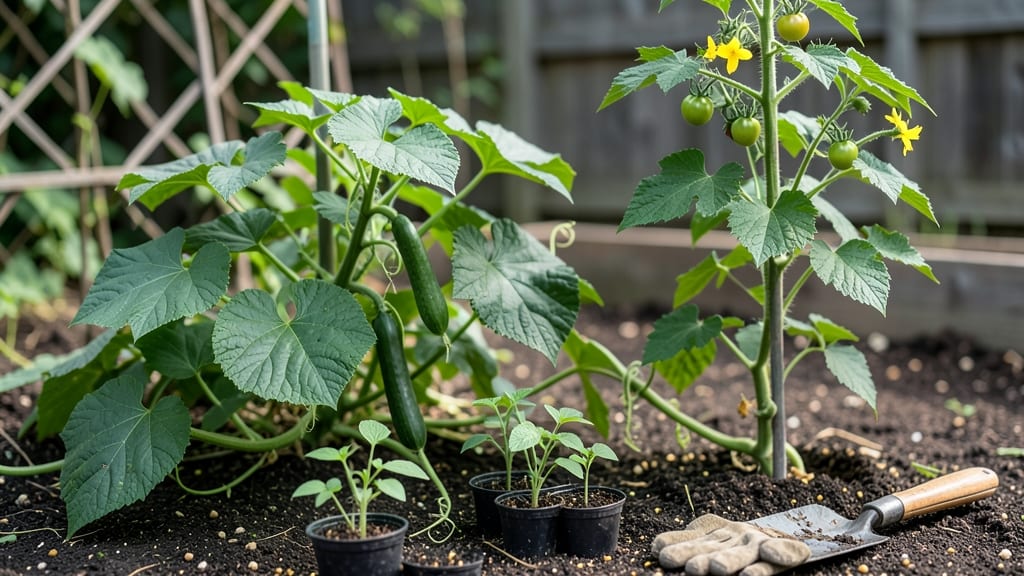
Planting tomatoes next to cucumbers isn’t just smart gardening—it’s a harvest-booster duo that saves space and repels pests. 🌱 I’ve seen firsthand how this pairing can double your yield when done right, especially in small gardens where every square foot counts.
The secret lies in their shared needs and natural chemistry: tomatoes love the shade cucumbers provide, while cucumbers thrive with the tomatoes’ deep roots breaking up compacted soil.
You’ll need a sunny spot with at least 6 hours of light daily, well-draining soil mixed with compost, and a trellis or cage system to keep vines off the ground.
Spacing matters too—plant tomatoes 18-24 inches apart and cucumbers 12-18 inches away, giving them room to sprawl without competing for nutrients. The real magic happens when you water consistently at the base (not the leaves) to prevent fungal diseases that plague both plants.
By mid-summer, you’ll notice fewer aphids and squash bugs thanks to the tomatoes’ strong scent and the cucumbers’ silvery leaves acting as a natural deterrent. The tomatoes stay cooler in the shade, producing juicier, sweeter fruit, while cucumbers grow straighter and faster with the support of nearby stakes.
It’s a symbiotic relationship that turns two average crops into a neighborhood bragging-rights garden.
This combo works best in USDA zones 3-10, but even in cooler climates, a black plastic mulch or row cover extends the season. Just watch for overcrowding—if vines touch, diseases spread faster.
Start small with one tomato plant and two cucumbers to test your spot before scaling up. Trust me, your taste buds (and your neighbors) will thank you.
📚 In This Guide
- What you need
- Instructions
- Tips and common mistakes
- Wrapping up and next steps
What you need
- ● Tomato plants: 2–4 healthy seedlings or seeds (choose disease-resistant varieties like Cherry or Roma for best results).
- ● Cucumber plants: 2–3 vining varieties (e.g., Straight Eight or Marketmore) or bush types (like Bush Champion).
- ● Well-draining potting mix: 10–15 gallons (or enough to fill 2–3 large containers if gardening in pots).
- ● Compost or organic fertilizer: 5–10 lbs (balanced 10-10-10 or tomato/cucumber-specific blend).
- ● Mulch: Straw, wood chips, or shredded leaves (2–3 inches thick to retain moisture).
- ● Garden trowel or small shovel.
- ● Pruning shears (for trimming excess growth).
- ● Watering can or hose with a gentle spray nozzle.
- ● Garden gloves (to protect your hands from thorns and soil).
- ○ Support structures: Optional but helpful! Trellis or tomato cages (for tomatoes).
- ● Cucumber trellis or sturdy stakes (to encourage upward growth).
- ● A sunny spot: 6–8+ hours of direct sunlight daily.
- ● Space: 18–24 inches apart between tomato and cucumber plants (or rows).
- ● Soil pH: 6.0–7.0 (test your soil or amend with lime/sulfur if needed).
- ● Water source: Consistent access to water (drip irrigation or soaker hoses work best).
How to plant tomatoes next to cucumbers for maximum yield
This classic companion pairing boosts flavor, deters pests, and saves space—here's how to do it right.
🌱 Step 1: Select Compatible Varieties for Your Climate
Start with determinate tomato varieties (like 'Roma' or 'Celebrity') that grow in compact bushes—these won't overwhelm cucumbers. Avoid indeterminate types that sprawl. For cucumbers, choose bush varieties ('Bush Champion' or 'Spacemaster') or vining types ('Straight Eight' or 'Marketmore') if you have trellis space. Both plants thrive in warm soil (60-65°F) and need full sun (6-8 hours daily).
I always plant tomatoes first (2-3 weeks before cucumbers) since they take longer to establish. Space tomato plants 18-24 inches apart in rows 3 feet apart. This gives cucumbers room to sprawl or climb later without shading the tomatoes. If using a trellis for cucumbers, install it 3-4 feet tall near the tomato plants for vertical growth.
🪴 Step 2: Prepare the Soil for Both Plants
Tomatoes and cucumbers share similar soil needs: loamy, well-draining soil with pH 6.0-6.8. Work in 2-3 inches of compost and a balanced fertilizer (10-10-10) at planting time. I avoid fresh manure—it can burn roots and attract pests. For containers, use sterile potting mix with perlite to prevent compaction.
Tomatoes need slightly more phosphorus for root development, so add 1 tablespoon of bone meal to each planting hole. Cucumbers benefit from potassium-rich fertilizer (like wood ash) to boost fruit production. Mix these amendments into the top 6 inches of soil where roots will establish. Water deeply before planting to settle the soil and remove air pockets.
☀️ Step 3: Plant and Train for Optimal Growth
Set tomato plants deeper than their nursery pots—bury ⅓ of the stem to encourage strong root growth. Cucumbers can be planted 6-12 inches apart in rows 3 feet apart or trained up a trellis 12-18 inches from the tomato plants. If using a trellis, weave cucumber vines through it as they grow to keep fruits off the ground and improve air circulation.
Here's the thing—prune tomato suckers (side shoots) to direct energy into fruit production, but leave cucumber vines intact to maximize leaf coverage (which improves photosynthesis). Mulch both plants with 2-3 inches of straw to retain moisture and suppress weeds. Watch for yellowing leaves—this signals overwatering or nutrient deficiency, not just heat stress.
💧 Step 4: Water and Fertilize for Companion Benefits
Both plants need 1-1.5 inches of water weekly, but cucumbers are thirstier. I water at the base of plants in the morning to prevent fungal diseases. Drip irrigation works best—it delivers water directly to roots without wetting leaves. Avoid overhead sprinklers, which can spread mildew between the two plants.
Fertilize tomatoes with a low-nitrogen formula (5-10-10) every 3-4 weeks to support fruiting. Cucumbers respond well to compost tea or fish emulsion for a potassium boost. The key is balanced feeding—too much nitrogen makes both plants leafy but fruitless. You'll know you're on track when tomatoes set small green fruits and cucumbers produce flowers within 4-6 weeks of planting.
✂️ Step 5: Prune and Harvest for Continuous Production
Prune tomato plants weekly to remove suckers and diseased leaves. For cucumbers, harvest fruits when they're 6-8 inches long to encourage more production. I always pick cucumbers every 2-3 days—overripe fruits attract pests and reduce yields. If cucumbers start climbing onto tomato plants, gently redirect them back to the trellis to avoid shading.
This companion pairing works because tomatoes repel spider mites (a cucumber enemy) while cucumbers deter aphids (a tomato pest). By mid-season, you'll see larger, sweeter tomatoes and more cucumbers per vine than if grown separately. Just watch for hornworms—they love both plants! Handpick them early in the morning when they're sluggish.
Tips & tricks for perfect tomato and cucumber companion planting
These garden secrets will help you maximize your harvest while keeping pests at bay—no fancy equipment required.
Variety Selection Matters: When choosing determinate tomato varieties like 'Roma' or 'Celebrity', look for compact plants that stay within their space. For cucumbers, bush varieties ('Bush Champion') are ideal for containers or small gardens, while vining types ('Straight Eight') need that 3-4 foot trellis near your tomatoes. The key is matching growth habits—tall indeterminate tomatoes will shade cucumbers, while sprawling cucumbers can smother tomato plants. I've seen firsthand how this balance leads to healthier plants and bigger yields.
Soil Prep is Non-Negotiable: That 2-3 inches of compost and balanced 10-10-10 fertilizer in Step 2 creates the perfect foundation, but here's what nobody tells you—test your soil pH first. Most garden centers offer cheap test kits. If your pH is below 6.0, add lime; above 6.8, use sulfur. Tomatoes need that phosphorus boost from bone meal, but cucumbers will actually suffer if you overdo it—stick to the 1 tablespoon per hole. For containers, I swear by adding perlite to prevent compaction, which can strangle those cucumber roots.
Planting Timing is Critical: The 2-3 week head start for tomatoes in Step 1 isn't just about giving them time to establish—it's about letting them develop a strong root system before cucumbers arrive. I've planted them simultaneously and watched cucumbers outcompete tomatoes for nutrients. Also, bury those tomato stems ⅓ deep as instructed, but make sure you're planting in warm soil (60-65°F)—cold soil slows root growth and makes plants vulnerable to disease. A soil thermometer is worth its weight in gold for this.
Pest Prevention Strategy: While the instructions mention tomatoes repelling spider mites and cucumbers deterring aphids, here's the real game-changer: plant a few basil plants between your tomato and cucumber rows. Basil acts as a natural pest repellent AND improves the flavor of both fruits. I've seen gardens where this simple addition cut down on pesticide use by 70%. Plus, you get fresh basil for cooking—it's a win-win. Just be sure to harvest it regularly to encourage new growth.
Pro Tips for Plant Tomatoes Next To Cucumbers
- These garden secrets will help you maximize your harvest while keeping pests at bay—no fancy equipment required.
- Variety Selection Matters: When choosing determinate tomato varieties like 'Roma' or 'Celebrity', look for compact plants that stay within their space.
- Soil Prep is Non-Negotiable: That 2-3 inches of compost and balanced 10-10-10 fertilizer in Step 2 creates the perfect foundation, but here's what nobody tells you—test your soil pH first.
Frequently asked questions
Why do tomatoes and cucumbers grow well together?
Tomatoes and cucumbers are companion plants because they share similar growing conditions (sun, water, and soil) while offering mutual benefits. Tomatoes deter pests like aphids that attack cucumbers, while cucumbers’ sprawling vines provide shade, keeping tomato soil cooler and reducing disease risks like blight. Plus, their vertical space-saving styles make them perfect neighbors!
When is the best time to plant tomatoes and cucumbers together?
Start by planting cucumbers 1–2 weeks after your last frost date (they’re frost-sensitive), then add tomato seedlings 1–2 weeks later. This staggered approach ensures cucumbers establish roots while tomatoes warm up. For cooler climates, opt for early-maturing tomato varieties (like ‘Early Girl’) to align harvests and maximize space efficiency.
What if I don’t have space for both? What are good alternatives?
If space is tight, try these tomato-friendly swaps for cucumbers:
- Peppers (bell or hot): Repel pests and thrive in similar conditions.
- Basil: Boosts tomato flavor and deters mosquitoes.
- Marigolds: Natural pest repellents that add color.
- Squash or zucchini: Provide ground cover (but watch for disease spread).
What pests or diseases should I watch for when growing them together?
Keep an eye out for:
- Cucumber beetles: Chew tomato leaves and spread bacterial wilt. Handpick or use row covers early.
- Blight (fungal): Overhead watering or crowded plants increase risk. Space plants 18–24 inches apart and water at the base.
- Powdery mildew: White fungus on cucumber leaves? Improve airflow with trellises and avoid wetting foliage.
Do tomatoes and cucumbers compete for nutrients?
Not if you feed them right! Both are heavy feeders, so enrich soil with compost before planting. Use a balanced fertilizer (10-10-10) at planting, then switch to a low-nitrogen, high-potassium blend (like 5-10-10) when fruits form. Mulch with straw to retain moisture and reduce competition—your plants will thank you with bigger yields!
Wrapping up and next steps
Planting tomatoes next to cucumbers isn’t just a gardening trick—it’s a smart strategy to boost your harvest while keeping pests at bay! 🌱 By leveraging their natural companionship, you’ll enjoy healthier plants, fewer weeds, and a thriving garden ecosystem. Ready to put this to work?
Your Next Step: Start Small, Scale Up!
Begin with a few tomato-cucumber pairs in a sunny spot, monitor their progress, and watch your confidence (and yields!) grow. Once you’ve mastered this duo, explore other companion plants like basil or marigolds to create an even more resilient garden. Happy planting—your future harvest is waiting! 🌿✨