
Planting
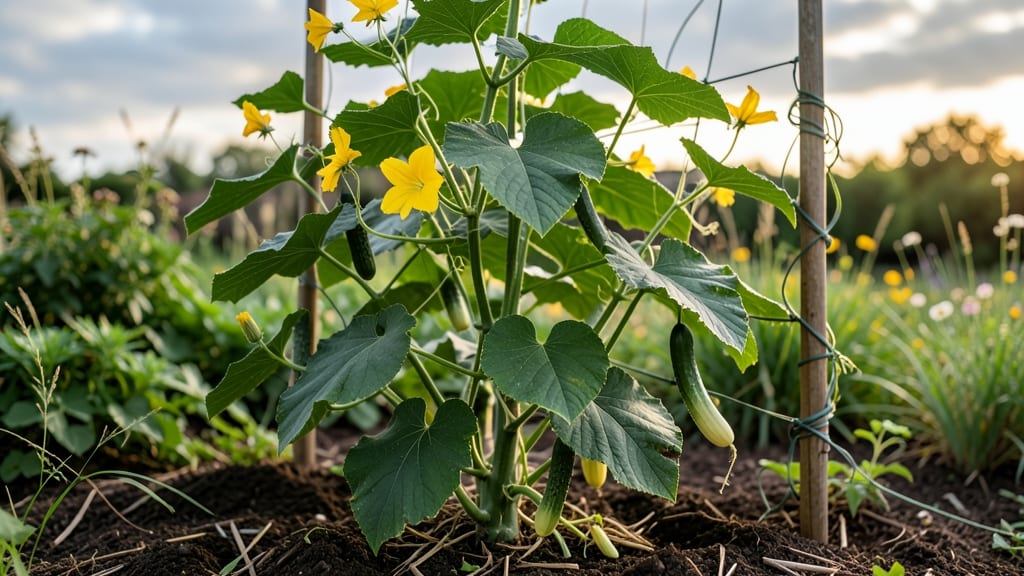
Growing a huge cucumber plant isn't luck—it's strategy. 🌿 I've turned my 5-gallon containers into cucumber powerhouses by mastering the right mix of sunlight, water, and support. The key? Trellising that keeps vines climbing instead of sprawling, and soil that feeds them like a gourmet meal.
Start with well-draining soil mixed with compost, and choose bush varieties like 'Bush Champion' or vining types like 'Straight Eight' for maximum size. Give them 6-8 hours of sunlight daily and water at the base—not the leaves—to avoid disease.
A sturdy trellis or cage lets vines grow 10+ feet tall without taking over your garden.
By mid-summer, you'll be harvesting 10-15 pounds of cucumbers from a single plant. The secret? Prune aggressively—remove suckers (those little shoots between stems) to redirect energy into fruit production. And don't forget to fertilize every 2 weeks with a balanced organic feed.
Even in small spaces, this method works—whether you're growing in containers, raised beds, or the ground. The payoff? A vine so productive, you'll wonder why you ever bought store-bought cucumbers. Ready to grow like a pro?
📚 In This Guide
- What you need
- Instructions
- Tips and common mistakes
- Wrapping up and next steps
What you need
- ● Seeds or Seedlings: Cucumber seeds (varieties like ‘Straight Eight,’ ‘Marketmore,’ or ‘Armenian’ for vines) – 5-10 seeds (or 2-3 seedlings if transplanting).
- ○ Optional: Organic seed starter (e.g., coconut coir or peat pellets) for early germination.
- ● Growing Medium: Well-draining potting mix (5-10 gallons per container) or fertile garden soil (amend with compost).
- ○ Optional: Perlite or vermiculite (10-20% mix) for aeration in containers.
- ● Containers (if not gardening in-ground): Large pots (5+ gallons each) or fabric grow bags (10-15 gallons for sprawling vines).
- ● Drainage holes (critical!) and saucers to catch runoff.
- ● Support Structures: Trellis, cage, or sturdy stakes (6+ feet tall) to guide vines upward.
- ● Twine or soft plant ties (for securing vines).
- ● Fertilizer: Balanced organic fertilizer (10-10-10 or 5-5-5) or compost tea for nutrient boost.
- ○ Optional: Epsom salt (1 tbsp/gallon of water) for magnesium (every 2-3 weeks).
- ● Watering Supplies: Watering can or drip irrigation system (for consistent moisture).
- ● Mulch (straw or shredded leaves) to retain soil moisture.
- ● Soil pH test kit (ideal pH: 6.0–6.8).
- ● Row covers or shade cloth (for early-season protection from pests/heat).
- ● Pruning shears (to manage vine growth and remove yellow leaves).
- ● Beneficial insects (ladybugs or lacewings) for natural pest control.
- ● Garden journal (to track progress and adjust care!).
How to grow a towering cucumber vine in any space
Here's the method I use to coax cucumbers into 6-10 foot giants—whether you've got a balcony or a backyard.
🌱 Step 1: Choose the Right Variety and Location
Start with bush or vining varieties rated for your climate zone—'Straight Eight' or 'Arkansas Little Leaf' are my go-tos for containers, while 'Diva' or 'Sweet Success' dominate in gardens. Cucumbers need full sun (6+ hours daily) and warm soil (70°F+) to thrive, so wait until nighttime temps stay above 55°F before planting.
I always check the seed packet for days to maturity—60-70 days for most varieties—and mark the planting date on my calendar. This ensures I harvest before the first frost. For containers, use 5-gallon pots or larger—smaller pots restrict root growth and stunt vine size. If planting in ground, space vines 3-6 feet apart to give them room to sprawl.
☀️ Step 2: Build a Support System Early
Cucumbers are heavy vines—a single plant can produce 10+ pounds of fruit—and without support, they’ll flop and rot. I install 5-6 foot tall trellises, cages, or sturdy stakes at planting time. For vines, use galvanized wire or strong twine to weave plants upward in a zigzag pattern—this prevents fruit from touching the ground and reduces disease risk.
If you’re growing in containers, a freestanding trellis with a wide base prevents tipping. I’ve seen cucumbers topple entire setups when vines reach 8 feet—secure the trellis to a wall or stake it deep into the soil. Watch for first tendrils (thin, curly growths) and gently guide them onto the support within 2-3 days of sprouting.
💧 Step 3: Water Deeply and Consistently
Cucumbers have shallow but extensive root systems, so they need 1-2 inches of water per week, delivered deeply rather than superficially. I water early in the morning to reduce fungal risks and let the soil dry slightly between waterings—consistently moist but not soggy is key. Overwatering leads to blossom-end rot in fruits, while underwatering causes bitter, small cucumbers.
Mulch around the base with 2-3 inches of straw or shredded leaves to retain moisture and keep roots cool. In containers, check soil moisture by sticking your finger 1-2 inches deep—if it feels dry, water thoroughly until it drains from the bottom. Avoid wetting leaves when watering, as this encourages powdery mildew, a common cucumber nemesis.
✂️ Step 4: Prune and Train for Maximum Growth
Pruning isn’t just about shaping—it’s about redirecting energy into fewer, larger fruits. For bush varieties, pinch off side shoots that form below the first 5-7 leaves to encourage upward growth. For vining types, trim excessive side branches to 12-18 inches long, leaving the main stem and 2-3 strong lateral branches to bear fruit.
Here’s the thing—I never prune more than 20% of the plant at once, or you’ll shock it into stress. Watch for yellowing leaves or stunted growth as signs you’ve over-pruned. Instead, focus on removing suckers (growths between the main stem and branches) and deadheading (snipping off spent flowers) to keep the plant’s energy focused on producing large, high-quality cucumbers.
🌿 Step 5: Fertilize and Monitor for Pests
Cucumbers are heavy feeders, so I start with a balanced fertilizer (10-10-10) at planting, then switch to a low-nitrogen, high-potassium formula (5-10-10) once flowers appear. Side-dress with compost or worm castings every 3-4 weeks to replenish nutrients without burning roots. Over-fertilizing with nitrogen leads to leafy growth at the expense of fruit—something I learned the hard way with a 12-foot vine that produced zero cucumbers.
Keep an eye out for cucumber beetles, aphids, and spider mites, which love cucumber leaves. I use neem oil spray as a preventative and row covers early in the season. If you spot holes in leaves or stunted growth, act fast—these pests can wipe out a plant in days. A strong spray of water in the early morning often knocks off aphids before they cause damage.
Tips & tricks for growing towering cucumber vines
Real talk: The difference between a 3-foot vine and a 10-foot monster comes down to these strategic moves—learned through trial, error, and a few toppled trellises. Here's what nobody tells you about pushing cucumbers to their limits.
Variety Selection Matters: Those 60-70 day maturity ratings aren't just numbers—they're your harvest window. For containers, 'Straight Eight' and 'Arkansas Little Leaf' are my go-to varieties because they handle confined spaces better than their sprawling cousins. I've seen 'Diva' and 'Sweet Success' in gardens reach 10 feet when given proper support and pruning—these are the heavy hitters for serious growth. The key is matching variety to your space and climate zone.
Support System Engineering: That 5-6 foot tall trellis isn't just decoration—it's the foundation of your giant cucumber dreams. I always install mine at planting time because cucumbers grow fast, and you don't want to be playing catch-up when vines start toppling. For containers, I triple-check the trellis base is wide enough to prevent tipping—nothing worse than watching your 8-foot vine take down your patio furniture. Use galvanized wire or strong twine to weave vines in that zigzag pattern, which creates natural air circulation and prevents fruit rot.
Watering Wisdom: The 1-2 inches per week guideline is your baseline, but timing is everything. I water early in the morning so the leaves have all day to dry, which drastically reduces powdery mildew risk. Here's my secret: I let the top inch of soil dry between waterings—this prevents blossom-end rot while keeping roots happy. For containers, I always check moisture by sticking my finger 1-2 inches deep; if it's dry, I water until it drains from the bottom. That's the only way to ensure those roots get the consistent moisture they crave.
Pruning Strategy: This is where most people mess up. When pruning vining types, I never trim more than 20% of the plant at once—that's what caused my 12-foot vine to produce nothing but leaves. Focus on removing those suckers (growths between main stem and branches) and deadheading spent flowers. For bush varieties, pinch off side shoots below the first 5-7 leaves to force energy upward. I've seen vines reach 9 feet when properly trained—it's all about redirecting that growth energy where you want it.
Pro Tips for Huge Cucumber Plant
- Real talk: The difference between a 3-foot vine and a 10-foot monster comes down to these strategic moves—learned through trial, error, and a few toppled trellises.
- Variety Selection Matters: Those 60-70 day maturity ratings aren't just numbers—they're your harvest window.
- Support System Engineering: That 5-6 foot tall trellis isn't just decoration—it's the foundation of your giant cucumber dreams.
Frequently asked questions
Got questions about growing a huge cucumber plant? You’re not alone! Here are answers to the most common queries—from space needs to troubleshooting—so you can crush your cucumber-growing goals with confidence.
How much space does a huge cucumber plant really need?
A single cucumber vine can sprawl 10–20 feet if left unchecked! In containers, use a 5-gallon pot or larger (minimum 12" deep) and train vines with a trellis. In gardens, allocate 3–4 feet per plant or plant vertically to save space. Pro tip: Prune aggressively to encourage upward growth and prevent overcrowding.
When is the best time to plant cucumbers for maximum growth?
Cucumbers thrive in warm soil (60–90°F), so plant after the last frost when nighttime temps stay above 55°F. For containers, start seeds 2–3 weeks indoors before transplanting. In warmer climates, spring or early summer is ideal; cooler zones may need to wait until late May or June. Check your zone’s frost dates for precision!
Can I grow cucumbers in containers, or do I need a garden?
Containers work great for cucumbers—just choose large pots (5+ gallons) with drainage holes and a lightweight potting mix. Use trellises or cages to support vines and harvest more efficiently. Dwarf or bush varieties (like ‘Bush Champion’) are perfect for small spaces. Need help? Pick a sunny spot (6+ hours of light) and fertilize weekly with compost tea.
Why is my cucumber plant wilting or turning yellow?
Wilting or yellowing leaves usually signal underwatering, overwatering, or nutrient issues. Check soil moisture—it should stay consistently damp but not soggy. Yellowing lower leaves? Likely overwatering or poor drainage. Brown edges? Underwatering or heat stress. Boost growth with a balanced fertilizer (10-10-10) and mulch to retain moisture. Still struggling? Inspect for pests (like aphids) or fungal diseases (powdery mildew).
What’s the fastest way to get a huge cucumber harvest?
For rapid growth and bigger yields, focus on:
- Sunlight: Place plants in full sun (6+ hours daily).
- Watering: Keep soil evenly moist (1–2 inches per week).
- Pollination: Gently shake vines or hand-pollinate flowers with a paintbrush.
- Pruning: Remove suckers (side shoots) to direct energy to fruit.
- Fertilizer: Use compost or fish emulsion every 2–3 weeks.
Wrapping up and next steps
Growing a huge cucumber plant is totally within reach—whether in a cozy container or sprawling garden! With the right support, soil, and care, you’ll soon be harvesting crisp, vine-ripened cucumbers. 🌱 Don’t let small spaces hold you back; even a balcony can yield a bountiful harvest.
Ready to take the next step? Start small: pick your favorite variety, gather supplies, and plant with confidence. Watch your green thumb grow as you enjoy fresh, homegrown cucumbers all season long!