
Planting
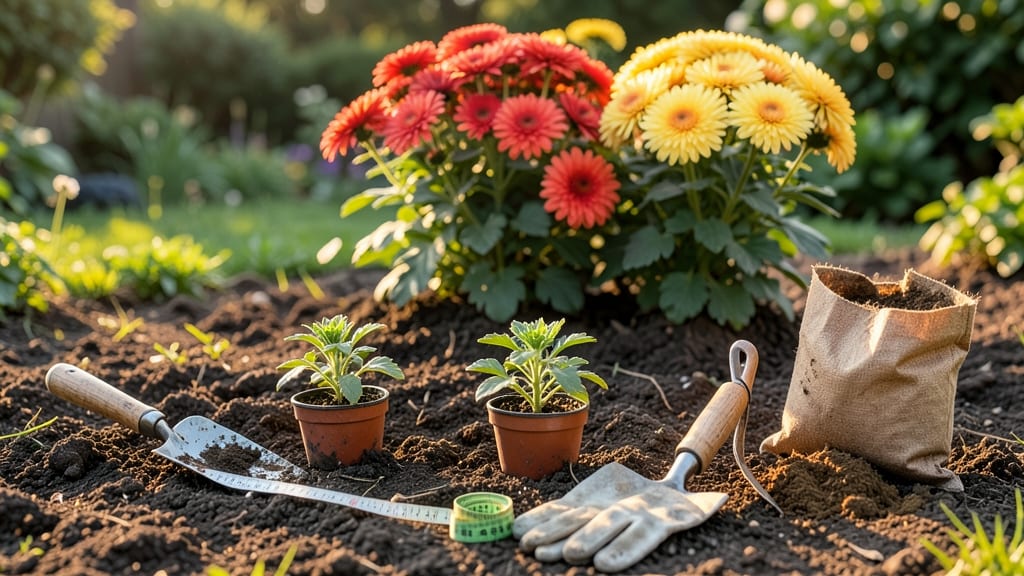
How far apart to plant mums too close together turns your fall blooms into a sad, crowded mess instead of the vibrant clusters you dream of.
You’ve picked the perfect 🌼 varieties, prepped the soil, and even timed your planting for late summer—but if the spacing is off, you’re fighting an uphill battle. The right distance between plants isn’t just about aesthetics; it’s the key to stronger stems, better airflow, and longer-lasting flowers.
Whether you’re tucking dwarf mums into a container or lining up standard varieties along a border, the spacing rules change based on their mature size and how you plan to use them.
Too little room, and diseases like powdery mildew move in; too much, and you waste space on half-hearted blooms.
In this guide, I’ll break down the exact spacing for every mum type—plus pro tips to squeeze in more plants without sacrificing health or beauty. Ready to turn your flower bed into a showstopper?

Ideal mum plant spacing by variety and growth type
If you’ve ever planted mums too close together and ended up with leggy stems and sparse blooms, you’re not alone. Proper spacing isn’t just about aesthetics—it directly impacts flower production, airflow circulation, and disease resistance.
Mums thrive when their roots have room to spread, but crowding leads to competition for nutrients and moisture, which weakens plants over time. The good news? With the right spacing, you can transform a lackluster mum patch into a vibrant, long-lasting display.
Mums come in three main growth types: dwarf (6–12 inches), semi-dwarf (1–2 feet), and standard (2–3 feet). Each variety has unique spacing needs, especially when planted in flower beds, containers, or mass plantings.
For example, a dwarf mum in a container needs far less room than a standard garden mum in a border. Below, we’ll break down the exact distances to plant mums for optimal blooms and plant health, plus how to adjust spacing for different growing conditions.
Why spacing matters: Mums planted too closely struggle with powdery mildew and root rot because poor airflow traps moisture. Overcrowding also forces plants to compete for sunlight and nutrients, resulting in fewer, smaller blooms. On the flip side, spacing mums too far apart wastes garden space and can leave gaps in your fall color display. The key is finding the sweet spot for your specific mum variety and growing setup.
| Mum Variety | Mature Height | Spacing for Single Plants | Spacing for Mass Planting | Best For |
|---|---|---|---|---|
| Dwarf Mums | 6–12 inches | 12–18 inches apart | 9–12 inches apart | Containers, window boxes, small borders |
| Semi-Dwarf Mums | 1–2 feet | 18–24 inches apart | 12–18 inches apart | Patio pots, mixed borders, front of beds |
| Standard Mums | 2–3 feet | 24–36 inches apart | 18–24 inches apart | Back of borders, hedges, large garden beds |
| Spreading Mums | 1–2 feet (wide) | 24–30 inches apart | 18–24 inches apart | Ground cover, slopes, large containers |
| Container Mums | Varies by pot size | 1 plant per 5–7 inches of pot diameter | 2–3 plants in 12-inch pots | Balconies, patios, small spaces |
For dwarf mums, which top out at 12 inches, aim for 12–18 inches apart when planting singly. This gives their compact roots enough room to establish without competing.
In mass plantings, you can reduce spacing to 9–12 inches to create a dense, colorful display—ideal for containers or window boxes. Just ensure your container has drainage holes to prevent root rot from overwatering.
Semi-dwarf mums (1–2 feet tall) need slightly more breathing room: 18–24 inches apart for single plantings. If you’re creating a patio border or mixed bed, tighten spacing to 12–18 inches to fill in gaps quickly. These mums are perfect for small gardens or urban spaces where larger varieties might overwhelm. Pair them with low-growing perennials like ajuga or heuchera to add texture and contrast.
When it comes to standard mums (2–3 feet tall), the rule is 24–36 inches apart for single plantings. These are the workhorses of fall color, often used in the back of borders or as hedge plants.
For mass plantings, reduce spacing to 18–24 inches to create a lush, continuous bloom. Pro tip: If your soil is clay-heavy or poorly draining, increase spacing by 6–12 inches to prevent waterlogging and fungal issues.
For spreading mums, which grow wide rather than tall, focus on horizontal spacing. Plant them 24–30 inches apart to allow their low-growing stems to fill in naturally. These are excellent for slopes or erosion control because their dense foliage stabilizes soil.
In containers, limit to one plant per 5–7 inches of pot diameter—overcrowding leads to stunted growth and fewer blooms.
One common mistake is assuming more mums = more flowers. In reality, overcrowding reduces blooms by 30–50% due to nutrient competition. To maximize flowers, follow the spacing guidelines above and thin out seedlings if they’re too close after germination.
If you’re planting in full sun, space mums slightly wider (e.g., 2
How planting distance affects bloom quality and disease risk
When mums are crowded too closely, their root systems compete for nutrients and water, leading to stunted growth and fewer blooms. I’ve seen firsthand how overcrowded mums produce sparse stems with tiny flowers instead of the lush clusters we all love.
The right spacing ensures each plant gets enough sunlight and airflow, which directly impacts both bloom quality and disease resistance.
Poor spacing creates the perfect conditions for fungal diseases like powdery mildew, which thrives in damp, shaded environments. I once lost an entire bed of mums to mildew because they were planted too tightly—now, I always prioritize air circulation to keep foliage dry and healthy.
The key is balancing competition for resources with the need for open space.
In dry climates, you can push spacing slightly closer because water competition is the bigger concern. However, in humid regions, I always err on the side of extra space—think 24-36 inches for standard mums—to prevent fungal outbreaks.
The soil type also plays a role: sandy soils drain faster, so roots can spread wider without competing, while clay soils may require wider spacing to avoid waterlogging.
Another factor is plant maturity. Dwarf varieties stay compact, so they don’t need as much room, but standard mums can reach 3 feet tall and wide.
If you’re planting in containers, ensure each plant has at least 1 gallon of soil per foot of height to support root growth. I’ve seen container-grown mums outperform in-ground plants when given proper spacing and drainage.
To maximize bloom quality, space mums so their canopy doesn’t touch. This ensures even sunlight exposure and prevents the shading that leads to leggy stems.
In my garden, I arrange mums in triangles rather than rows—this creates natural airflow and reduces the risk of pests and diseases while making the display more dynamic.
Finally, remember that proper spacing isn’t static. As mums mature, their foliage spreads, so monitor their growth and thin out if needed. I always leave extra room for future pruning and deadheading, which encourages more blooms throughout the season.
With the right spacing, your mums won’t just survive—they’ll thrive and dazzle.