
Planting
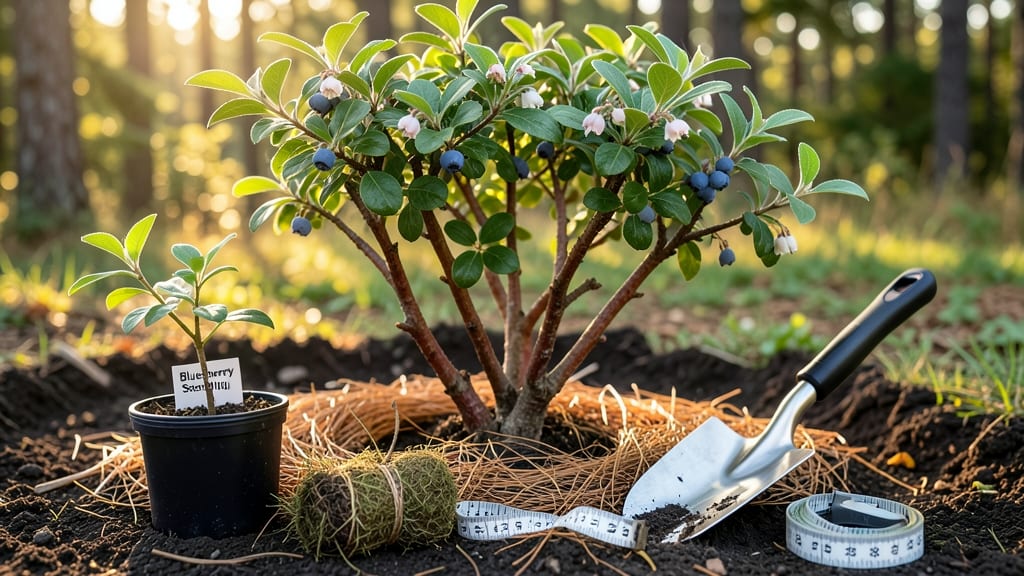
Planting blueberries at the correct depth is the key to unlocking strong roots, faster fruiting, and bigger harvests—yet most gardeners bury them too deep or leave them exposed.
Picture this: You’ve spent months waiting for your 🫐 blueberry bushes to grow, only to watch them struggle because the roots are smothered or the crown sits too high. That’s why getting the depth right matters more than you think.
In Zone 6a, where spring planting kicks off in March, the ideal depth depends on soil type, root flare visibility, and whether you’re planting bare-root or container-grown bushes. Too shallow, and roots dry out; too deep, and they suffocate.
Below, I’ll walk you through the exact soil line secrets—from measuring the root flare to adjusting for clay or sandy soil—so your bushes thrive from day one.

The correct blueberry planting depth by root flare and soil type
Getting the planting depth right for your blueberry bushes is the difference between a thriving shrub and one that struggles to survive. The root flare—that swollen area where roots meet the stem—must sit just above soil level.
This ensures proper airflow and prevents root suffocation or exposure, both of which can kill your plant before it even starts producing fruit.
Most gardeners mistakenly bury the root flare too deep, thinking it needs extra support. But blueberries hate wet roots, and burying them too low creates a suffocating environment. Conversely, planting too shallow leaves roots vulnerable to drying out or temperature swings.
The key lies in balancing soil type, container vs. in-ground planting, and the visibility of the root flare.
Here’s the science-backed breakdown of how deep to plant blueberries based on your growing conditions:
| Planting Scenario | Root Flare Position | Soil Type Adjustment | Depth Guideline |
|---|---|---|---|
| In-Ground (Clay Soil) | Visible above soil line | Loosen soil 12" deep | 1–2 inches below flare |
| In-Ground (Sandy Soil) | Visible above soil line | Amend with peat moss | 1 inch below flare |
| Container (5+ Gallons) | Flush with rim | Use acidic potting mix | Root flare at pot edge |
| Container (<5 Gallons) | Slightly above rim | Add perlite for drainage | 1/2 inch below rim |
| Sloped or Rocky Soil | Visible above grade | Build soil mound | Root flare at highest point |
For in-ground planting, dig a hole twice as wide as the root ball but only as deep as needed to accommodate the roots without bending them. The root flare should sit 1–2 inches above soil level.
If your soil is clay-heavy, loosen the bottom of the hole to improve drainage. In sandy soil, mix in peat moss or compost to retain moisture and nutrients.
Container planting requires extra attention because roots can’t spread freely. Use a pot with drainage holes and fill it with an acidic potting mix (pH 4.5–5.5). Place the root flare flush with the pot’s rim for containers 5+ gallons.
In smaller pots, position it ½ inch below the rim to prevent root exposure. Always use a well-draining mix to avoid waterlogging.
After planting, water deeply to settle the soil and eliminate air pockets. The top inch of soil should remain slightly moist but never soggy. Mulch around the base with pine needles or wood chips to maintain soil acidity and retain moisture.
Avoid piling mulch against the stem, as this can cause rot.
One of the biggest mistakes is ignoring the root flare entirely. If you bury it too deep, roots suffocate and the plant may develop stem rot. If planted too shallow, roots dry out, leading to stunted growth.
Always check the flare’s position before backfilling soil. A quick trick: Use a stake or marker to note the flare’s original position before planting.
Blueberries thrive when their roots are cool and moist but never waterlogged. Adjust your planting depth based on your soil type and container size, and always prioritize the visibility of the root flare.
With the right depth, your bushes will establish faster, produce more fruit, and live longer—giving you years of delicious harvests. 🫐
5 Common mistakes that kill blueberry bushes (and how to avoid them)
Blueberry bushes are surprisingly delicate when it comes to planting depth—get it wrong, and you risk stunted growth, root rot, or even plant death. The most critical mistake? Ignoring the root flare, that swollen area where roots meet the stem.
Planting too deep buries this junction, suffocating roots, while planting too shallow exposes them to drying winds and extreme temperatures.
I’ve seen gardeners bury blueberry plants up to their first set of leaves, thinking "more soil equals better support." Wrong! This smothers the roots and triggers anaerobic conditions, where roots suffocate from lack of oxygen.
The fix? Always plant with the root flare slightly above soil level—never deeper than 1 inch below the surface.
⚠️ WRONG PLANTING DEPTH = ROOT DISASTER
Correct depth: Root flare 1 inch above soil (never buried).
Sandy soil: Plant 1–2 inches deeper (drains faster).
Clay soil: Plant 1 inch shallower (prevents waterlogging).
💡 Pro Tip: Use a ruler to measure depth—eyeballing it leads to mistakes!
Another deadly error? Skipping soil amendments for acid-loving blueberries. Many gardeners assume their soil is naturally acidic, but most standard garden soil tests at pH 6.5–7.5—far too alkaline for blueberries. Without peat moss or sulfur amendments, your bushes will yellow, drop buds, and produce tiny, tasteless berries.
Test your soil first! Aim for pH 4.5–5.5 by mixing in 2–3 inches of pine fines or composted leaves at planting.
Overlooking drainage is the third silent killer. Blueberries hate "wet feet," yet many gardeners plant them in low spots where water pools. If your yard has heavy clay, raise beds or amend with coarse sand and perlite to create air pockets.
A simple perforated drain pipe buried beneath the root zone can save your bushes during heavy rains.
Environmental factors like over-mulching or using the wrong mulch can also strangle roots. A 3-inch layer of pine straw or wood chips is ideal, but pile it too high (6+ inches), and you’ll smother the plant.
Worse yet, some gardeners use grass clippings or fresh sawdust, which mat down and block oxygen. Stick to acidic, organic mulches like pine needles or shredded bark.
Finally, planting at the wrong time sets bushes up for failure. Blueberries need 6–8 weeks of warm soil to establish roots before winter. Planting in late spring (after May) gives them no time to harden off.
Instead, plant bare-root bushes in early spring (March–April) or container-grown plants in fall (September–October), ensuring roots have time to spread before dormancy.
Fix these mistakes now, and your blueberry bushes will thrive—producing juicy, abundant berries for years to come. 🫐