
Planting
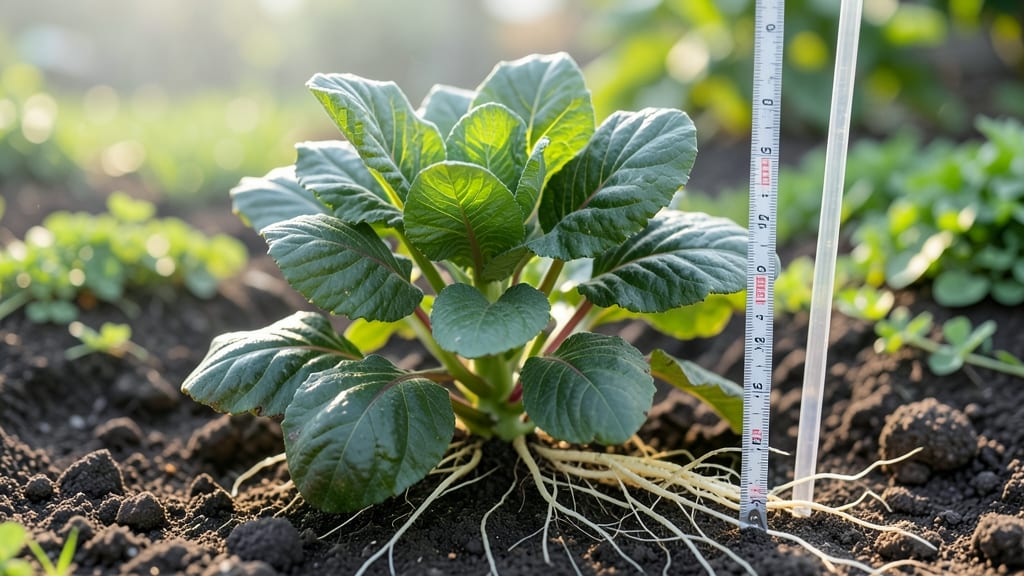
Mustard greens grow with roots that stay surprisingly shallow—typically just 6 to 12 inches deep—so planting them too deep can smother their fast growth and send them bolting before you get a harvest.
If you’ve ever watched your 🌱 mustard greens struggle to break the soil surface or bolt too soon, you know how critical planting depth really is. These greens thrive when their roots spread freely in loose, nutrient-rich soil, not when they’re buried under extra inches of dirt.
Here’s the perfect planting depth for mustard greens, how to prep your soil for shallow roots, and why container gardening can actually work better than in-ground beds for this quick-growing crop.
You’ll also learn how to adjust watering and harvesting practices for shallow roots—and how to fix common mistakes that stunt growth before it starts.


Mustard greens root depth explained: how deep should you plant them?
Mustard greens thrive because of their fast growth cycle, but their shallow root system demands precise planting. Unlike deep-rooted vegetables, mustard greens develop roots that typically reach 6-12 inches deep but spread horizontally.
This shallow structure means they absorb nutrients quickly—perfect for cut-and-come-again harvesting—but also makes them sensitive to planting depth.
The ideal planting depth for mustard greens is 0.5-1 inch below soil level. Planting too deep can suffocate seedlings, while planting too shallow exposes roots to drying out. Their roots need just enough soil coverage to anchor while staying close to the surface for rapid nutrient uptake.
Here’s why root depth matters: Shallow roots mean mustard greens rely on topsoil moisture and surface-level nutrients. In sandy soil, roots may spread wider but grow less deep, while clay soil can restrict root expansion if compacted. Understanding this helps you adjust watering and fertilization strategies.
🌱 Key Insight: Mustard greens prioritize horizontal root spread over depth, which is why they perform well in raised beds or containers with loose, nutrient-rich soil.
| Root Characteristic | Specification | Soil Impact |
|---|---|---|
| Depth Range | 6–12 inches | Shallow roots need loose topsoil |
| Planting Depth | 0.5–1 inch | Too deep = stunted growth |
| Root Spread | 12–18 inches wide | Wide spread needs spacing |
| Sandy Soil | Roots grow wider | Frequent watering needed |
| Clay Soil | Roots grow shallower | Aerate to prevent compaction |
When planting mustard greens, focus on soil texture and moisture retention. Sandy soils drain quickly, so mulch heavily to retain moisture for those shallow roots.
In clay soils, amending with compost improves aeration, preventing roots from suffocating. Always aim for well-draining soil—waterlogged conditions can rot roots before they establish.
Another critical factor is seed spacing. Mustard greens should be sown 1 inch apart in rows spaced 12–18 inches apart. This spacing prevents root competition, allowing each plant to develop its own robust root system. Overcrowding leads to stunted roots and poor nutrient uptake, slowing growth.
For container gardening, choose pots with at least 6 inches of depth. Mustard greens won’t need deeper containers, but they’ll benefit from wider pots to accommodate their horizontal root spread.
Ensure containers have drainage holes to prevent root rot—a common issue in shallow-rooted plants when water pools at the bottom.
Shallow roots also mean mustard greens are quick to respond to environmental changes. For example, they bolt (flower prematurely) when stressed by heat or drought. Maintaining consistent soil moisture is key—water deeply but infrequently to encourage roots to grow deeper naturally. A drip irrigation system works best for this.
Finally, avoid disturbing the roots after planting. Mustard greens have a fragile root structure, so transplant seedlings carefully, keeping the root ball intact. If you’re direct-sowing, thin seedlings to the recommended spacing without pulling—use scissors to snip unwanted plants at soil level to avoid damaging roots.
By understanding mustard greens’ shallow but wide root system, you can optimize planting depth, soil conditions, and watering to ensure a bountiful, fast harvest. Their roots may not go deep, but with the right care, they’ll spread efficiently and deliver flavorful greens in record time. 🌿
5 Critical factors that affect mustard greens root growth (and how to optimize them)
Mustard greens thrive when their shallow root systems get the right conditions. Unlike deep-rooted vegetables, they only need 6-12 inches of soil to establish strong roots—but that doesn’t mean you can plant them too shallow or too deep.
Let’s break down the five critical factors that determine whether your mustard greens will grow lush or struggle.
First, soil temperature plays a huge role. Mustard greens prefer cool soil (50-75°F). If your soil is too warm, roots may become stunted or the plant will bolt prematurely. I’ve found that planting in early spring or late summer gives the best results for root development in most climates.
Next, moisture balance is non-negotiable. Mustard greens hate soggy soil, but they also despise drought. Their roots need consistent moisture without waterlogging. Aim for 1 inch of water per week, adjusting for rain.
I use a moisture meter to check soil dampness—never let the top 1-2 inches dry out.
- 🌡️ Soil Temp: 50-75°F (cool soil prevents bolting)
- 💧 Moisture: 1 inch/week (consistent, not soggy)
- 🌿 Nutrients: N-P-K 10-10-10 (balanced fertilizer)
- 📏 Spacing: 1-2 inches apart (prevents root competition)
- 🪴 Container Depth: 8+ inches (roots need room to spread)
Nutrient density is another game-changer. Mustard greens are heavy feeders and need a steady supply of nitrogen for leafy growth. I mix compost or a balanced 10-10-10 fertilizer into the soil before planting. Side-dress with fish emulsion every 3-4 weeks for a nutrient boost without overloading the roots.
Don’t overlook spacing requirements. Crowding forces roots to compete for nutrients and space, leading to stunted growth. Plant seeds 1 inch apart in rows spaced 12-18 inches apart.
If you’re direct-sowing, thin seedlings to 2-3 inches apart once they’re 2 inches tall. I’ve seen mustard greens bolt when overcrowded—proper spacing prevents stress.
Finally, if you’re growing mustard greens in containers, depth matters. Their roots need at least 8 inches of soil to establish properly. I use 10-12 inch deep pots with drainage holes to prevent root binding.
Add a layer of compost at the bottom to encourage root growth downward instead of circling the pot.
By optimizing these five factors, you’ll give your mustard greens the best chance for strong roots, rapid growth, and a bountiful harvest.
Start with cool soil, keep moisture consistent, feed wisely, space properly, and choose the right containers—your greens will thank you with tender, crisp leaves in no time! 🌱