
Planting
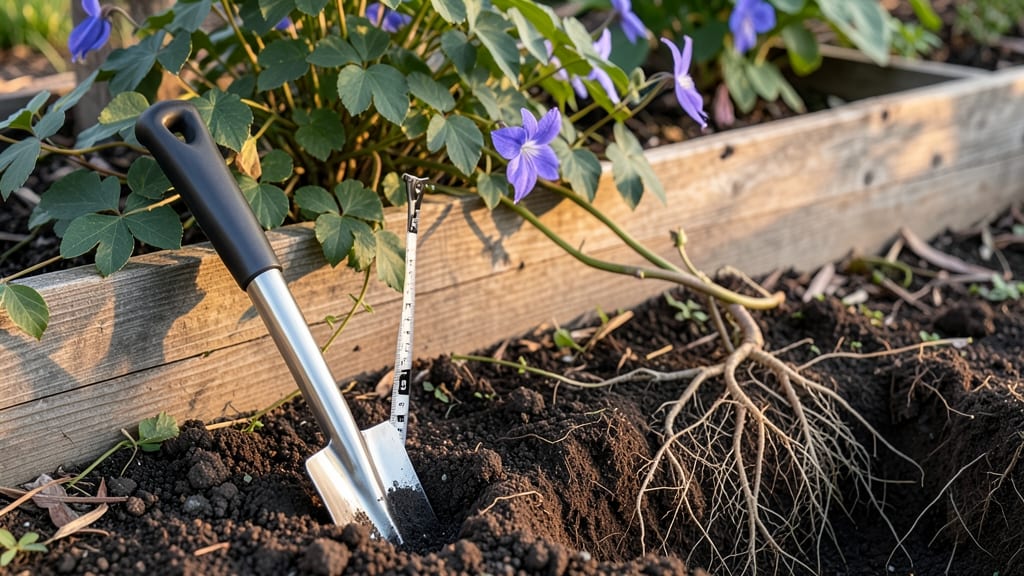
Clematis roots grow 12 to 36 inches deep, spreading far wider than most gardeners expect — and getting that depth right is the difference between a thriving vine and a struggling one.
Picture this: you’ve given your clematis 🌸 perfect sunlight, water it religiously, and still, the blooms are sparse or the leaves yellow. The issue might be underground, where roots need space to stretch and absorb nutrients efficiently.
Not all clematis varieties dig the same depth. Some, like the hardy 'Montana,' thrive with shallower roots, while others, like 'Jackmanii,' dive deep.
Soil type and drainage also play a role, which is why planting in a trench 4 to 6 inches deep is a game-changer for most gardeners in Zone 6a.
In this guide, I’ll break down exactly how deep your clematis needs to go, what happens when roots get cramped, and how to adjust your planting for healthier vines — no guesswork required.


How deep clematis roots grow: the science behind underground spread
Clematis roots are far more extensive than their delicate blooms suggest. These woody vines develop root systems that spread both deep and wide, with most varieties reaching 12 to 36 inches underground—though some varieties exceed this range.
Understanding this underground spread is key to providing the right growing conditions, as shallow planting or compacted soil can stunt vine growth and reduce flowering potential.
The depth and spread of clematis roots depend heavily on three pruning groups (Group 1-3) and seasonal growth patterns.
Group 1 varieties (early bloomers) often develop shallower but wider roots to access early spring moisture, while Group 3 varieties (late bloomers) may send roots deeper to reach summer water reserves. This variation explains why some clematis thrive in containers while others demand in-ground planting.
Here’s how root depth directly impacts your vine’s health: deeper roots access nutrient-rich subsoil, while extensive lateral roots improve water absorption during drought. However, poor drainage or rocky soil can force roots to grow unevenly, leading to weak stems and fewer blooms.
Let’s break down the science behind these underground patterns.
🌱 SUMMARY-TABLE: CLEMATIS ROOT DEPTH BY VARIETY GROUP
| Group | Root Depth | Lateral Spread | Best Soil Type | Key Notes |
|---|---|---|---|---|
| Group 1 | 12–24" | 2–4 ft wide | Well-draining, loamy | Early bloomers; shallow but extensive |
| Group 2 | 18–30" | 3–5 ft wide | Moist but not waterlogged | Mid-season bloomers; balanced depth |
| Group 3 | 24–36+" | 4–6 ft wide | Deep, fertile soil | Late bloomers; deep water access |
| Container Varieties | 12–18" | 1–2 ft wide | Fast-draining mix | Shallow roots; needs frequent watering |
Seasonal growth further influences root depth. In spring, clematis roots focus on lateral expansion to establish a wide network for early blooms. By summer, roots grow deeper to access moisture reserves, while fall sees minimal growth as the plant prepares for dormancy.
This cyclical pattern explains why overwatering in summer can lead to root rot—deep roots need time to dry slightly between waterings.
Soil composition plays a critical role in root development. Clay-heavy soils can restrict root spread, forcing roots to grow shallower and more horizontally, while sandy soils encourage deeper penetration but may lack nutrients.
Amending your soil with compost or organic matter creates an ideal balance, helping roots reach their full potential depth. Aim for a loamy texture with good aeration to support both vertical and horizontal growth.
One common misconception is that clematis roots grow only as deep as the plant’s height. In reality, root depth often exceeds vine height—some mature clematis can have roots extending up to 50% deeper than their aboveground growth.
This is why planting too shallow (e.g., burying the crown too close to the surface) leads to weak stems and poor flowering. Always follow the 4-6 inch trench rule for optimal root establishment.
For container-grown clematis, root depth is naturally limited by pot size. Choose containers with at least 12–18 inches of depth and wide bases to accommodate lateral spread. Elevate containers slightly to prevent waterlogging, which can suffocate shallow roots.
If you notice roots circling the pot, it’s time to repot or prune roots to encourage downward growth.
Monitoring root health is easier than you think. Healthy clematis roots are white or tan with a slight woody texture, while rotten roots appear dark and mushy.
If you’re unsure about your plant’s root depth, gently dig around the base (being careful not to damage lateral roots) to assess spread. This hands-on check can reveal if your clematis needs deeper soil amendments or better drainage.
Pro tip: Mulch around your clematis with 2–3 inches of organic mulch (like shredded bark) to protect roots from temperature extremes. This also encourages deeper root growth by maintaining consistent soil moisture. Just avoid piling mulch directly against the stem—keep it 2–3 inches away to prevent rot.
Understanding clematis root depth transforms your approach to care. Whether you’re planting a Group 3 variety that demands deep soil or a container clematis with shallow roots, tailoring your methods to these underground patterns ensures stronger vines, more blooms, and fewer struggles.
Next time you admire those cascading flowers, remember: the real magic starts below ground. 🌿
Signs your clematis isn’t getting enough root space (and how to fix it)
Your clematis might be sending distress signals if it’s not getting the root space it needs. Even with perfect sunlight and water, root-bound stress can stunt growth and reduce blooms. The key is recognizing these early warning signs before your vine becomes permanently stressed.
First, watch for stunted growth—if your clematis vines are growing slower than expected or staying shorter than usual for their variety, restricted roots are often the culprit. This happens when roots can’t spread out to access nutrients and water efficiently.
Another red flag is yellowing leaves, especially on younger growth. This chlorosis (yellowing) often appears when roots struggle to absorb iron or other nutrients due to compacted soil. Check the undersides of leaves for pale or yellow patches.
Poor flowering is another common symptom. If your clematis produces fewer blooms than usual or flowers appear small and weak, it’s likely struggling to support its above-ground growth. Roots need space to store energy for spring blooming.
🚨 callout-warning 🚨
Clematis roots typically spread 12-36 inches deep, depending on the variety. Group 1-2 clematis (early bloomers) often have shallower roots (12-18 inches), while Group 3 (late bloomers) can reach 24-36 inches. Planting too shallow or in compacted soil forces roots to compete for space.
Fix it now: Loosen soil to 18+ inches deep and mulch heavily to encourage deeper root growth.
Root-bound vines also show thick, gnarled roots when you gently dig around the base. If roots are circling tightly or pushing up against container walls (if potted), they’re clearly crowded. This restricts water and nutrient uptake, leading to weak stems.
To fix these issues, start by aerating the soil around your clematis. Use a garden fork to loosen soil to 18 inches deep in a grid pattern. Mix in compost or aged manure to improve drainage and nutrient availability.
Apply a 3-4 inch layer of mulch around the base (keep it 6 inches away from the stem) to retain moisture and encourage roots to spread outward. For container-grown clematis, repot into a larger container with well-draining soil if roots are circling.