
Companion Plants
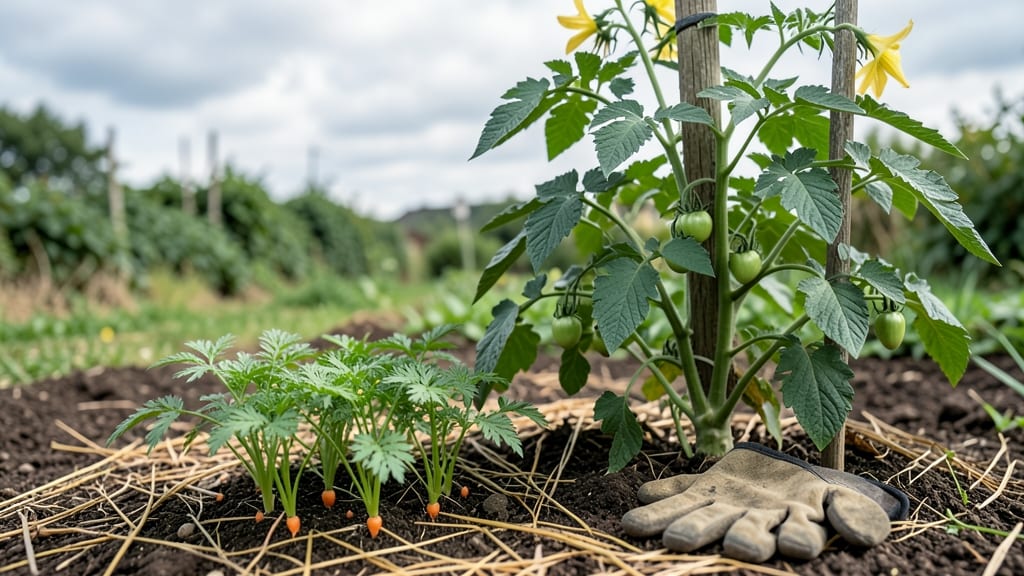
You can plant carrots next to tomatoes, but success depends on proper spacing and soil preparation to prevent root competition and nutrient depletion.
Tomatoes' sprawling root systems can outcompete carrots for water and nutrients, especially in small garden plots.
The key is giving carrots 12+ inches of separation from tomato plants and loosening the soil to prevent root entanglement. 🌱 I've found that planting carrots in raised beds or along the outer edges of tomato rows works best, as it reduces competition while still allowing both crops to thrive in the same space.
Another strategy is to plant carrots early in the season before tomatoes take over the soil. This gives carrots a head start in nutrient-rich conditions. Just be mindful of tomato stakes or cages—carrots need loose soil free from large debris to grow straight and avoid forking.
With the right setup, this pairing can actually save space in your garden!
💡 In This Article
- Root Competition: How Tomatoes Affect Carrot Growth
- Optimal Spacing and Soil Prep for Carrots Near Tomatoes
Root competition: how tomatoes affect carrot growth
Tomatoes develop a sprawling root system that can spread up to 3 feet wide and penetrate 2-3 feet deep, creating fierce competition for water and nutrients. Carrots, on the other hand, grow a single taproot that needs loose, debris-free soil to develop straight and uniform.
When planted too close, tomato roots can compact the soil around carrots, causing them to fork or grow crooked—a common frustration for gardeners. 🌱 Studies show that root competition reduces carrot yields by up to 30% when planted within 6 inches of tomatoes.
The real battle happens in the soil's top 6-12 inches, where both crops vie for nitrogen and phosphorus. Tomatoes are heavy feeders, absorbing nutrients quickly, while carrots prefer consistent moisture and a steady supply of potassium.
This mismatch means carrots often get stunted or develop bitter flavors when competing directly with tomatoes. The problem worsens in small garden plots where space is limited, making proper spacing critical.
Soil compaction from tomato cages or stakes adds another layer of challenge. Carrots need soil that's loose enough for their roots to push through easily—any resistance causes them to split or grow in odd directions.
I've seen carrots planted near tomato cages develop forked roots because their taproots couldn't penetrate the compacted zones created by stake pressure. This is why many gardeners avoid planting carrots near tomato supports entirely.
Interestingly, the competition isn't always one-sided. While tomatoes can outcompete carrots, carrots' shallow root systems don't disrupt tomato growth significantly. The real risk is to the carrots, which are more sensitive to soil conditions.
This asymmetry is why companion planting experts recommend giving carrots priority in terms of soil quality and space when growing near tomatoes.
One surprising benefit of this pairing is that tomatoes can help deter carrot pests like carrot flies. The strong scent of tomato foliage masks the carrots' natural aroma, making them less attractive to these insects.
This pest-repelling effect can sometimes outweigh the competition risks, especially in organic gardens where chemical pest control isn't an option.
For best results, consider planting carrots in containers or raised beds alongside tomatoes. This separation gives carrots their preferred loose soil while still allowing them to benefit from the tomato plants' pest-deterring qualities. The key is balancing these competing needs through thoughtful garden design.