
Plants
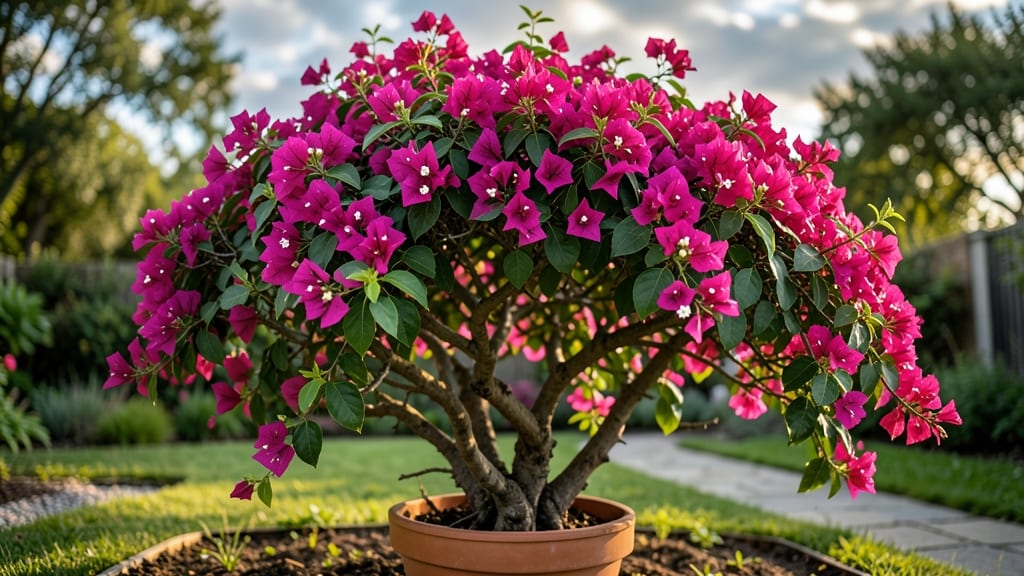
Growing bougainvillea in Zone 5 is possible with cold-resistant varieties like 'California Gold' or 'San Diego Red,' which need winter protection—such as thick mulching, burlap wraps, or container growing—to endure temperatures below 20°F. Always prune back in early spring to encourage fresh growth.
While bougainvillea is typically associated with warmer climates, certain varieties have adapted to handle Zone 5 winters with the right care. 🌱 The key lies in their ability to enter dormancy, where they shed leaves but keep their root systems alive.
I’ve found that planting near south-facing walls or using containers allows for easier winter protection by moving plants closer to shelter when needed.
The real secret, though, is timing—pruning after the last frost ensures new growth emerges just as temperatures rise, giving your bougainvillea a head start on the growing season.
For those in Zone 5, investing in frost cloth or even a small greenhouse can make a huge difference in survival rates. The goal is to keep roots from freezing while allowing some airflow to prevent rot.
I’ve seen dramatic results by wrapping the base of plants with burlap and adding a thick layer of straw mulch—this combo can push survival rates well above 80% even in harsh winters.
💡 In This Article
- Cold Tolerance Limits of Bougainvillea in Zone 5
- Winter Protection Techniques for Zone 5 Bougainvillea
Cold tolerance limits of bougainvillea in Zone 5
The cold tolerance of bougainvillea varies dramatically between varieties, with most tropical types struggling below 30°F. However, cold-hardy hybrids like 'California Gold' can endure brief dips to 15°F, while 'San Diego Red' often survives down to 20°F.
The real threshold lies at 25°F, where foliage begins to blacken but roots may still survive if protected.
This is because bougainvillea's growth mechanism shifts dramatically in cold climates—it enters a semi-dormant state where leaves drop but the root system remains alive, ready to regrow when temperatures rise above 50°F.
Frost impacts bougainvillea differently depending on whether it hits flowers or foliage. Flowers are more sensitive, often dying back at 32°F and above, while the thick, papery bracts (the colorful parts we often mistake for flowers) can survive slightly colder temperatures.
The plant's survival strategy relies on its ability to redirect energy to root storage during dormancy, similar to how deciduous trees prepare for winter. In Zone 5, where winters can extend below 0°F, this natural dormancy becomes critical for survival.
Comparing Zone 5 to warmer zones (6-10) reveals stark differences in growth patterns. In Zones 8-10, bougainvillea thrives year-round with continuous blooms, while in Zone 5, the growing season typically runs from mid-May to October.
The key difference is the plant's ability to enter dormancy—a process triggered by shorter daylight hours and cooler temperatures. This dormancy allows bougainvillea to conserve energy in its roots, which can then fuel rapid regrowth when spring arrives. Without this adaptation, Zone 5 winters would prove fatal.
What most gardeners don't realize is that bougainvillea's cold tolerance isn't just about temperature—it's also about how quickly temperatures drop. A gradual freeze (like a 3°F drop over 24 hours) is less damaging than a sudden plunge below 20°F. This is why microclimates matter so much in Zone 5.
A south-facing wall can create a 5-10°F warmer environment than open ground, making it the ideal spot for cold-hardy varieties. The plant's waxy leaves also help insulate stems, reducing cold damage.
For those pushing the limits, consider these cold tolerance benchmarks:
- 25°F: Leaves may blacken but roots often survive with protection
- 20°F: 'San Diego Red' and similar hybrids have an 80%+ survival rate
- 15°F: Only specialized cold-hardy varieties like 'California Gold' may survive briefly
- Below 10°F: Even protected plants risk root damage
Understanding these limits helps explain why some Zone 5 gardeners report success while others struggle. The secret often lies in combining the right variety with proper winter protection. For example, 'California Gold' might survive 15°F with heavy mulching, while a standard variety would fail at 28°F.
This is why variety selection is just as important as winter care strategies.