
Planting
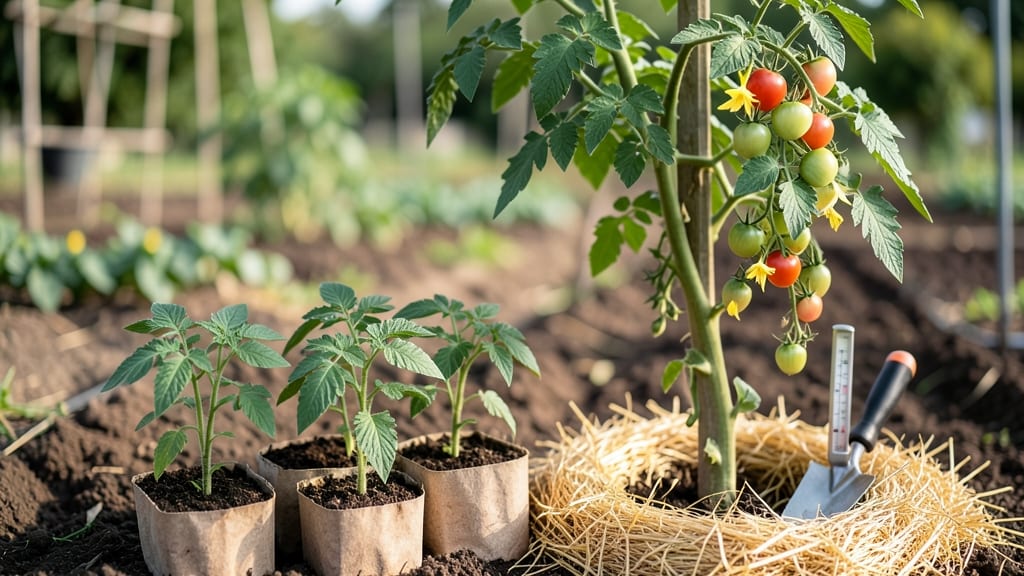
Planting tomatoes in Michigan at the right time means the difference between a bountiful harvest and a lost season — and the best time depends on your hardiness zone.
Michigan gardeners know timing is everything: plant too early and frost will wipe out your seedlings; too late and your tomatoes won’t have time to ripen. But with the right frost-free window by zone, you can maximize yields and avoid common mistakes.
In USDA zones 5b-6b, the ideal window runs from mid-April to early June, but regional differences matter. The Upper Peninsula’s cooler climate demands earlier starts, while southern Michigan can push planting later into spring.
Below, I break down exact frost-free dates by zone, soil temperature checks, and how to extend your growing season with cold frames or succession planting for continuous harvests.

Michigan tomato planting dates by hardiness Zone (with exact frost-free windows)
Michigan's diverse climate—from the Upper Peninsula's cooler zones to the southern Lower Peninsula's longer growing seasons—means your tomato planting window varies dramatically. In Zone 4a, you might only get 120 frost-free days, while Zone 6b gardeners enjoy up to 180 days.
Getting the timing right ensures your plants thrive and produce fruit before fall frost hits.
For all Michigan zones, the golden rule is: Wait until soil temperatures hit at least 60°F and nighttime temps stay above 50°F. Cold soil stunts root growth, and chilly nights stress young plants.
Use a soil thermometer (just $10 at garden centers) to check—it's the most reliable way to avoid common mistakes like planting too early and watching your seedlings die.
Below is your zone-by-zone planting schedule, including exact frost-free windows, ideal transplant dates, and tips for early vs. late varieties. Pro tip: Early varieties (like 'Stupice' or 'Mountain Merit') can handle cooler soils, while heirlooms (e.g., 'Brandywine') need warmer conditions to set fruit.
🌱
In Zone 4a, your window is tight—only 120–130 frost-free days, so focus on early-maturing varieties (60–70 days to harvest). Start seeds indoors 6–8 weeks before transplanting (early March) or buy sturdy 6-inch seedlings from local nurseries in late April.
For Zone 6b, you can push the envelope: Try late plantings in June for fall tomatoes using heat-tolerant varieties like 'Heatmaster' or 'Solar Fire'.
Here’s how to adjust for container gardening in cooler zones: Soil in pots warms faster than ground soil, so you can transplant 1–2 weeks earlier. Use black plastic pots (they absorb heat) and place containers on south-facing patios or raised beds.
Just ensure pots have drainage holes—tomatoes hate soggy roots. In Zone 4a/4b, consider row covers or cold frames to extend your season by 2–3 weeks.
Watch for false springs, where warm weather tricks you into planting early, only for a late frost to hit. Sign up for your local Cooperative Extension Service alerts (e.g., MSU Extension) or use apps like Frost Freeze for real-time updates.
I’ve lost three tomato batches to April frosts—don’t let it happen to you!
For late varieties (like heirlooms), wait until mid-May in Zones 4a/4b or early May in Zones 5b/6b. These need longer daylight to set fruit, so planting too early can lead to blossom drop.
If you’re eager for tomatoes, try succession planting: Start a second batch 2–3 weeks after your first transplant to stagger harvests through early fall.
🌿
Pro move: Hardening off seedlings is non-negotiable. Acclimate your plants to outdoor conditions 7–10 days before transplanting by gradually increasing their time outside. Start with 1–2 hours/day in partial shade, then
How to extend your Michigan tomato growing season (cold frames, row covers & succession planting)
Michigan's short growing season doesn't have to limit your tomato harvest. With the right strategies, you can push your planting dates earlier or later, ensuring a longer harvest window. I've found that combining cold frames, row covers, and succession planting can add weeks—or even months—to your tomato-growing potential.
These techniques are especially valuable in Zone 5b and colder regions where frost lingers longer.
One of my favorite methods is using cold frames to start seeds indoors 6-8 weeks before the last frost date. This gives seedlings a head start while protecting them from late spring frosts.
For example, in Zone 4a, I start seeds in cold frames around March 15, transplanting them outdoors by May 1. This early start ensures I get fruit before summer's heat peaks.
- 1. Cold Frames: Start seeds 6-8 weeks early; protect seedlings until soil warms to 60°F.
- 2. Row Covers: Use lightweight fabric to raise soil temps by 5-8°F and delay frost damage.
- 3. Succession Planting: Stagger plantings every 2-3 weeks for continuous harvests.
- 4. Cold-Hardy Varieties: Choose 'Stupice' or 'Glacier' for early/late seasons.
- 5. Black Plastic Mulch: Warms soil 3-5°F faster than bare ground.
Row covers are another game-changer. These lightweight fabrics create a microclimate that raises soil temperatures and protects plants from light frosts. I've seen row covers extend the growing season by 3-4 weeks in both spring and fall.
For late-season protection, I use them until October 1, even after most gardeners have given up. Just remember to secure the edges tightly to prevent pests from sneaking in.
Succession planting is my secret weapon for a steady tomato supply. Instead of planting all your tomatoes at once, I stagger them every 2-3 weeks from May 1 to June 15. This ensures you always have ripe tomatoes while the first batch is still producing.
For example, if your first planting yields fruit in July, your second planting will be ready in August, and the third in September. It’s like having three mini-harvests!
Don’t overlook cold-hardy tomato varieties either. Varieties like 'Stupice' and 'Glacier' tolerate cooler temperatures better than traditional types. I plant these in early May under row covers, often getting fruit when other varieties wouldn’t even think of flowering.
These varieties also handle light frosts better, making them ideal for Michigan’s unpredictable spring.
Finally, consider using black plastic mulch to warm the soil faster. This method can shave 1-2 weeks off your planting timeline by raising soil temperatures to 60°F sooner. I’ve found that combining black plastic mulch with row covers gives my tomatoes a head start that’s hard to beat.
Just remember to remove the mulch in late summer to prevent overheating.
With these techniques, you can turn Michigan’s short season into a tomato lover’s paradise. Whether you’re using cold frames, row covers, or succession planting, the key is to start early, protect your plants, and keep adding new batches.
Soon, you’ll be enjoying homegrown tomatoes from July through October—or even longer! 🍅