
Planting
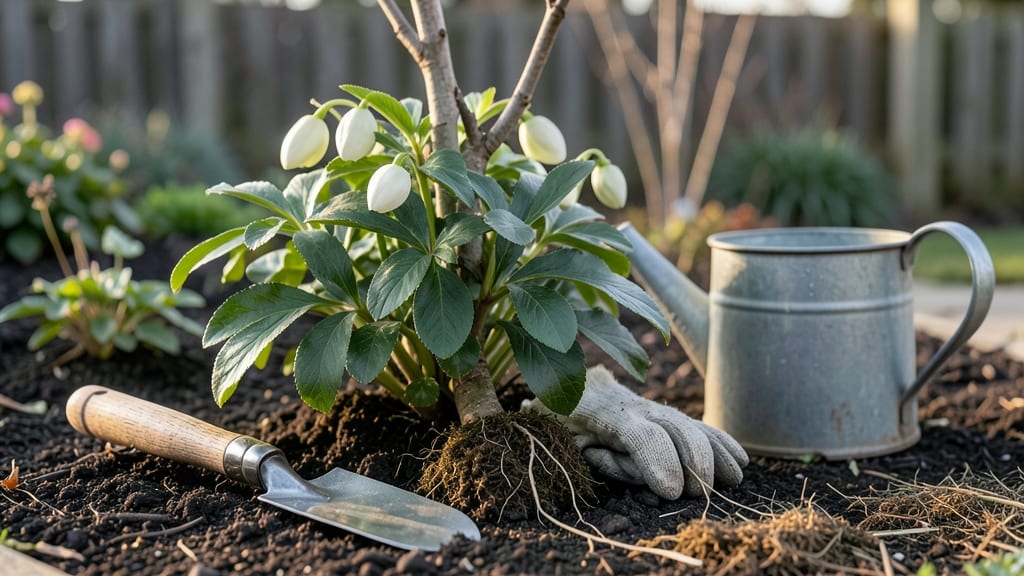
Transplanting a Lenten rose (Helleborus orientalis) unlocks winter-blooming magic in your shady garden. 🌿 I’ve moved these tough perennials in early spring and fall, and the key is patience—rushing leads to stress, while timing right means blooms that outshine spring bulbs.
These shade-lovers thrive where others fail, but their roots need special care to survive the shift.
The secret to success? Moist, well-draining soil mixed with compost and a spot with dappled light. Dig a hole twice as wide as the root ball but no deeper—settling too low invites rot.
Gently loosen roots if they’re circling, then water deeply before planting to reduce shock. A mulch layer keeps moisture in and weeds out while roots adjust.
After transplanting, keep the soil consistently damp (not soggy) for the first 4-6 weeks. Avoid fertilizing until new growth appears—stressed plants need energy for roots, not blooms.
By next winter, your Lenten rose will reward you with bold, nodding flowers that defy the cold. The best part? No summer wilting or fussy care.
Common mistakes to avoid: transplanting in mid-summer heat or freezing temps, overwatering, or disturbing roots more than necessary. If you’re moving an established plant, do it on a cool, overcast day—roots thank you later with years of effortless blooms. Patience pays off with these shade stars.
📚 In This Guide
- What you need
- Instructions
- Tips and common mistakes
- Wrapping up and next steps
What you need
- ● Lenten Rose Plant(s): 1–3 mature plants (depending on desired size)
- ○ Optional: Bare-root plants for early spring transplanting
- ● Garden Soil: 5–10 gallons of well-draining, slightly acidic soil (pH 6.0–7.0)
- ● Organic matter: 2–3 cups of compost or aged manure per plant
- ● Transplanting Tools: 1 garden trowel or spade
- ● 1 hand fork (for loosening soil)
- ● 1 pruning shears (for trimming damaged roots)
- ● 1 watering can or hose with a gentle spray nozzle
- ○ Optional: Transplanting spade (for minimal root disturbance)
- ● Mulch: 2–3 inches of organic mulch (e.g., shredded bark, pine needles, or straw)
- ○ Fertilizer: Optional but helpful: Balanced, slow-release fertilizer (10-10-10 or similar)
- ● Location: Choose a partially shaded spot (3–6 hours of dappled sunlight). Avoid harsh afternoon sun.
- ● Timing: Transplant in early spring or fall (avoid extreme heat or frost).
- ● Container Option: If potted: 1+ 12–18-inch diameter container with drainage holes
- ● Pot mix: 50% potting soil, 30% perlite, 20% compost
- ● Safety: Wear gloves (some Helleborus varieties have mild irritants) and knee pads for comfort.
Step-by-Step guide to transplanting Lenten roses
Here's how to move these shade-loving beauties without shocking their delicate roots.
🪴 Step 1: Choose the Right Time and Location
Transplant Lenten roses in early spring or fall, when temperatures hover between 50-70°F. This gives roots time to establish before summer heat or winter frost stress. Look for a spot with partial to full shade—these roses thrive where others struggle, often blooming from late winter into spring.
I always test the area first by observing how much sunlight it gets. If nearby plants show signs of stress (yellowing leaves, stunted growth), your Lenten rose will likely do better there. The ideal location has well-draining soil and protection from harsh afternoon sun, which can scorch their dark foliage.
🌱 Step 2: Prepare the New Planting Hole
Dig a hole twice as wide as the root ball but only as deep as the container it came in. Loosen the sides of the hole with a garden fork to encourage root spread. Lenten roses prefer slightly acidic soil (pH 6.0-6.5), so if your soil tests higher, mix in 2 inches of peat moss into the bottom of the hole.
Gently tap the sides of the hole to settle the soil before adding the plant. This prevents the rose from sinking too low, which can cause root rot. I like to add a handful of slow-release fertilizer (10-10-10) to the bottom—this gives the roots a nutrient boost without overwhelming them.
✂️ Step 3: Remove and Transplant the Rose
Water the rose 24 hours before transplanting to reduce root stress. Carefully slide the plant from its container, supporting the root ball with one hand while gently squeezing the sides of the pot with the other. If roots are circling tightly, use your fingers to loosen them—this prevents girdling as the plant matures.
Place the rose in the hole so the top of the root ball sits level with the surrounding soil. Backfill with native soil mixed with 1 inch of compost, pressing lightly to remove air pockets. Avoid compacting too firmly—you want roots to spread easily, not fight through dense soil.
💧 Step 4: Water and Mulch for Recovery
Water deeply immediately after planting, soaking the soil until it drains from the bottom of the hole. This helps settle the roots into place. For the first 2 weeks, water every 3-4 days—enough to keep the soil 2 inches deep consistently moist but not soggy.
Spread 2-3 inches of organic mulch (like shredded bark or pine needles) around the base, keeping it 3 inches away from the stem. Mulch conserves moisture and regulates soil temperature, which is especially important for Lenten roses in their first year. Replenish mulch as it breaks down to maintain protection.
☀️ Step 5: Monitor and Support New Growth
Watch for new leaf growth in 4-6 weeks—this signals successful transplanting. If leaves yellow or wilt, it’s often a sign of overwatering or poor drainage. Adjust your watering schedule based on rainfall; mature Lenten roses are surprisingly drought-tolerant once established.
Stake tall stems if needed, but avoid tying too tightly—these roses have flexible canes that can snap if restricted. Prune only to remove dead or crossing branches in early spring. With proper care, your Lenten rose will reward you with vibrant blooms in its first season, often starting as early as late winter.
Tips & tricks for transplanting Lenten roses without stressing the roots
Between us, I've transplanted my fair share of Lenten roses—and learned which details make all the difference. Here's what nobody tells you about keeping these shade-loving beauties happy through the move.
The Timing Secret: Those 50-70°F temperatures in Step 1 aren't just ideal—they're critical. I've transplanted in cooler weather (45°F) and seen roots struggle to establish. If your spring arrives late, consider fall transplanting instead. Watch for the first signs of new growth in nearby plants as your cue to act.
Root Ball Rescue: When loosening circling roots in Step 3, I use a butter knife to gently separate stubborn roots without tearing them. Think of it like untangling headphones—patience prevents damage. If you notice any broken roots during removal, trim them with clean pruners to encourage healthy regrowth.
Soil Science: The 2 inches of peat moss in Step 2 isn't just about pH—it creates tiny air pockets that prevent compacted soil. For even better drainage, I mix in a handful of perlite or coarse sand. This is especially important if your native soil feels heavy or clay-like when squeezed.
Watering Wisdom: That first deep watering in Step 4 should reach at least 12 inches down—not just the top 2 inches of soil. I use a garden trowel to check moisture depth after watering. For the first two weeks, I set a reminder on my phone for those 3-4 day intervals to avoid overwatering, which is the #1 cause of transplant failure.
Pro Tips for Transplant Lenten Rose
- Between us, I've transplanted my fair share of Lenten roses—and learned which details make all the difference.
- The Timing Secret: Those 50-70°F temperatures in Step 1 aren't just ideal—they're critical.
- Root Ball Rescue: When loosening circling roots in Step 3, I use a butter knife to gently separate stubborn roots without tearing them.
Frequently asked questions
Got questions about transplanting your Lenten Rose (Helleborus)? You’re not alone! Here are some of the most common queries—plus straightforward answers to help you succeed.
When is the best time to transplant a Lenten Rose?
The ideal time is early spring or fall—when the plant is dormant but not in peak bloom. Avoid transplanting during extreme heat or frost. Spring (March-April) is best for most climates, as it gives roots time to establish before summer stress. If you must transplant in summer, do it in early morning or late evening to reduce shock.
How long does it take for a transplanted Lenten Rose to recover?
Most Lenten Roses show signs of recovery in 4–6 weeks, with new growth appearing by early summer. Patience is key! Avoid fertilizing for 6–8 weeks post-transplant—focus on watering deeply (1–2 inches per week) and keeping the soil moist but not soggy. Yellowing leaves may appear temporarily, but they’ll bounce back as roots adjust.
Can I transplant a Lenten Rose that’s already blooming?
It’s possible but risky. If you must move a blooming plant, trim back ⅓ of the foliage to reduce stress and prioritize root health over flowers. Better yet: Wait until blooms fade naturally (late spring) and transplant in early summer. This minimizes shock and ensures next year’s flowers won’t be compromised.
What’s the best way to prepare the new planting site?
Lenten Roses thrive in partial to full shade with well-draining, slightly acidic soil (pH 6.0–7.0). Before transplanting:
- Amend heavy clay soil with compost or peat moss (25% mix).
- Avoid fresh manure—it can burn roots.
- Dig a hole twice as wide as the root ball but no deeper.
- Add a 1-inch layer of mulch (wood chips or pine needles) to retain moisture.
Why is my transplanted Lenten Rose wilting or turning yellow?
Wilting or yellowing leaves often signal transplant shock, root damage, or over/under-watering. Check these fixes:
- Underwatering: Soil should stay consistently moist (not drenched).
- Overwatering: Yellow leaves + mushy stems = root rot. Let soil dry slightly between waterings.
- Root disturbance: If roots were circling or damaged, trim any brown/mushy roots before replanting.
- Sunburn: Sudden bright light can scorch leaves. Gradually acclimate to new light conditions.
Wrapping up and next steps
Transplanting a Lenten rose isn’t just about moving a plant—it’s about unlocking its stunning potential in shady spots where others wilt. With the right timing, soil prep, and care, you’ll reward yourself with vibrant blooms that thrive year after year. 🌿✨
Ready to give your Helleborus the love it deserves? Start by choosing a new spot—whether it’s a dappled woodland garden or a cozy corner under trees—and follow the steps above.
Before you know it, your Lenten rose will be the star of your shade garden, proving that beauty grows even in the quietest places.
Next step: Mark your calendar for early fall or spring—when the soil is cool but workable—and get digging! 🌱