
Planting
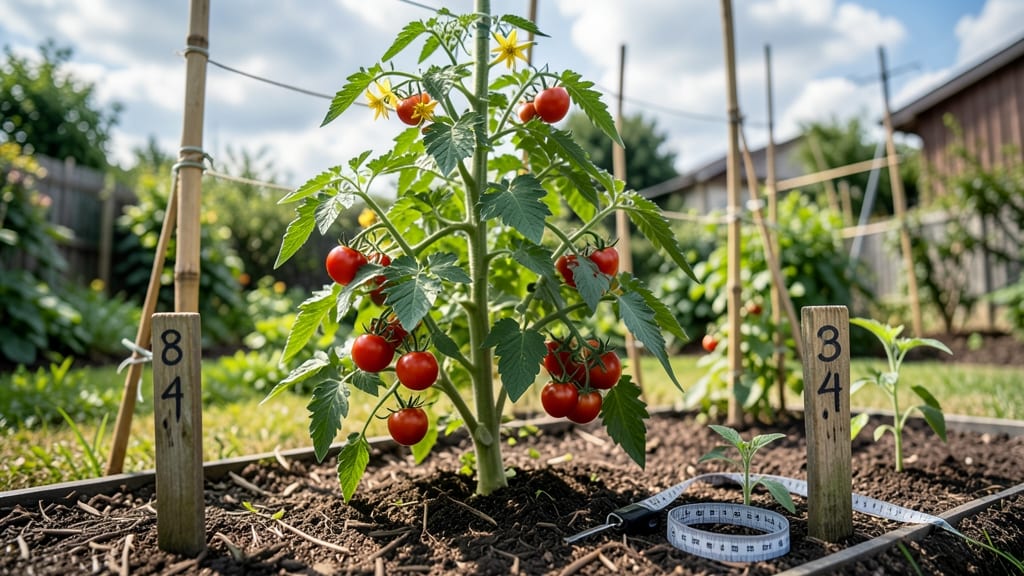
A tomato plant spacing chart is your secret weapon for avoiding blight, maximizing airflow, and coaxing bigger yields from every plant 🍅.
Picture this: you’ve just planted your cherry tomatoes in neat rows, only to watch them fight for sunlight and air—leading to moldy leaves and stunted fruit. That’s not just a lost harvest; it’s a lesson in how spacing directly impacts your garden’s health.
Whether you’re working with determinate (bush) or indeterminate (vining) varieties, the right spacing ensures sunlight reaches every leaf and air circulates freely. This isn’t just theory—it’s the difference between a 5-gallon bucket of tomatoes and a 10-gallon harvest.
In this guide, I’ll break down the exact inches for rows, containers, and raised beds, plus how to adjust for small spaces or high-density gardens. Grab your tape measure—your tomatoes are about to thank you.

Tomato plant spacing chart by variety: determinate vs indeterminate tomatoes
Proper tomato plant spacing isn’t just about fitting more plants in your garden—it’s about creating an environment where each plant thrives. Determinate and indeterminate tomatoes have completely different spacing needs because their growth habits differ drastically.
Determinate varieties grow to a fixed size and produce fruit all at once, while indeterminate types keep growing and producing until frost. Getting this right means fewer diseases, bigger yields, and healthier plants.
I’ve grown both types for years, and the difference in yield and plant health when spacing is correct is staggering. Poor spacing leads to crowded foliage, which traps moisture and invites fungal diseases like early blight and late blight.
Meanwhile, proper spacing ensures each plant gets the sunlight and airflow it needs to develop strong stems and produce high-quality fruit. Let’s break down the exact spacing you need for each type, including dwarf, bush, and vine varieties.
Here’s a quick reference to guide your planting. The chart below covers the most common tomato varieties, but always check the seed packet or plant tag for specific recommendations—some heirlooms or specialty varieties may need adjustments.
For determinate tomatoes, think of them like shrubs—they stop growing at a certain height and produce fruit all at once. This makes them perfect for canning or sauces, but their compact size means you can fit more plants in a smaller space. Bush varieties like ‘
How to adjust spacing for high-yield tomato gardens: row vs grid planting
When I first started growing tomatoes, I crammed my plants too close together—big mistake! Overcrowded tomatoes compete for sunlight, nutrients, and airflow, leading to weak stems, fungal diseases, and poor fruit quality.
The right spacing transforms your garden from a blight-prone mess to a high-yield powerhouse. Let’s break down how to maximize your harvest based on your space and layout.
Your garden’s size and layout determine whether row spacing or grid planting works best. Traditional row planting (single or double rows) is ideal for large plots, while grid layouts (square foot gardening) shine in small spaces or containers.
Both methods require adjustments based on your tomato varieties—indeterminate vines need more room than determinate bushes. Let’s compare the two approaches.
For row planting, I recommend spacing indeterminate tomatoes 2–3 feet apart in rows that are 3–4 feet wide. This creates a windbreak effect, reducing disease spread. If you’re growing determinate varieties, tighten the spacing to 1.5–2 feet since they stay compact.
Add companion plants like basil or marigolds between rows to improve airflow and deter pests.
In grid layouts, I’ve had success using a 1-foot square grid for determinate tomatoes and a 2-foot grid for indeterminate types. This method works wonders in raised beds or small gardens.
Pair tomatoes with shallow-rooted companions like lettuce or radishes to utilize vertical space efficiently. Just remember: prune regularly to maintain airflow, especially in dense grids.
If you’re working with containers, choose dwarf or bush varieties like ‘Tiny Tim’ or ‘Patio Princess’—they thrive in 5–10 gallon pots. For vining indeterminate types, opt for 20+ gallon containers and use a cage or trellis to guide growth upward.
This saves space while maximizing sunlight exposure for each plant.
Pro tip: Adjust spacing based on your local climate. In humid areas, increase spacing by 10–20% to enhance airflow and reduce fungal diseases like early blight. In arid regions, closer spacing can help retain soil moisture. Always check your plant tags for variety-specific recommendations!