
Planting
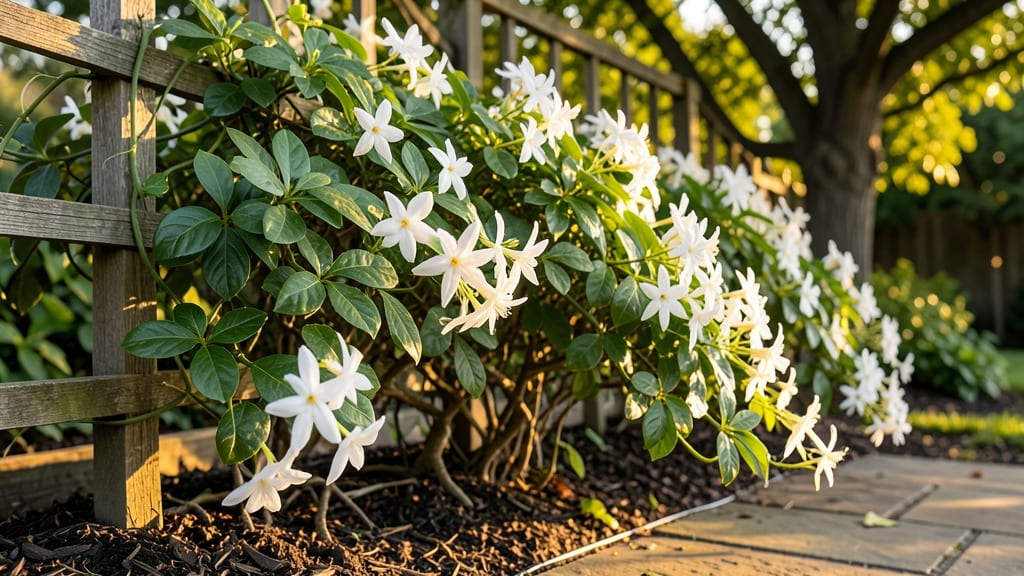
The star jasmine plant thrives best in USDA zones 7 through 10, where its delicate vines flourish year-round with minimal care. In colder climates, treat it as an annual or relocate potted plants indoors before frost. Well-draining soil and partial shade in hotter zones help maintain its signature sweet fragrance.
Star jasmine's love for warmer climates isn't just about temperature—it's about consistency. 🌿 The plant's native habitat in East Asia thrives in mild winters and warm summers, which is why zones 7-10 provide the perfect balance.
Even a light frost can damage its tender leaves, which is why gardeners in colder areas often grow it as an annual or bring it indoors during winter months. The key to success lies in mimicking its natural environment as closely as possible, whether through containers or strategic planting locations.
What makes star jasmine particularly special is its ability to bloom multiple times in a single season when given the right conditions. In hotter zones, providing partial shade during peak afternoon sun prevents stress while still allowing it to soak up enough light for vigorous growth.
The plant's fragrant white flowers release their sweetest scent in the evening, making it a popular choice for trellises near patios or windows.
💡 In This Article
- Understanding Star Jasmine’s Climate Adaptations
- Growing Star Jasmine Outside Its Native Zones
Understanding star jasmine’s climate adaptations
Star jasmine's climate preferences stem from its tropical origins in East Asia, where it evolved to thrive in humid, subtropical conditions with consistent warmth. The plant's tender vines contain minimal cold-hardiness, typically surviving only down to 20-25°F for short durations—any colder, and the leaves will blacken from frost damage.
This sensitivity explains why USDA zones 7-10 provide the ideal balance: winters rarely drop below 10°F, while summers maintain 75-90°F averages, perfect for its growth cycle.
The plant's heat tolerance is equally specialized. While it can handle full sun in cooler zones, prolonged exposure to afternoon temperatures above 90°F causes leaf scorch and bloom reduction.
This is why gardeners in zone 10 often provide 30-50% shade during peak heat—mimicking the dappled light of its native forest understories. The fragrance itself peaks at 70-80°F evenings, when volatile oils in the flowers vaporize most effectively, creating that signature sweet aroma.
Comparing star jasmine to other fragrant climbers reveals key differences. Unlike wisteria (zones 5-9), which can handle colder winters, or honeysuckle (zones 4-8), which tolerates more frost, star jasmine lacks true dormancy.
Its growth is continuous when temperatures stay above 50°F, meaning it requires year-round moisture and protection from wind—both of which are abundant in its native subtropical climate. This lack of cold adaptation is why gardeners in zone 6 must treat it as an annual or take special overwintering measures.
What most gardeners don't realize is how star jasmine's root system reacts to temperature shifts. The plant develops a shallow, fibrous root network that thrives in well-draining soil with 60-70% moisture retention.
When soil temperatures drop below 55°F, root activity slows dramatically, which is why container-grown plants in colder zones need insulated pots and frost blankets. The roots are also highly sensitive to waterlogging—something that rarely occurs in the plant's native well-drained hillside habitats.
For extended blooming, star jasmine relies on a phenomenon called photoperiodism. Unlike some plants that bloom in response to cold (vernalization), star jasmine responds primarily to day length.
In zones 7-10, it typically blooms in late spring and fall when days are 12-14 hours long, but can produce intermittent flowers year-round with proper care. This adaptability is why it's often called the "poor man's jasmine"—it rewards consistent conditions with nearly continuous fragrance when grown in optimal zones.
One fascinating adaptation is how star jasmine's leaves change with temperature. New growth in cool weather appears darker green and more compact, while summer leaves are lighter and more elongated—a response to increased light intensity.
This leaf structure helps the plant reduce water loss during hotter periods, another trait borrowed from its subtropical ancestors. The plant's ability to adjust its foliage so precisely is what allows it to thrive in zones 7-10 without the stress seen in colder climates.