
Planting
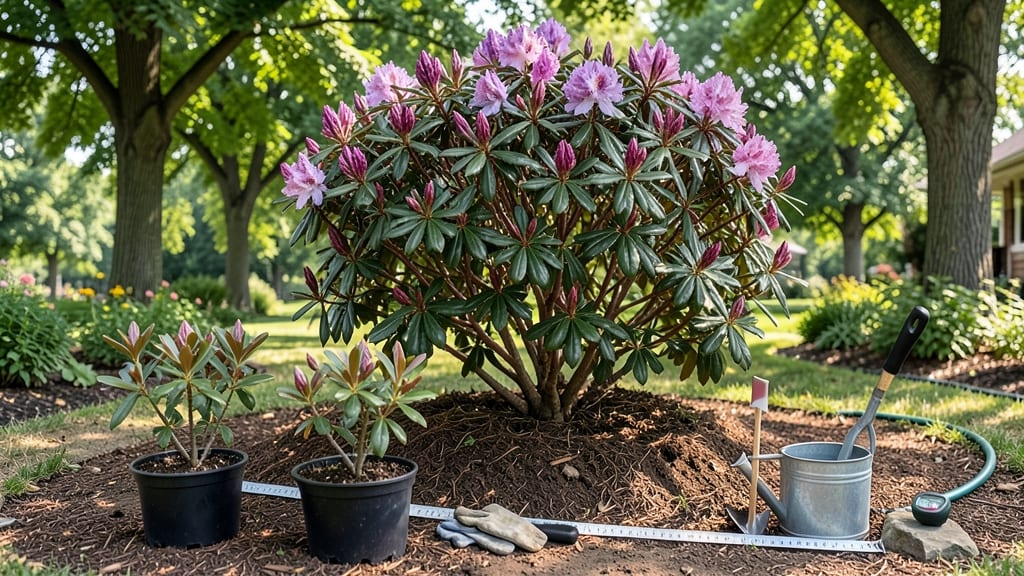
Properly spacing rhododendron plants means the difference between a thriving shrub and one struggling for sunlight. 🌿 The 3-foot rule isn’t arbitrary—it accounts for mature size, airflow, and those stunning blooms you’re dreaming of.
I’ve learned the hard way that crowding leads to weak growth and fewer flowers, while proper spacing ensures decades of lush foliage. Most gardeners focus only on mature height, but width matters just as much. Dwarf varieties need 2-3 feet between plants, while large hybrids require 4-6 feet.
This prevents root competition and lets those fragrant blooms shine without fighting for space. Your goal? A garden where every rhododendron feels like the star it is. With the right spacing, you’ll see thicker foliage, brighter blooms, and fewer pests—because crowded plants attract disease.
The payoff comes in spring, when your border bursts with color instead of sparse, leggy branches. Think of this as the foundation for a low-maintenance, high-impact garden. Works for sun-dappled borders, woodland edges, or even container groupings. Here’s how to get it right the first time—no second-guessing required.
📚 In This Guide
- What you need
- Instructions
- Tips and common mistakes
- Wrapping up and next steps
What you need
- ● Rhododendron plants: Healthy nursery-grown specimens (check root systems for vigor!). Quantity: 1–10+ plants (depends on garden size—aim for 3–6 feet apart for mature spacing). Size: 1–3 gallon containers (smaller for young plants, larger for established ones).
- ● Shovel or trowel: For digging holes (choose a garden shovel for bulk planting or a hand trowel for precision).
- ● Measuring tape or sticks: To mark 3-foot intervals (or use a spacing grid for large areas).
- ● Well-draining soil mix: Peat moss or coconut coir (1 part). Garden soil (2 parts). Pine bark fines or compost (1 part) for acidity and aeration.
- ● Mulch: Pine needles, wood chips, or shredded bark (2–3 inches thick; avoid cedar—it’s toxic!).
- ● Garden gloves: To protect hands from thorns and soil.
- ● Watering can or hose with a gentle nozzle: For post-planting hydration.
- ● pH testing kit: To confirm soil acidity (ideal range: 4.5–6.0).
- ● Epsom salt or aluminum sulfate: Boosts acidity if soil tests too alkaline (follow package instructions).
- ● Slow-release fertilizer: Acid-loving plant formula (e.g., 10-10-10 or 16-4-8) for a post-planting kickstart.
- ● Plant supports: Stakes or cages for young, top-heavy rhododendrons in windy areas.
- ● Landscape fabric: To suppress weeds (leave holes for roots).
- ● String or spray paint: For marking plant locations before digging.
Proper spacing for rhododendrons: the science behind the 3-Foot rule
Here's how to plant rhododendrons for maximum bloom potential and decades of healthy growth.
🌱 Step 1: Understand the 3-Foot Rule and Its Benefits
Rhododendrons need 3 feet of space between plants to develop strong root systems and avoid competition. This spacing prevents overcrowding, which leads to weak stems, poor flowering, and increased susceptibility to pests. The rule accounts for their eventual mature size—most varieties spread 4-6 feet wide at maturity.
I always measure from the center of one plant to the center of the next. This creates an invisible "bubble" around each plant where roots can expand freely. You'll notice healthier foliage and more abundant blooms in properly spaced plants compared to those crammed together.
☀️ Step 2: Plan Your Planting Layout Before Digging
Sketch your garden bed first, marking each plant's center point 3 feet apart in all directions. Rhododendrons have shallow but wide-spreading roots, so avoid planting near large trees or shrubs that will compete for moisture and nutrients. A south-facing slope works beautifully—they thrive in dappled sunlight and natural drainage.
For a natural look, stagger plants in a staggered pattern rather than a grid. This mimics their wild growth habit and creates a more organic, layered appearance. If planting along a fence or wall, maintain that 3-foot spacing from the structure to prevent root binding.
💧 Step 3: Dig Holes That Match the Root Ball Size
Dig holes twice as wide as the root ball but no deeper—rhododendrons hate having their roots buried too deeply. The top of the root ball should sit 1 inch above the surrounding soil level to prevent waterlogging. Amend the native soil with 2-3 inches of organic matter (like compost or peat moss) only if your soil is extremely sandy or clay-heavy.
Gently remove the plant from its container and loosen any circling roots with your fingers. You'll see the fibrous root system spread outward—this is why spacing matters. Place the plant in the hole so the root flare (where roots meet the trunk) is visible above the soil line.
✂️ Step 4: Backfill and Mulch for Long-Term Health
Fill the hole with native soil, pressing lightly to eliminate air pockets but avoiding compaction. Water deeply to settle the soil around the roots. Once settled, spread 3-4 inches of organic mulch (like pine bark or shredded leaves) around the base, keeping it 6 inches away from the stem to prevent rot.
This mulch layer retains moisture while regulating soil temperature—critical for rhododendrons, which prefer acidic, moist (but not soggy) conditions. You'll notice fewer weeds and more consistent moisture levels in the root zone. Replenish mulch annually to maintain this protective barrier.
🌿 Step 5: Monitor and Adjust Over Time
Check your spacing after 3-5 years. If branches start touching or foliage looks crowded, it's time to thin out. Select the weakest plant in each cluster and remove it completely. You'll see immediate improvement in air circulation and bloom quality. Prune any crossing branches while you're at it—this prevents disease and improves light penetration to inner stems.
Rhododendrons planted with proper spacing will reward you with 20+ years of blooms. The key is patience—letting them grow into their mature form rather than forcing them into a confined space. After the first year, you'll notice how much more vibrant and resilient these plants become compared to those planted too closely.
Tips & tricks for perfect rhododendron plant spacing
These essential strategies will help you create a thriving rhododendron garden that blooms beautifully for decades.
Visual Planning Tip: Before digging, lay out your plants in their final positions using stakes or flags to visualize the 3-foot spacing from Step 2. This helps you spot potential issues like uneven spacing or awkward gaps before you start digging. I've found that sketching a simple grid on paper first prevents costly mistakes when working with multiple plants.
Soil Preparation Insight: When amending soil in Step 3, focus on improving drainage rather than fertility—rhododendrons prefer lean, acidic conditions. Mix in 2-3 inches of organic matter only if your soil is extremely sandy or clay-heavy. For most gardeners, native soil works perfectly when properly mulched. The key is maintaining that 1-inch elevation for the root ball to prevent waterlogging.
Mulching Technique: For Step 4, use 3-4 inches of pine bark mulch rather than shredded leaves, as it lasts longer and resists compaction. Keep it 6 inches away from the stem to prevent rot—this is where many gardeners go wrong. The mulch should look like a donut around each plant, not a mound touching the trunk. This creates the perfect moisture barrier while allowing air circulation.
Long-Term Maintenance Strategy: Mark your planting locations with landscape fabric stakes or small flags immediately after planting. This helps you remember where each plant is located when it's time for annual mulch replenishment or pruning. After 3-5 years as mentioned in Step 5, you'll be glad you have these markers when it's time to assess spacing and thin out any overcrowded areas.
Pro Tips for Spacing Rhododendron Plants
- These essential strategies will help you create a thriving rhododendron garden that blooms beautifully for decades.
- Visual Planning Tip: Before digging, lay out your plants in their final positions using stakes or flags to visualize the 3-foot spacing from Step 2.
- Soil Preparation Insight: When amending soil in Step 3, focus on improving drainage rather than fertility—rhododendrons prefer lean, acidic conditions.
Frequently asked questions
Got questions about spacing rhododendrons? You’re not alone! Here are answers to the most common concerns—so you can plant with confidence and enjoy those stunning blooms for years.
Why does spacing matter for rhododendrons?
Proper spacing (like the 3-foot rule) ensures good airflow, reduces disease risk, and prevents root competition. Crowded plants struggle with weaker growth, fewer blooms, and susceptibility to pests. Think of it like giving each plant its own "personal bubble" for optimal health!
Can I plant rhododendrons closer together in small gardens?
Yes, but with adjustments! In tight spaces, opt for dwarf varieties (like 'PJM' or 'Nova Zembla') and space them 2–2.5 feet apart. Just monitor for overcrowding and prune regularly to maintain airflow. Container gardening is another great option for small areas!
What’s the best time to plant rhododendrons for proper spacing?
Plant in early fall or late winter (before new growth starts). This gives roots time to establish before summer heat. Avoid planting in extreme heat or frost—roots need stable soil temps to spread out correctly. Pro tip: Water deeply after planting to encourage root expansion!
How do I fix overcrowded rhododendrons later?
If your rhododendrons are already too close, prune selectively to thin out dense areas and improve airflow. For severe cases, transplant some plants to new locations (best in fall). Mulch heavily to protect roots during the process. Patience is key—overcrowded plants may take a season to recover!
Do rhododendrons need different spacing in containers?
In containers, space plants 12–18 inches apart (depending on variety). Use well-draining soil and larger pots (at least 12 inches wide) to prevent root binding. Container rhododendrons also need more frequent watering since their root space is limited. Elevate pots for better drainage!
Wrapping up and next steps
Properly spacing your rhododendrons by 3 feet apart isn’t just a rule—it’s the secret to vibrant blooms and healthy growth for years to come! 🌸 With the right soil, sunlight, and care, your garden will thrive, rewarding you with stunning seasonal displays.
Now that you’re armed with the know-how, grab your gloves and get planting! Ready to transform your outdoor space? Start by marking your spots and watch your rhododendrons flourish!