
Planting
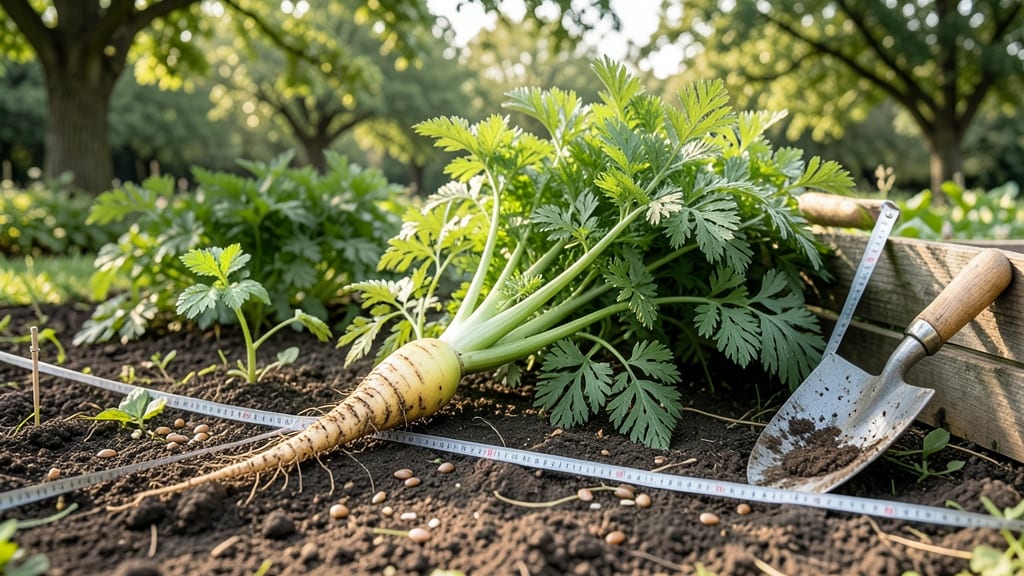
Twelve inches between parsnips isn’t just a number—it’s the secret to thick, fork-free roots that outperform crowded beds. 🌱 I’ve learned the hard way that cramming these slow growers leads to stunted, knobby harvests, but proper spacing turns them into the most reliable crop in my garden.
Start with 18-inch rows and 12-inch spacing in well-loosened soil. Parsnips need deep, stone-free ground to grow straight, so till at least 12 inches down before planting. The roots can reach 2 feet long, so give them room to stretch without competing for nutrients.
By mid-fall, you’ll pull smooth, pencil-thick roots that store well and taste sweeter after frost. The key is patience—parsnips mature slowly, but the payoff is worth it when you see rows of uniform, market-quality produce. For small gardens, narrow rows work, but never skimp below 8 inches between plants.
Commercial growers use 6-inch spacing for higher yields, but home gardeners get better quality with extra room. Avoid overcrowding, or you’ll spend harvest day untangling gnarled roots.
📚 In This Guide
- What you need
- Instructions
- Tips and common mistakes
- Wrapping up and next steps
What you need
- ● Parsnip seeds – Choose certified organic or heirloom varieties (e.g., Tender and True or Gladiator). Aim for 1/8 to 1/4 teaspoon per 10-foot row (~100–200 seeds).
- ● Well-draining soil – Test for pH 6.0–7.0 (parsnips thrive in slightly acidic to neutral soil). Amend with compost if needed.
- ● Garden bed or raised bed – Minimum depth of 12–18 inches (parsnips grow long!).
- ● Water source – Hose with gentle spray nozzle or drip irrigation system.
- ● Garden trowel or transplanting tool – For digging shallow furrows (1 inch deep).
- ● Measuring tape or spacing grid – To mark 12-inch intervals precisely (or use a 1-foot ruler for quick checks).
- ○ Garden twine & stakes – Optional but helpful for marking rows in large beds.
- ● Mulch (straw or shredded leaves) – 2–3 inches thick to retain moisture and suppress weeds.
- ● Gloves & knee pads – Because gardening is way more comfortable with these!
- ● Seedling trays – If starting indoors (8–10 weeks before last frost).
- ● Row cover or cloches – To protect young seedlings from pests or frost.
- ● Organic fertilizer (low-nitrogen) – Like 5-5-5 or compost tea, applied 4–6 weeks after planting.
- ● Hand weeder – For precise weed removal without disturbing parsnip roots.
How to space parsnips for maximum root development
Here’s the method I’ve used for years to grow parsnips that rival grocery store giants—just with better flavor and texture.
🌱 Step 1: Understand Parsnip Growth Habits
Parsnips need 12 inches of space between plants to develop thick, straight roots without competing for nutrients. Their taproots grow deep—sometimes 2 feet or more—so crowding leads to forked, stunted harvests. I always mark rows with a wooden dowel or string line to ensure precision, especially in loose, well-drained soil.
Think of it like planting potatoes: too close, and roots tangle underground. Too far apart, and you waste garden space. The 12-inch rule balances both—giving roots room to plump up while keeping foliage dense enough to shade out weeds.
🌿 Step 2: Prepare the Soil Before Planting
Parsnips thrive in loose, stone-free soil with a pH between 6.0 and 7.0. Before planting, work in 2-3 inches of compost (but avoid fresh manure—it can cause forking). I use a broadfork to loosen the soil to a depth of 12 inches, breaking up any compacted layers that could restrict root growth.
Smooth the surface with a rake, then create shallow furrows (about ½ inch deep) using a hoe. Space furrows 18 inches apart to account for the plant’s eventual width. This double spacing—12 inches within rows, 18 inches between rows—prevents overcrowding while maximizing yield in a small garden.
💧 Step 3: Plant Seeds at the Right Depth and Spacing
Parsnip seeds are tiny and slow to germinate, so I plant them ¼ inch deep and 1 inch apart in the furrow. This close initial spacing lets me thin later without disturbing developing roots. After sowing, cover seeds lightly with soil and water gently with a fine-mist spray—not a stream, or you’ll wash them deeper than intended.
Here’s the thing—don’t let the soil dry out during germination. Keep it consistently moist until true leaves appear (about 3-4 weeks). Once seedlings are 2 inches tall, thin to 12 inches apart by snipping unwanted plants at soil level with scissors. This avoids uprooting and damaging nearby roots.
☀️ Step 4: Maintain Spacing Through the Growing Season
Parsnips need full sun (6-8 hours daily) to develop properly, but their foliage can get lanky if overcrowded. After thinning, give plants room to breathe—their leaves will spread 12-18 inches wide at maturity. If you notice stems leaning toward the sun, rotate the row 90 degrees mid-season to encourage even growth.
Watch for foliage touching between plants—that’s your cue to hill soil around the stems (like potatoes) to prevent rot and encourage straighter roots. Mulch with 2 inches of straw to retain moisture and suppress weeds, which compete for space and nutrients.
⏰ Step 5: Harvest at the Right Time to Preserve Shape
Parsnips improve in flavor after frost, but their spacing determines final size. If planted 12 inches apart, roots will reach 1-2 inches in diameter by harvest time. Use a fork to loosen soil around the base before pulling—never dig with a shovel, or you’ll slice through tender roots.
Harvest when foliage yellows and dies back (usually 100-120 days after planting). Store roots in a cool, dark place (like a root cellar) for 4-6 months. Proper spacing ensures roots stay straight and unblemished, so you’re not left with forked, knobby messes.
Tips & tricks for perfect parsnip spacing
These insights will help you transform your parsnip patch from scraggly to showstopping—no guesswork required.
Precision Marking Matters: When creating your 12-inch spacing grid in Step 1, use a wooden dowel or string line with inch markers to visualize the spacing before planting. I learned this the hard way after eyeballing rows and ending up with unevenly spaced plants. The extra 10 minutes of setup prevents hours of weeding later when plants compete for space. For larger gardens, a laser level creates perfectly straight rows—worth the investment if you're growing more than a few plants.
The Thinning Technique: In Step 3, when thinning seedlings to 12 inches apart, use clean scissors to snip plants at soil level rather than pulling. This prevents disturbing the roots of neighboring plants, which can cause them to fork or grow unevenly. I now keep a small pair of scissors dedicated to thinning tasks—it makes the process faster and cleaner. If you're short on time, you can thin in stages: first reduce to 6 inches apart, then wait a week before final thinning to 12 inches.
Sunlight Strategy: The 6-8 hours of daily sunlight mentioned in Step 4 is non-negotiable for parsnips, but here's what I've discovered: if your garden gets less than 6 hours, consider planting in a south-facing row where plants receive maximum exposure. You can also interplant with shorter crops like lettuce that won't compete for space but will benefit from the parsnips' shade as they mature. This maximizes your garden's productivity without sacrificing parsnip quality.
Harvest Timing Secret: In Step 5, when checking for harvest readiness, look for roots that are 1-2 inches in diameter but haven't yet developed a woody texture. Here's a pro tip: gently brush away soil from one side of the root to check progress without disturbing the entire plant. I've found that harvesting in the morning after a light frost enhances sweetness—just be sure to pull them before the ground freezes completely, or you'll damage the roots.
Pro Tips for Spacing For Parsnips
- These insights will help you transform your parsnip patch from scraggly to showstopping—no guesswork required.
- Precision Marking Matters: When creating your 12-inch spacing grid in Step 1, use a wooden dowel or string line with inch markers to visualize the spacing before planting.
- The Thinning Technique: In Step 3, when thinning seedlings to 12 inches apart, use clean scissors to snip plants at soil level rather than pulling.
Frequently asked questions
Got questions about spacing parsnips like a pro? You’re in the right place! Here are answers to the most common queries—no guesswork, just growing confidence.
How close can I plant parsnips if I’m short on space?
While 12 inches apart is ideal, you can squeeze parsnips into 8–10 inches if space is tight—but expect smaller roots. Thin seedlings to avoid overcrowding, or try interplanting with early-harvest crops like lettuce or radishes. Just avoid planting them too close to other root veggies (like carrots or beets), which compete for nutrients.
When is the best time to thin parsnips?
Thin parsnips 2–3 times during their early growth phase:
- First thinning (2–3 weeks after germination): Reduce seedlings to 6 inches apart to prevent competition.
- Second thinning (4–6 weeks): Space them to your final 12-inch gap.
Can I plant parsnips in containers or raised beds?
Parsnips thrive in deep containers (at least 12–18 inches deep) or raised beds, as long as the soil is loose and well-draining. Space them 8–10 inches apart in containers (they’ll grow smaller but still delicious). Avoid shallow planters—they’ll struggle to develop full-sized roots. Bonus: Containers warm up faster in spring, giving you an earlier start!
Why are my parsnips growing crooked or forked?
Crooked or forked parsnips usually mean overcrowding or poor soil conditions. Check these fixes:
- Ensure proper 12-inch spacing (or wider if needed).
- Loosen soil before planting to prevent root restriction.
- Avoid planting in rocky or compacted soil—parsley roots need wiggle room!
- Harvest early if forking starts—young parsnips are still tasty!
What can I plant near parsnips to improve growth?
Parsnips love companion plants that deter pests and share nutrients well:
- Onions, garlic, or chives (repel carrot flies that may target parsnips).
- Tomatoes or beans (fix nitrogen in the soil).
- Herbs like dill or thyme (attract beneficial insects).
Wrapping up and next steps
Mastering the right spacing for parsnips is your ticket to a thriving garden—bushy plants, fewer weeds, and roots that grow straight and sweet! 🌱 With just 12 inches between plants and a little patience, you’ll reap a bountiful harvest that rivals the pros.
Don’t let spacing stress you out; think of it as the secret handshake for parsnip success.
Ready to dig in? Start by marking your rows with stakes or a string, then plant your seeds with confidence. Before you know it, you’ll be pulling out golden, flavorful roots to enjoy in soups, roasts, or crisp salads. Happy planting—your future self will thank you! 🎉