
Planting
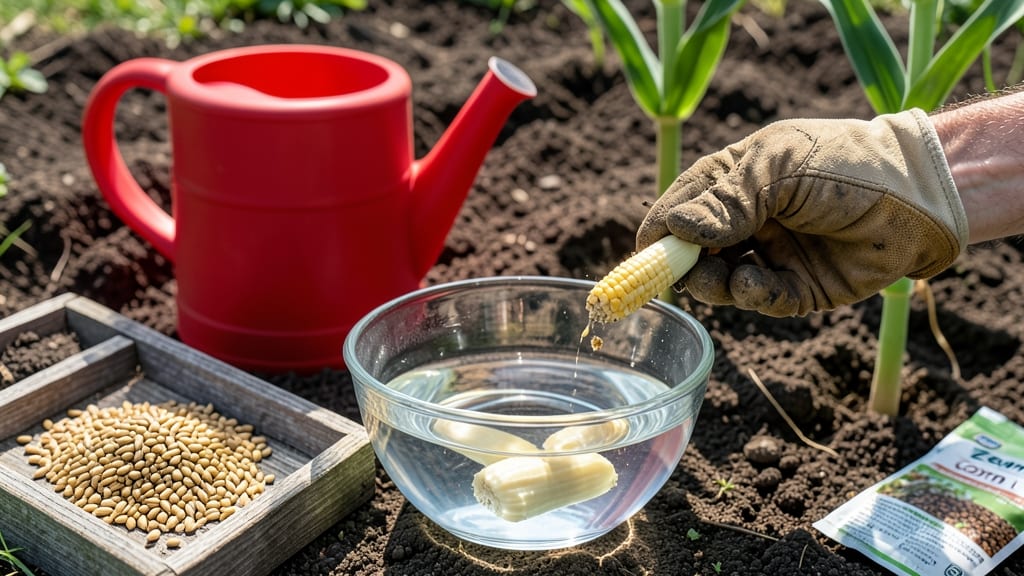
Soaking corn seeds before planting cuts germination time in half and keeps those little kernels from rotting. 🌱 I learned this trick after watching my first batch of corn seeds sit for weeks without sprouting—until I tried soaking them overnight.
The difference was night and day: faster growth, stronger seedlings, and fewer losses to damp soil. This simple pre-treatment works by softening the seed coat, letting water and nutrients rush in where they belong. You’ll need clean water, a container, and about 12 hours of patience—no fancy equipment required.
The key is consistency: too short, and the seeds won’t wake up; too long, and you risk over-hydration. I’ve found that 10-12 hours is the sweet spot for most varieties.
What you’ll end up with is corn popping out of the soil 5-7 days earlier than unsoaked seeds, with roots that dive deeper and stems that stand taller. The plants also seem tougher, shrugging off early pests and cool snaps better than their unsoaked cousins.
It’s a small step that makes a big difference in the garden. Works for sweet corn, field corn, and even popcorn varieties—just avoid heirloom seeds with hard coats unless you’re willing to experiment. Here’s how to do it right without overcomplicating things.
📚 In This Guide
- What you need
- Instructions
- Tips and common mistakes
- Wrapping up and next steps
What you need
- ● Corn seeds: Choose high-quality, non-GMO seeds (e.g., Zea mays)—about 1 lb per 100 sq ft of planting area.
- ● Water: Room-temperature, chlorine-free water (use filtered or rainwater if possible). Aim for 1 gallon per 1 lb of seeds.
- ● Large container: A bucket, basin, or clean plastic tub (at least 5-gallon capacity for 1 lb of seeds).
- ● Colander or mesh bag: To hold seeds while soaking (prevents them from floating away).
- ● Timer or clock: To monitor soaking time accurately (corn seeds need 12–24 hours, no more!).
- ● Paper towels or clean cloth: For drying seeds post-soak (absorbent but gentle on seeds).
- ○ Planting tray or seedling pots: Optional but helpful for pre-sprouting (use biodegradable pots if transplanting later).
- ● Hydrogen peroxide (3%) or apple cider vinegar: Add 1 tbsp per gallon of water to boost germination and prevent rot.
- ● Seed treatment fungicide: Like Mycorrhizal inoculant or Benlate to protect against mold.
- ● Heating pad or warm spot: For indoor soaking (corn seeds germinate faster in 70–80°F conditions).
- ● Planting journal: To track soaking times, seed varieties, and germination progress!
Step-by-step guide to soaking corn seeds before planting
This simple pre-planting trick cuts germination time in half and keeps seeds from rotting in damp soil.
💧 Step 1: Prepare the Soaking Solution
Fill a clean bowl with warm water (around 80°F)—lukewarm, not hot. Add a pinch of non-iodized salt (about 1/4 teaspoon per quart of water) to prevent bacterial growth during soaking. This isn't a sterile environment, so we're giving the seeds a tiny boost to fight off any lurking microbes.
Stir gently until the salt dissolves completely. You'll want about 2 cups of solution per pound of corn seeds—enough to fully submerge them without crowding. I like to use a wide, shallow bowl so the seeds spread out evenly. This prevents them from clumping together, which could lead to uneven soaking or mold spots.
⏰ Step 2: Soak the Seeds for 12-24 Hours
Place the corn seeds in the solution and let them soak for 12-24 hours. You'll know they're ready when they begin to plump up and develop a slight white haze around the edges—that's the seed coat softening. This process kickstarts germination internally, so the seedling has a head start once planted.
Check them after 12 hours. If they're still hard to the touch, give them another 6-12 hours. Over-soaking beyond 24 hours can weaken the seed, so don't leave them sitting. I set a timer on my phone to avoid forgetting—corn seeds can start to rot if left too long in water.
🌱 Step 3: Rinse and Prepare for Planting
After soaking, drain the seeds and rinse them under cool, running water for 30 seconds. This removes any residual salt and washes away any surface mold or debris. Gently pat them dry with a clean towel or paper towels—you want them damp but not dripping. This step is crucial because wet seeds planted directly into soil can rot before they sprout.
Now, your seeds are ready to plant. The soaking process has already softened the seed coat and jumpstarted germination, so they'll push through the soil faster. You'll notice the seeds feel heavier and slightly larger than before—this is a good sign! Plant them within 24 hours of rinsing for best results.
☀️ Step 4: Plant the Soaked Seeds at the Right Depth
Dig planting holes 1-2 inches deep—deeper than you might for dry seeds because the soaked seeds are more delicate. Space them 8-12 inches apart in rows that are 3 feet apart for optimal air circulation. Corn needs room to grow, and crowded plants lead to weak stalks and poor yields.
Drop 2-3 seeds per hole and cover lightly with soil, pressing down gently to ensure good soil-to-seed contact. Water the area lightly to settle the soil around the seeds. Within 5-7 days, you should see sprouts emerging—much faster than if you'd planted dry seeds. Keep the soil consistently moist (but not soggy) until germination is complete.
🌿 Step 5: Monitor for Germination and Early Growth
Once the first green shoots appear, thin the seedlings to leave the strongest one per hole. Corn seedlings are competitive, and overcrowding stresses the plants. Watch for first true leaves (the second set after the initial seed leaves)—this is when the plant starts photosynthesizing efficiently.
Here's where it gets fun: you'll see rapid growth after thinning. Corn loves warmth and sunlight, so make sure the area gets at least 6-8 hours of direct sun daily. If you're in a cooler climate, consider using black plastic mulch to warm the soil and speed up growth even more. Your soaked seeds gave them a head start, but now they need the right conditions to keep thriving.
Tips & tricks for perfect corn seed soaking
Here's what nobody tells you about getting the most out of your corn seed soaking process.
Temperature Matters: That 80°F water temperature is ideal—too hot and you'll kill the seeds, too cold and they won't activate properly. If your tap water runs hot, let it cool completely before using. For extra warmth in cooler climates, place your bowl in a sink with warm (not hot) water circulating underneath. I've found that seeds soaked at this precise temperature plump up noticeably faster than at room temperature.
The Soaking Secret: In Step 2, when checking your seeds after the initial 12 hours, press a seed between your fingers—it should feel noticeably softer than when you started. If they're still firm, that extra 6-12 hours is worth it. I've seen seeds that looked ready after 12 hours but still needed another 6 hours to fully soften their coats. Don't rush this step—properly softened seeds germinate twice as fast.
Salt Solution Safety: The 1/4 teaspoon per quart salt ratio is crucial—too much can inhibit germination, too little won't protect against bacteria. For visual reference, that's about the amount you'd use to season a small bowl of pasta. If you're using a large container, measure carefully—some people accidentally add too much and wonder why their seeds don't sprout. The salt creates a mild osmotic environment that prevents microbial growth without harming the seeds.
Planting Timing: Remember that 24-hour window after rinsing is critical. Seeds left damp too long can develop mold or rot before they even sprout. I keep a small marker on my calendar to remind myself to plant them the same day I rinse them. If you must delay planting, store them in a paper towel-lined container in the fridge for up to 24 hours—this slows down the germination process while keeping them viable.
Pro Tips for Soak Corn Before Planting
- Here's what nobody tells you about getting the most out of your corn seed soaking process.
- Temperature Matters: That 80°F water temperature is ideal—too hot and you'll kill the seeds, too cold and they won't activate properly.
- The Soaking Secret: In Step 2, when checking your seeds after the initial 12 hours, press a seed between your fingers—it should feel noticeably softer than when you started.
Frequently asked questions
Got questions about soaking corn seeds before planting? You’re not alone! Here are some of the most common queries—and straightforward answers—to help you get started with confidence.
Why should I soak corn seeds at all?
Soaking corn seeds boosts germination speed by up to 50% and reduces the risk of rot or mold. Seeds absorb moisture, swell, and kickstart metabolic activity, giving them a head start in the soil. Plus, it’s a simple way to ensure stronger, more uniform sprouts—especially in cooler or damp conditions.
How long should I soak corn seeds before planting?
For most sweet corn varieties, soak seeds for 8–12 hours in lukewarm water (not hot!). Field corn may need 12–24 hours for larger seeds. Pro tip: Use a breathable container (like a mesh bag) to avoid waterlogging. Drain and plant immediately after soaking to prevent overhydration or fungal growth.
What if my corn seeds start to sprout while soaking?
If seeds sprout during soaking, they’re ready to plant right away—just handle them gently to avoid damaging the tiny roots. Sprouted seeds are more fragile, so plant them shallowly (1–2 inches deep) and keep the soil moist. If you’re not planting immediately, store them in a damp paper towel in the fridge for up to 48 hours.
Can I reuse the soaking water for other seeds?
Nope! Soaking water can harbor bacteria or fungi from the seeds themselves, which might harm other plants. Always use fresh, clean water for each batch. For large-scale planting, consider a 50/50 water-to-hydrogen peroxide (3%) solution to disinfect between uses—but rinse seeds thoroughly before planting.
What if I forget to soak my seeds and plant them dry?
Don’t panic! Dry planting still works, but germination may take 2–3 days longer. To compensate, plant slightly deeper (2–3 inches) and keep the soil consistently moist (not soggy). For extra insurance, lightly scratch the seed coat with sandpaper to help water penetrate faster. Patience is key—just monitor for sprouts!
Bonus Tip: Soaking Alternatives
- Cold soak: Place seeds in a damp paper towel in the fridge for 24–48 hours to slow metabolic activity (great for delayed planting).
- Hydrogel crystals: Mix seeds with rehydrated crystals for even moisture distribution (ideal for large batches).
- Compost tea: Soak seeds in diluted compost tea (1:10 ratio) for 4–6 hours to introduce beneficial microbes.
Wrapping up and next steps
Soaking corn seeds before planting is a simple yet powerful step that can boost germination rates, prevent rot, and give your crop a head start. 🌱 Whether you’re a seasoned gardener or just starting out, this easy method ensures healthier, stronger plants with minimal extra effort.
Ready to try it?
Your next step? Grab those seeds, follow the soaking guide, and watch your corn thrive! Happy planting—your future harvest will thank you! 🌽✨