
Planting
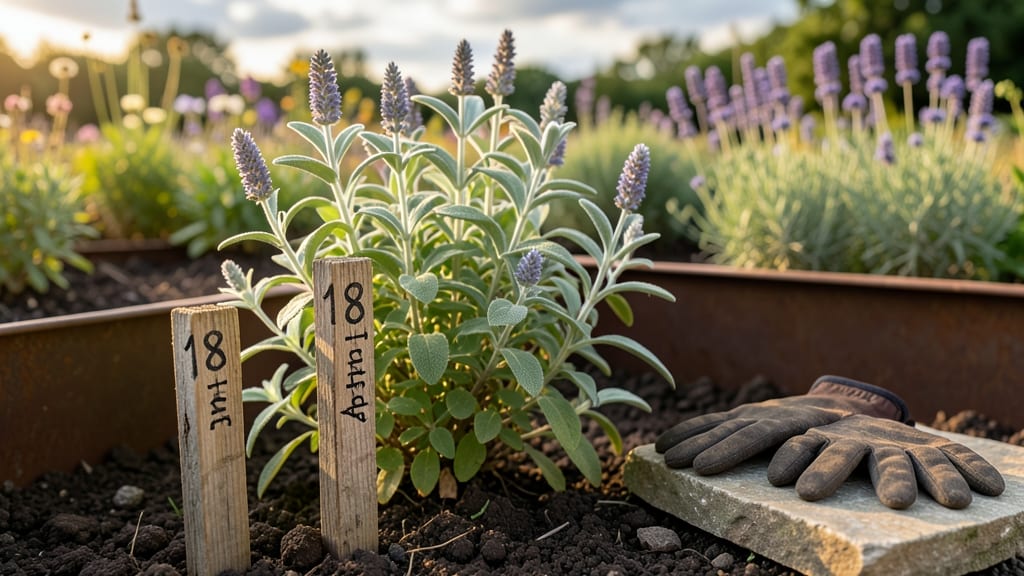
Spacing sage plants 12 inches apart is the secret to bushier growth and a bountiful harvest 🌿—not the crowded rows you might expect.
Struggling with leggy sage plants that look sparse and overcrowded? The right spacing can transform your garden from patchy to lush, ensuring healthy growth and abundant harvests—starting with just a 12-inch rule.
Too close, and your sage fights for sunlight and nutrients, leading to weak stems and poor flavor. Too far apart, and you waste space in your garden. Finding that sweet spot isn’t just about numbers—it’s about airflow, sunlight exposure, and even the variety of sage you’re growing.
In this guide, I’ll break down why 12 inches works, how to adjust for containers or in-ground planting, and the common mistakes that ruin sage growth—so you can grow a thriving, flavorful herb patch every time.

Why 12-Inch spacing maximizes sage plant health and yield
When planting common sage (Salvia officinalis), most gardeners instinctively crowd plants together to save space—but that’s a recipe for disaster. The 12-inch spacing rule isn’t arbitrary; it’s rooted in science to ensure your sage thrives.
Proper spacing boosts air circulation, reduces disease risk, and allows each plant to claim its share of sunlight and nutrients. Without it, your sage will grow leggy, flavorless, and prone to fungal infections.
Sage plants naturally grow 2-3 feet tall and spread 1-2 feet wide at maturity. When you cram them too close, their leaves compete for sunlight, leading to weak stems and poor leaf development.
The 12-inch gap gives roots room to expand while keeping foliage dense and aromatic. This spacing also prevents root competition, which stunts growth and weakens the plant’s immune system.
Here’s the science behind why 12 inches works best for sage:
| Factor | 12-Inch Spacing Benefit | Result of Poor Spacing |
|---|---|---|
| Sunlight Exposure | Full access to 6+ hours of direct sun per plant | Leggy growth, pale leaves, weak flavor |
| Air Circulation | Reduces humidity buildup around leaves | Fungal diseases (powdery mildew, rust) |
| Root Competition | Each plant gets enough nutrients and water | Stunted growth, yellowing leaves |
| Bushiness | Encourages lateral branching for fuller plants | Tall, sparse stems with few leaves |
| Harvest Yield | More aromatic leaves per plant | Smaller harvests with lower flavor intensity |
Proper spacing also enhances flavor. Sage leaves produce their most potent oils when exposed to sunlight and good airflow. In crowded conditions, the essential oils that give sage its distinctive taste become diluted, resulting in bland harvests.
If you’ve ever picked sage that tasted weak, chances are it was suffering from poor spacing.
Another critical benefit is disease prevention. Sage is susceptible to powdery mildew and rust, both of which thrive in damp, stagnant air created by overcrowded plants. The 12-inch gap allows air to flow freely, keeping leaves dry and reducing fungal spores.
I’ve seen gardens where sage plants were packed too closely—within a season, half the plants were lost to mildew.
For culinary sage varieties, like the classic Salvia officinalis, this spacing ensures you get the most flavorful leaves. Ornamental sages, such as purple sage (Salvia officinalis 'Purpurascens'), also benefit from the same spacing to maintain vibrant foliage and compact growth.
If you’re growing dwarf varieties, like 'Berggarten', you can reduce spacing slightly to 8-10 inches, but never less.
Even if you’re using containers, the same principle applies. A 5-gallon pot can comfortably hold 1-2 sage plants spaced 12 inches apart. If you try to fit 3 plants in one container, you’ll end up with a tangled mess.
Containers dry out faster, so proper spacing also helps prevent root rot from overwatering.
To maximize your sage’s potential, measure before planting. Use a tape measure or spacing markers to ensure each plant gets its 12-inch radius. If you’re planting in rows, space plants 12 inches apart in all directions.
For circular arrangements, like in a herb spiral, maintain the same distance between each plant. This might seem like a lot of space, but trust me—your sage will reward you with bushier growth and richer flavor.
If you’re already growing sage too close together, don’t panic. You can thin out the plants by carefully transplanting the smallest or weakest ones to a new location. Just be gentle with the roots to avoid shocking the plants.
With proper spacing, your sage will bounce back in no time, giving you healthier plants and better harvests.
Adjusting sage spacing for different growing conditions
Your sage plants thrive with the standard 12-inch spacing, but growing conditions like containers or partial shade demand adjustments. Too little space causes root competition, while too much wastes garden real estate. Let’s tailor spacing for your specific setup to ensure bushy growth and abundant harvests.
Climate plays a huge role—humid regions need wider spacing to prevent fungal diseases, while dry climates can handle closer spacing due to drought tolerance.
Raised beds and containers also require unique approaches to avoid overcrowding or stunted growth. Let’s break it down by scenario for perfect results.
For containers, opt for 5-gallon pots with one sage plant per container to avoid root competition.
If you’re planting multiple in a large pot, keep them 3–4 inches apart—but be ready to thin if they outgrow the space. Well-draining soil is non-negotiable to prevent root rot in confined spaces.
In raised beds, you can space sage 10–12 inches apart thanks to the bed’s warmer soil and improved drainage. Mix in compost to boost nutrient availability, and avoid overcrowding by monitoring growth. Prune regularly to maintain shape and encourage lush foliage.
If your sage lives in partial shade, increase spacing to 15–24 inches to compensate for slower growth. Shade-loving varieties like ‘Berggarten’ sage still need room to spread without competing for light. Pair with light pruning to stimulate bushier growth.
In humid climates, diseases like powdery mildew thrive in crowded conditions. Space plants 18–24 inches apart to ensure proper airflow and reduce moisture buildup. If you notice yellowing leaves, thin immediately to restore circulation.
For arid regions, closer spacing of 10–12 inches works because sage is drought-tolerant. Focus on deep watering every 7–10 days to encourage strong root systems. Mulch heavily to retain moisture and suppress weeds.