
Planting
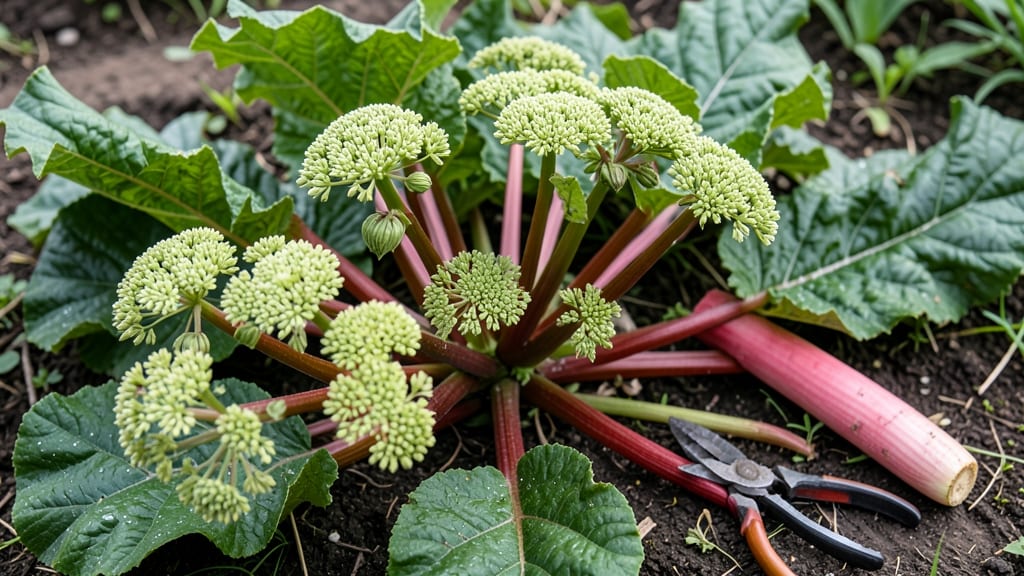
When your rhubarb plant goes to seed, you’ll get smaller harvests and tougher stalks—but here’s how to reset them for juicy, abundant growth again. 🌱 I’ve watched rhubarb bolt three times in five years, and each time, these simple fixes brought back the sweet, tender stalks I love.
The key? Timing, stress management, and knowing which varieties stay true to form.
Rhubarb bolts when it senses long daylight or drought stress, triggering that bitter seed stalk. Most home gardeners don’t realize it’s fixable—just prune it out, adjust watering, and focus on consistent moisture after planting.
Varieties like ‘Victoria’ or ‘Valentine’ bolt less often, but even stubborn types respond to these tweaks once you understand the pattern.
By mid-summer, you’ll see fresh, pink-and-green stalks instead of tough seed stalks. The fix takes just 10 minutes but saves your harvest—no more wasting energy on seeds when you could be growing food. Mulch heavily in spring, water deeply during dry spells, and avoid overcrowding to keep plants happy.
Works for backyard patches, raised beds, or even container rhubarb. Once you reset them, they’ll reward you with years of reliable harvests—no seed stalks in sight. Let’s get those plants back on track!
Natural Triggers Behind Bolting
When your once-vibrant rhubarb plant suddenly sends up flower stalks and goes to seed, it’s usually a sign of stress or an internal cue to reproduce. Understanding these triggers can help you prevent premature bolting and keep your plant focused on leaf production. Here’s why it happens:
Rhubarb plants are perennial, meaning they live for years—but age catches up eventually. After 3–5 years, many varieties become less productive and more likely to bolt. This is because:
- Depleted energy reserves: Older plants have weaker root systems, making it harder to store enough carbohydrates for growth. When stressed, they default to flowering as a survival tactic.
- Reduced hormonal balance: Gibberellins (growth hormones) decline over time, while florigen (a flowering hormone) increases, prompting seed production.
- Competition for resources: If the plant senses limited nutrients or space, it may prioritize reproduction over leaf growth.
Actionable fix: Replace mature plants every 4–5 years with fresh crowns to maintain vigor and delay bolting.
Rhubarb thrives in cool climates (USDA Zones 3–8), but sudden temperature swings—especially hot springs or late frosts—can shock the plant into bolting. Here’s how:
- False spring warm-up: If winter temperatures dip unexpectedly after early thawing, the plant may think it’s safe to flower, only to be hit by frost damage.
- Heat stress in summer: Prolonged temperatures above 85°F (29°C) disrupt photosynthesis, causing the plant to redirect energy toward seed production.
- Cold damage to crowns: Freeze-thaw cycles weaken root systems, making the plant more susceptible to stress-induced flowering.
Actionable fix:
- Mulch heavily in late fall to insulate roots.
- Avoid harvesting leaves in extreme heat—focus on watering deeply instead.
- Choose heat-tolerant varieties like ‘Victoria’ or ‘Valentine’ if you live in hotter regions.
Rhubarb is surprisingly drought-tolerant, but too much or too little water, along with poor soil conditions, can trigger bolting. The key issues:
| Cause | How It Triggers Bolting |
|---|---|
| Overwatering | Soggy soil deprives roots of oxygen, causing root rot. The plant perceives this as a survival threat and flowers to reproduce before dying. |
| Underwatering | Drought stress increases ethylene production, a hormone that signals aging and flowering. |
| Nitrogen deficiency | Without enough nitrogen, the plant can’t produce lush leaves. It shifts to seed production as a fallback. |
| Excess phosphorus | Too much phosphorus can disrupt the plant’s hormonal balance, promoting flowering over leaf growth. |
Actionable fix:
- Water deeply 1–2 times per week (adjust for clay/ sandy soil).
- Test soil pH (ideal: 6.0–6.8) and amend with compost or a balanced fertilizer (e.g., 10-10-10) in early spring.
- Avoid fresh manure—it can burn roots and trigger bolting.
Rhubarb is a crown plant, meaning its energy comes from the roots. Cutting too aggressively or at the wrong time can send it into survival mode:
- Harvesting stalks too early: If you cut leaves (not stalks) or harvest before the plant is 2 years old, it lacks stored energy to recover.
- Over-pruning flower stalks: If you remove all flower stalks (instead of just the seed heads), the plant may interpret this as a signal to bolt again the next year.
- Damaging the crown: Digging around the base or using a knife to harvest can wound roots, stressing the plant.
Actionable fix:
- Only harvest stalks (never leaves), leaving at least 1/3 of the plant intact.
- Wait until the plant is 3+ years old before heavy harvesting.
- Use a clean, sharp knife and cut at the base of the stalk—never tear or yank.
Pro tip: 💡 If your rhubarb bolts, don’t panic! Cutting the flower stalks at the base can sometimes reset the plant for another harvest season—though younger plants are more likely to recover.
Revitalize Your Rhubarb for Peak Performance
When your rhubarb plant starts going to seed, it’s not the end of the game—it’s a sign your plant is shifting energy from tasty stalks to reproduction. With the right steps, you can reset it for a juicier, more productive harvest next season.
Below, we’ll tackle common causes and provide practical, step-by-step fixes to bring your rhubarb back to its prime.
Fix: Prune Back Aggressively If your rhubarb has been producing for 3+ years without a break, it’s time to force a rejuvenation. Older plants often prioritize seed production over stalk growth. Here’s how to shock it into regrowth:
- 🔪 Cut Back Everything - In early spring (before new growth starts), severely prune the plant to just 1–2 inches above the ground.
Yes, this means removing all stalks and leaves. - Why? This mimics a "hard reset," tricking the plant into focusing on new, vigorous growth instead of seeding.
- 💡 Feed It Right After Pruning
- Apply a balanced fertilizer (10-10-10 or similar) to encourage leafy regrowth.
- Pro Tip: Avoid high-nitrogen fertilizers after the first harvest—too much leaf growth weakens stalks.
- 🌡️ Monitor Water & Soil
- Keep the soil moist but not soggy (rhubarb hates wet feet).
- Test soil pH—ideal range is 6.0–6.8. Amend with compost if needed.
Prevention for Next Year:
- Rotate harvests: Never pick stalks from the same plant year after year without a break.
- Divide every 3–4 years: Split clumps in early spring to refresh growth.
Fix: Adjust Your Picking Strategy If you’re harvesting too many stalks at once or picking from young plants, the rhubarb may bolt (go to seed) prematurely. Here’s how to fix it:
- 🍳 Limit Stalks per Harvest
- Only pick 1–2 stalks per plant in the first year, max 3–4 in subsequent years.
- Why? Over-harvesting stresses the plant, triggering seed production.
- 👨🍳 Wait Until Stalks Are Fully Mature
- Harvest only when stalks are at least 10–12 inches tall and 1+ inch in diameter.
- Avoid: Picking small, tender stalks—they’re less productive and more likely to cause bolting.
- ⏰ Time Your Harvests
- Start picking in early spring (after frost risk passes) and stop by late June.
- Why? Harvesting after mid-summer can signal the plant to shift to seed production.
Prevention Tips:
- Mark harvest zones: Use flags or stakes to avoid over-picking in one area.
- Prioritize leaf health: Leave at least half the leaves on the plant to fuel growth.
Fix: Optimize Growing Conditions Rhubarb bolts when it’s too hot, too dry, or shocked by sudden temperature swings. Adjust these factors to prevent seeding:
- 💦 Water Deeply & Consistently
- Rhubarb needs 1–1.5 inches of water per week, especially during dry spells.
- Fix: Install drip irrigation or soaker hoses to keep roots evenly moist.
- 🌞 Provide Partial Shade in Hot Climates
- In zones 8+, rhubarb may bolt due to heat stress.
- Solution: Use 30–50% shade cloth in peak summer or plant near taller crops (like corn) for natural shade.
- 🥶 Protect from Late Frost or Early Heat
- Mulch with straw or wood chips (3–4 inches deep) to stabilize soil temps.
- Pro Tip: In cold climates, cover young plants with row fabric if late frosts threaten.
Prevention Checklist:
- Choose the right zone: Rhubarb thrives in USDA zones 3–8—avoid planting in extreme heat.
- Avoid transplant shock: If moving rhubarb, do it in early spring and keep soil moist for 2 weeks.
If your rhubarb must produce this year, try this last-resort trick: 1. 🌱 Cut Back Seed Stalks Immediately - As soon as you see flower buds or seed stalks, snip them off at the base.
- 🍽️ Feed with Potassium - Apply a potassium-rich fertilizer (like banana peel tea or greensand) to redirect energy to stalks.
- 🌿 Hope for a Small Second Flush - Some varieties (like ‘Victoria’ or ‘Cherry’) may still produce a small late-season harvest if stress is minimized.
Final Thought: A little pruning and patience go a long way! With these fixes, your rhubarb will bounce back stronger—ready to deliver plump, tangy stalks for years to come. 🚀🍽️
Frequently asked questions
Why does my rhubarb plant go to seed so quickly?
Rhubarb typically bolts (goes to seed) when it senses stress or environmental cues like long daylight hours, heat stress, or poor soil conditions. Older plants (3+ years) are especially prone since their energy reserves decline. The key triggers are sudden temperature swings, drought, or over-harvesting—all signals the plant interprets as \"time to reproduce.\"
Can I still eat rhubarb stalks if the plant is going to seed?
Yes, but the quality suffers! Seed stalks make the remaining stalks tougher and more fibrous. Focus on harvesting young, tender stalks before the plant diverts energy to seeds. If you see flower buds, cut them immediately to redirect energy back to leaf growth for a small second harvest.
How do I reset a rhubarb plant that's already bolting?
Severely prune the plant to 1–2 inches above ground in early spring, then fertilize with a balanced 10-10-10 mix. Keep soil moist but well-drained and avoid harvesting for 1 full year to rebuild energy reserves. Mulch heavily to stabilize roots—this \"hard reset\" tricks the plant into focusing on regrowth.
Are some rhubarb varieties less likely to bolt?
‘Victoria’ and ‘Valentine’ are known for better heat tolerance and slower bolting. Other reliable choices include ‘Cherry’ (compact, great for containers) and ‘MacDonald’ (classic, cold-hardy). For hot climates, these varieties stay productive longer than standard types.
Will dividing my rhubarb plant prevent it from going to seed?
Dividing every 3–4 years refreshes the plant and delays bolting by 2–3 years. Dig up the crown in early spring, separate into 3-inch sections with at least 1 eye per division, and replant. This rejuvenates growth and reduces stress—key to preventing premature seed production.