
Planting
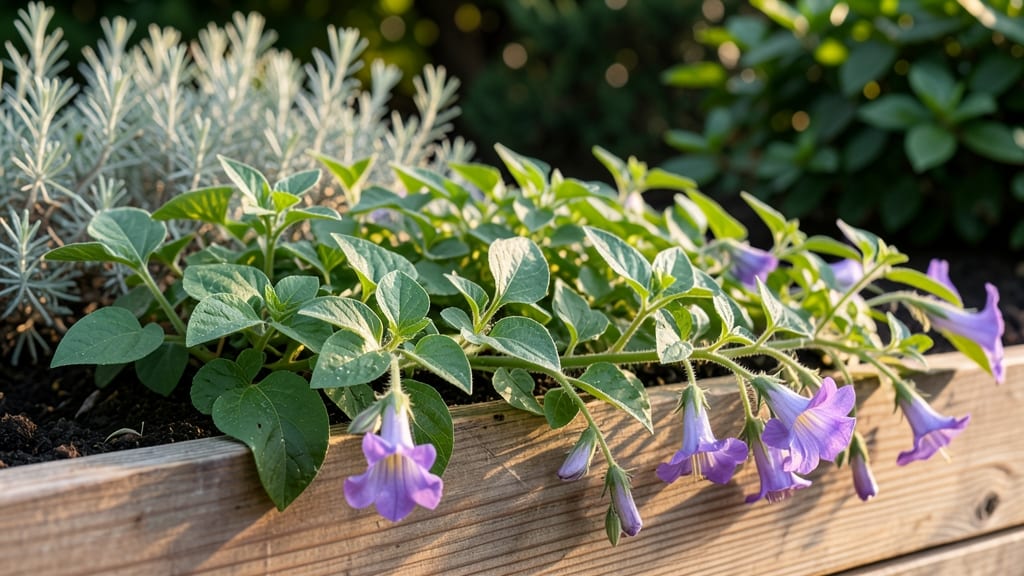
That purple potato vine plant (Solanum jasminoides) turns every container into a cascading masterpiece. 🌿 Its deep violet blooms and glossy foliage create a dramatic focal point that beginners and seasoned gardeners love equally.
I’ve used it to transform plain terra-cotta pots into showstoppers—just imagine how it’ll frame your porch or balcony.
The real magic happens when you pair it with complementary plants. Silver foliage like dusty miller or bright blooms like geraniums make the purple stand out even more.
For maximum impact, plant it in hanging baskets where its vines can spill over edges, or train it up a trellis for vertical drama. The key is keeping it well-watered and pruning lightly to encourage bushier growth.
By midsummer, your containers will be bursting with color that lasts well into fall. The flowers attract butterflies too, turning your space into a living garden party. And the best part? It thrives in partial shade, making it perfect for spots where other plants struggle.
This plant is your secret weapon for instant curb appeal—whether you’re dressing up a patio table or creating a full garden border. Let’s make your outdoor space pop with this easy-care stunner.
📚 In This Guide
- What you need
- Instructions
- Tips and common mistakes
- Wrapping up and next steps
What you need
- ● Purple potato vine plant (Solanum jasminoides) – 1-3 mature plants (or 6-12 inch cuttings for propagation). Look for healthy vines with vibrant purple foliage.
- ● Container – 12-18 inches wide and deep (hanging baskets, window boxes, or pots with drainage holes work best). Size depends on quantity of plants.
- ● Well-draining potting mix – 10-15 quarts. Use a blend of peat moss, perlite, and compost (or a pre-mixed container mix with added perlite for aeration).
- ● Slow-release fertilizer – 1-2 cups (look for a balanced 10-10-10 or 20-20-20 formula to encourage lush growth).
- ○ Mulch (optional but recommended) – 1-2 inches of orchid bark or coconut coir to retain moisture and suppress weeds.
- ● Gloves – 1 pair (to protect hands from prickly stems).
- ● Trowel or small shovel – 1 (for planting and mixing soil).
- ● Watering can or hose with gentle spray nozzle – 1 (avoid over-saturating the roots).
- ● Pruning shears – 1 (for trimming leggy vines or shaping growth).
- ○ Support structure (optional) – Trellis, netting, or stakes if you want to train vines vertically.
- ● Sunlight – Full sun to partial shade (6+ hours of direct light daily). Purple potato vine thrives in bright, indirect light but can tolerate morning sun in hot climates.
- ● Watering routine – Keep soil consistently moist but not soggy. Water when the top 1 inch of soil feels dry.
- ● Warmth – Ideal temperatures: 60–80°F (15–27°C). Avoid placing in drafty or freezing areas.
- ● Patience – Vines may take 4-6 weeks to fill out a container, but the dramatic purple cascades are worth the wait!
Instructions for growing purple potato vine with maximum trailing impact
Here's how to turn this fast-growing vine into a lush, cascading centerpiece that steals every show.
🪴 Step 1: Choose and Prepare Your Hanging Container
Select a 10-12 inch diameter hanging basket with multiple drainage holes—this vine needs room to spread and water to escape. I like fiberglass or plastic baskets because they're lightweight when full of water and soil. Line the bottom with 1-2 inches of coarse gravel to prevent roots from clogging drainage holes and causing rot.
Fill the basket halfway with lightweight potting mix (avoid garden soil—it compacts and suffocates roots). Mix in a handful of slow-release fertilizer granules to give your vine a nutrient boost right from the start. The goal is fluffy, airy soil that lets roots spread freely. Press down gently but don't compact—you want the mix to stay loose so water drains quickly.
🌱 Step 2: Plant Your Purple Potato Vine Cuttings
Take 4-inch cuttings from a healthy vine (look for stems with at least 2-3 leaf nodes). Remove the lower leaves so they sit just above the soil line—this prevents them from rotting when buried. Dip the cut end in rooting hormone powder to encourage faster root development, then place 2-3 cuttings in your prepared basket.
Space them evenly around the center. The vine will fill in quickly, so don't crowd them now. Gently firm the soil around the stems but leave the top leaves exposed to light. Water thoroughly until water runs freely from the drainage holes—this settles the soil and removes air pockets that could dry out the cuttings.
☀️ Step 3: Position for Maximum Sun and Airflow
Purple potato vine thrives in full sun to partial shade (6+ hours of direct sunlight daily). Place your basket where it gets morning sun and afternoon shade if temperatures exceed 85°F—the leaves burn easily in intense afternoon heat. A covered patio or balcony with afternoon shade works perfectly.
Keep the basket 12-18 inches above ground level—this prevents the lower leaves from touching soil and rotting while still allowing the vine to cascade beautifully. Rotate the basket a quarter turn weekly so the vine grows evenly in all directions. You'll notice new growth appearing within 7-10 days if conditions are right.
💧 Step 4: Water and Feed for Rapid, Healthy Growth
Water when the top inch of soil feels dry to touch—this vine loves moisture but hates soggy roots. I water in the morning so excess moisture evaporates during the day. During hot spells, you might need to water daily, but always check before adding more. The basket should feel light when lifted—if it's heavy, it's overwatered.
Feed with liquid fertilizer every 2-3 weeks during the growing season (spring through fall). I use a balanced 10-10-10 formula diluted to half strength. The vibrant purple color deepens with proper feeding—you'll see the difference within 2-3 weeks of consistent feeding. Stop fertilizing in late summer to prepare the plant for dormancy.
✂️ Step 5: Prune and Maintain for Year-Round Beauty
Pinch back the tips of new growth when vines reach 12-18 inches long to encourage bushier, fuller growth. This isn't necessary but makes a huge difference in how dense your basket looks. Remove any yellow or brown leaves immediately—they sap energy from healthy growth. I also trim back leggy stems in late summer to redirect energy to new growth.
In fall, when temperatures drop below 50°F, bring the basket indoors to a bright, cool spot (55-65°F). Reduce watering but don't let the soil dry completely. With proper care, your vine will stay green and vibrant through winter, ready to burst into growth again in spring. This is the secret to having a showstopping display year after year.
Tips & tricks for perfect purple potato vine displays
Here's what nobody tells you about turning this vibrant vine into a showstopper—these little details make all the difference.
Container Selection: Don't settle for just any hanging basket! Look for ones with multiple drainage holes and at least 10-12 inches in diameter—this gives your vine room to spread its dramatic purple leaves. I've found that fiberglass baskets hold up better in heavy rain than plastic ones, and they're easier to clean between seasons. The 1-2 inches of coarse gravel at the bottom isn't just for drainage—it also prevents root rot by keeping air circulating around the roots. Trust me on this.
Cutting Technique: When taking your 4-inch cuttings, make sure each has at least 2-3 leaf nodes—these are the growth points where new roots and leaves will emerge. Here's the thing: the lower leaves you remove before planting should be just above the soil line, but don't strip all the leaves. Leave a few at the top to help with photosynthesis while the roots establish. And that rooting hormone powder? It's worth every penny—it can double your success rate with cuttings.
Sunlight Strategy: The 85°F temperature threshold isn't just about heat—it's about protecting those stunning purple leaves from sunburn. I've learned this the hard way after watching beautiful foliage turn brown in intense afternoon sun. Morning sun gives your vine the energy boost it needs, while afternoon shade prevents leaf scorch. If you're in a particularly hot climate, consider moving your basket to a spot with filtered light during peak afternoon hours. The quarter turn weekly rotation might seem like overkill, but it ensures your vine grows evenly in all directions rather than developing a lopsided shape.
Winter Care: That 55-65°F indoor temperature range during winter is more important than you might think. Too cold and the vine goes dormant; too warm and it can become leggy and sparse. I keep mine near a bright window but away from heating vents. Reducing watering but not letting the soil dry completely is the sweet spot—you're essentially mimicking a light winter rain cycle. This care keeps your vine healthy enough to burst into growth again as soon as spring arrives, giving you that head start on a lush display.
Pro Tips for Potato Vine Plant Purple
- Here's what nobody tells you about turning this vibrant vine into a showstopper—these little details make all the difference.
- Container Selection: Don't settle for just any hanging basket!
- Cutting Technique: When taking your 4-inch cuttings, make sure each has at least 2-3 leaf nodes—these are the growth points where new roots and leaves will emerge.
Frequently asked questions
Got questions about growing potato vine purple? You’re not alone! Here are answers to the most common queries—from care tips to troubleshooting—to help your plants thrive with ease.
Is potato vine purple toxic to pets or humans?
The Solanum jasminoides (purple potato vine) is non-toxic to both pets and humans, making it a pet-friendly choice for homes and gardens. However, while it’s safe, avoid ingesting large quantities—it can cause mild stomach upset in some people or animals. Always supervise pets near new plants!
How fast does purple potato vine grow, and when will it trail?
This vine is a fast grower! Under ideal conditions (full sun to partial shade and well-draining soil), it can shoot up 10–15 feet in a single season. Trailing typically begins within 4–8 weeks of planting, especially if pruned regularly to encourage bushier growth. Pinch back tips early to promote fuller, cascading vines.
Can potato vine purple survive winter, or is it annual?
In USDA Zones 9–11, purple potato vine is perennial and will return year after year. However, in colder climates (Zones 8 and below), it’s often treated as an annual. For overwintering, bring potted plants indoors to a cool, bright spot (50–60°F) or mulch heavily if planted in the ground. Frost will kill it, but it often regrows from roots in spring!
Why aren’t my purple potato vine leaves turning purple?
If your leaves are green instead of purple, it’s usually due to too much shade or excess nitrogen. Purple hues develop with bright light and balanced fertilizer (low in nitrogen). Move your plant to a sunnier spot (6+ hours of direct sun) and switch to a phosphorus-rich fertilizer to encourage vibrant color. Yellowing leaves may also signal overwatering—let soil dry slightly between waterings.
What’s a good alternative if I can’t grow potato vine purple?
If your climate or space limits purple potato vine, try these equally dramatic trailing plants:
- Sweet potato vine (Ipomoea batatas): More heat-tolerant, with purple, green, or variegated leaves.
- Lantana: Drought-resistant, blooms in bold colors, and attracts pollinators.
- String of Hearts (Ceropegia woodii): A trailing succulent with heart-shaped leaves (great for containers!).
- Coleus: Offers vibrant foliage in shades of purple, pink, and green (thrives in shade).
Wrapping up and next steps
Bringing potato vine purple into your garden or containers is a game-changer for vibrant, low-maintenance drama! 🌿 With its stunning cascading foliage and minimal care needs, it’s perfect for adding a pop of color to patios, balconies, or hanging baskets.
Whether you’re a seasoned gardener or just starting out, this plant proves that beauty doesn’t have to mean hard work.
Ready to transform your space? Start small—pick a sunny spot, grab a pot, and let your purple potato vine take center stage! 🌸 Now’s the time to get growing!