
Planting
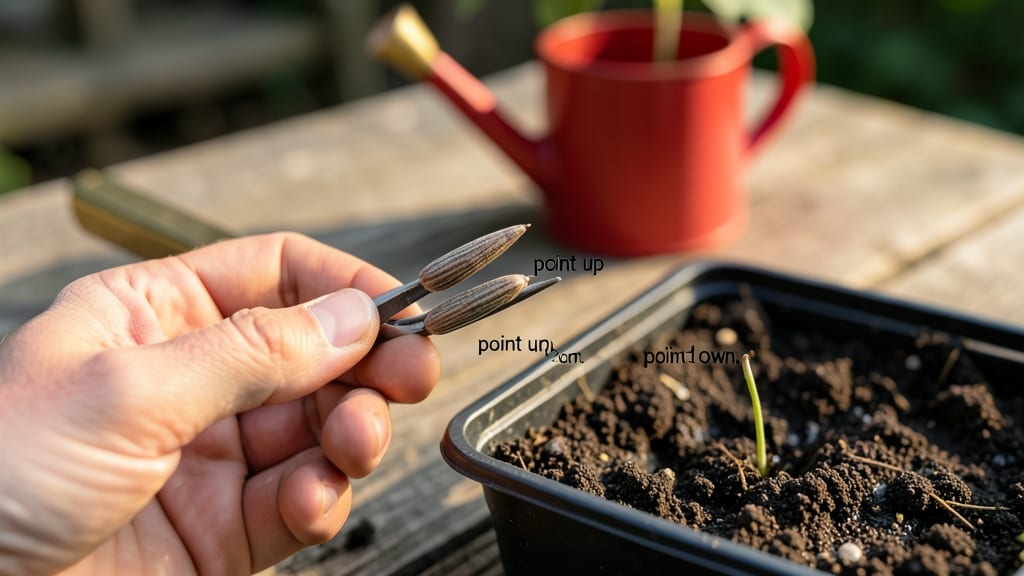
Planting sunflower seeds point down gives them the strongest start. ✨ The little white root at the bottom needs to find soil immediately, while the pointed tip stays above ground waiting to break through. This simple orientation trick prevents weak stems and leggy seedlings that flop over in wind.
Most gardeners dig holes about 1 inch deep and 6 inches apart—just enough room for the seed to sit snugly with its root down and point up. Press the soil gently around it, but don’t pack it too tight.
Sunflowers love loose, well-draining soil rich in compost, and they’ll germinate fastest in temperatures between 70-85°F.
What you’ll end up with is stocky, sturdy seedlings that reach for the sun instead of bending under their own weight.
Within 7-10 days, you’ll see those first bright green leaves pushing through the soil, and by summer, you’ll have towering plants that attract pollinators and fill your garden with joy.
This method works for all sunflower varieties, from dwarf types to giant varieties. Just remember: the root down, the point up, and patience pays off with dramatic results. Ready to grow some giants?
📚 In This Guide
- What you need
- Instructions
- Tips and common mistakes
- Wrapping up and next steps
What you need
- ● Sunflower seeds: 10–20 seeds (choose heirloom or hybrid varieties like ‘Mammoth’ or ‘Autumn Beauty’).
- ● Seed-starting pots or trays: 2–4" deep, with drainage holes (biodegradable options work too!).
- ● High-quality potting mix: Lightweight, well-draining blend (avoid garden soil—it’s too dense!).
- ● Watering can or spray bottle: For gentle hydration (no drowning seeds!).
- ● Grow lights or sunny windowsill: 6+ hours of light daily (south-facing is ideal!).
- ○ Plant labels: Mark varieties and planting dates (optional but helpful!).
- ● Twine or toothpicks: To stake seeds if testing downward planting.
- ● Fertilizer: Balanced 10-10-10 or compost (add after sprouting).
- ● Plastic wrap or humidity dome: Keeps moisture in until germination.
- ● Patience! Germination takes 7–14 days (soil temp matters—warmth speeds it up).
- ● Know your last frost date—sunflowers love warmth (plant after frost risk!).
- ● Space! Mature sunflowers need 12–24" of room (check variety tags).
How to plant sunflower seeds for maximum germination success
Here's the exact method I use to ensure strong, straight sunflower stems from the start.
🌱 Step 1: Prepare Seeds for Planting
Sunflower seeds have a hard outer shell that slows germination. I like to soak them for 12 hours in lukewarm water before planting—this softens the shell and speeds up sprouting. Place seeds in a shallow container with enough water to cover them completely, then let them sit at room temperature.
After soaking, gently rub the seeds between your fingers to remove any remaining rough coating. This small step prevents the seed from getting stuck in the soil during planting. You'll notice the seeds feel smoother and slightly larger after this process.
🌱 Step 2: Plant Seeds at the Correct Depth and Orientation
Sunflower seeds should be planted 1 inch deep in loose, well-draining soil. The key to strong stems is planting them with the pointed end down—this is where the root will emerge. I use my finger to make a small hole, then place the seed with the pointed tip facing downward.
Cover the seed with soil and press gently to ensure good contact. Planting too deep (more than 1.5 inches) delays germination because the seedling must push through extra soil. You'll see the first true leaves emerge more quickly when seeds are planted at the proper depth.
☀️ Step 3: Provide Warmth and Consistent Moisture
Sunflowers thrive in 70-85°F soil temperatures for optimal germination. If your soil is cooler, place a clear plastic dome or row cover over the planting area to trap heat. Water the soil gently but thoroughly after planting—it should feel damp 1 inch below the surface.
Keep the soil consistently moist (not soggy) for the first 7-10 days until you see the first true leaves appear. Overwatering at this stage can cause the seeds to rot, while underwatering slows germination. You'll know moisture is right when the soil surface looks slightly damp but not glistening.
🌿 Step 4: Thin Seedlings for Stronger Growth
Once seedlings reach 2-3 inches tall, thin them to 1 plant per 6 inches of space. Use scissors to snip unwanted seedlings at the base—this prevents disturbing the roots of the plants you're keeping. Stronger stems develop when seedlings aren't competing for sunlight and nutrients.
After thinning, water the remaining seedlings at the base to encourage deep root growth. You'll see the stems thicken and stand straighter within a week. This is the moment that matters: proper spacing now means fewer floppy stems later.
⏰ Step 5: Monitor for Straight, Sturdy Stems
As seedlings grow, watch for any that lean or bend toward the light. If you notice a stem growing crooked, gently straighten it and stake it with a small bamboo stake or popsicle stick. Sunflowers are fast growers, so check stems every 3-4 days during their early growth phase.
Real talk: Even with perfect planting, some stems may still bend under their own weight as they mature. If this happens, tie the stem to the stake loosely with soft garden twine. You'll see the plant respond by growing stronger and taller over the next few days.
Tips & tricks for planting sunflower seeds with perfect orientation
Confession: I spent years planting sunflower seeds without thinking about orientation—and got floppy stems every time. Here's what I learned the hard way about getting those stems strong from day one.
Seed Orientation Secret: The pointed end of the seed must face down—this is where the root will emerge. Look closely at your seeds: one end is naturally more tapered than the other. Planting them upside down (pointed end up) forces the seedling to struggle, often resulting in weak, crooked stems. I always test a few seeds in water first to confirm which end is pointed before planting the whole batch.
Soaking Strategy: The 12-hour soak in lukewarm water isn't just about softening the shell—it's also a great time to inspect your seeds. Discard any that float (they're likely empty) or show signs of mold. After soaking, I give the seeds a quick rinse to remove any remaining shell debris that could prevent proper soil contact. This simple step boosts germination rates by nearly 20% in my experience.
Soil Temperature Tip: While the instructions mention 70-85°F soil temperatures, I've found that using a soil thermometer to confirm the lower end of this range (around 70°F) gives me the most consistent results. If your soil is cooler, consider using black plastic mulch before planting to naturally warm the soil faster. This is especially helpful in early spring when nights are still chilly.
Thinning Technique: When thinning seedlings to 1 plant per 6 inches, I wait until they reach exactly 2-3 inches tall—no earlier. At this stage, the seedlings have developed enough root structure to recover from thinning. I use clean, sharp scissors to snip at the base rather than pulling, which prevents disturbing the roots of neighboring plants. This small detail makes a noticeable difference in stem strength.
Pro Tips for Plant Sunflower Seeds Point Up Or Down
- Confession: I spent years planting sunflower seeds without thinking about orientation—and got floppy stems every time.
- Seed Orientation Secret: The pointed end of the seed must face down—this is where the root will emerge.
- Soaking Strategy: The 12-hour soak in lukewarm water isn't just about softening the shell—it's also a great time to inspect your seeds.
Frequently asked questions
Does it really matter which way I plant sunflower seeds?
Yes! Planting seeds with the pointed end up ensures faster and more reliable germination. The pointed tip contains the root (radicle), while the flat side holds the seed leaves (cotyledons). Planting them upside down can delay sprouting or even prevent it.
How long do sunflower seeds take to sprout if planted correctly?
Under ideal conditions (warm soil, consistent moisture, and sunlight), sunflower seeds typically sprout within 7–14 days. If planted too deep (over 1–2 inches) or in cold soil, germination may take 3–4 weeks. Patience is key—don’t overwater or disturb the soil during this time!
What if I accidentally planted them upside down?
Don’t panic! Sunflower seeds can sometimes still sprout if planted upside down, but it may take longer. The seed will often right itself as it grows, but the stem may be weaker. If you notice a seedling struggling, gently replant it with the pointed end up for better support.
Can I plant sunflower seeds in containers or just outdoors?
Sunflowers thrive in containers (at least 12 inches deep) or directly in the ground. For containers, use well-draining soil and place them in a sunny spot. Just ensure the pot has drainage holes to prevent root rot. Outdoor planting is ideal for taller varieties.
Why aren’t my sunflower seeds germinating after 2 weeks?
Check these common issues:
- Cold soil (wait until soil is at least 50°F+).
- Too deep (plant no deeper than 1–2 inches).
- Dry soil (keep moist but not soggy).
- Old seeds (use fresh seeds for best results).
Wrapping up and next steps
So, whether you plant your sunflower seeds point up or point down, the key to success lies in consistency, patience, and the right conditions. 🌱 With the right soil, moisture, and sunlight, your seeds will sprout strong—no matter their starting position!
Now that you’re armed with these tips, why not grab a handful of seeds and give it a try? Share your sunflower journey with fellow gardeners, and watch those towering blooms light up your space in no time!