
Planting
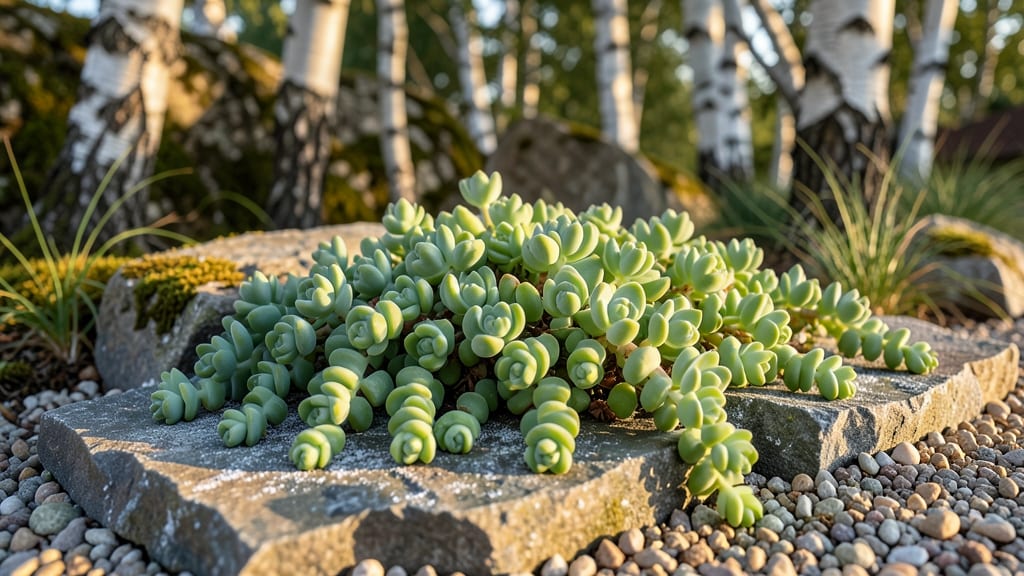
For plant growth in rocks, fast-germinating species like succulents, mosses, and alpine plants thrive best with well-draining soil mixes, bright indirect light, and careful moisture control. Avoid heavy mulch and overwatering to prevent root rot in rocky substrates.
Rock gardens create stunning visuals while challenging traditional planting methods. 🌿 The key lies in selecting plants that naturally adapt to rocky conditions—succulents store water efficiently in their leaves, while mosses thrive in shallow, nutrient-poor soils.
Alpine plants, like sedums or sempervivums, have evolved to handle dry, windy environments with minimal soil. What separates these species is their ability to absorb moisture quickly and their shallow root systems that anchor into crevices rather than deep soil.
Creating the perfect rocky environment requires more than just placing plants on stones. Start with a 3:1 ratio of gritty sand to organic matter (like perlite or coarse sand) to mimic natural rocky soil. Position plants so they're 2-3 inches apart to allow airflow while preventing competition.
Watering becomes an art—soak the soil thoroughly but only when the top inch feels dry, as rocks radiate heat and can dry out roots faster than regular garden beds.
💡 In This Article
- Why Succulents and Mosses Excel in Rocky Gardens
- Step-by-Step Guide to Creating a Thriving Rock Garden
Why succulents and mosses excel in rocky gardens
Succulents and mosses dominate rocky gardens because their biology perfectly matches the harsh conditions of rocky substrates. Succulents like sedum or echeveria store water in their thick leaves, allowing them to survive prolonged dry spells—a critical adaptation when rocks absorb and radiate heat quickly.
Their shallow root systems (often just 1-2 inches deep) spread horizontally to capture moisture from thin soil layers between rocks, rather than competing for deep water sources. 🌵 Mosses, on the other hand, thrive in nutrient-poor environments by absorbing water and minerals directly from the air and rock surfaces through their dense, spongy structure.
The soil composition in rocky gardens creates a unique microclimate that favors these plants. A 70% inorganic mix (gravel, sand, or crushed stone) combined with 30% organic matter (peat moss or compost) mimics natural rocky outcrops where water drains rapidly.
This prevents root suffocation while providing enough nutrients for slow-growing alpine plants. For example, a 1:1 ratio of coarse sand to perlite creates pockets of air that prevent compaction—a common issue in heavy garden soils.
These adaptations explain why traditional garden plants (like impatiens or ferns) fail in rocks: their deep roots and high moisture needs clash with the limited water retention of rocky substrates.
Light plays a crucial role in this ecosystem. Most rock-loving plants prefer bright indirect sunlight (4-6 hours daily), as direct sun can overheat rocks and scorch delicate foliage.
Succulents, for instance, can handle more sun (up to 8 hours) because their waxy leaves reflect excess heat, while mosses prefer dappled shade to retain moisture. The rock surfaces also act as natural heat sinks, moderating temperature swings that would stress plants in open soil.
This is why alpine plants—evolved in high-elevation rocky terrain—thrive in rock gardens: their ability to photosynthesize efficiently in cool, bright conditions aligns perfectly with the microclimate created by stones.
Water absorption mechanics further explain these plants' success. Succulents use a process called CAM photosynthesis (Crassulacean Acid Metabolism), where they open their stomata at night to minimize water loss—a perfect fit for rocky environments where daytime evaporation is rapid.
Mosses, meanwhile, rely on capillary action to draw water upward through their dense, tangled structures, even from tiny crevices. This explains why mosses often appear lush and green in rock gardens while other plants wither: they're designed to capitalize on fleeting moisture. The trade-off?
Both types require precise watering schedules—overwatering leads to root rot in the shallow, well-draining soil.
Consider the contrast with traditional garden plants: a petunia, for example, needs consistent moisture and rich soil to thrive, while a sedum can survive on half the water and one-tenth the nutrients**. This biological mismatch is why rock gardens often fail when planted with conventional species.
The key takeaway is that these specialized plants have evolved to exploit the unique advantages of rocky environments—rapid drainage, heat absorption, and minimal competition—while avoiding their pitfalls. 💫