
Planting
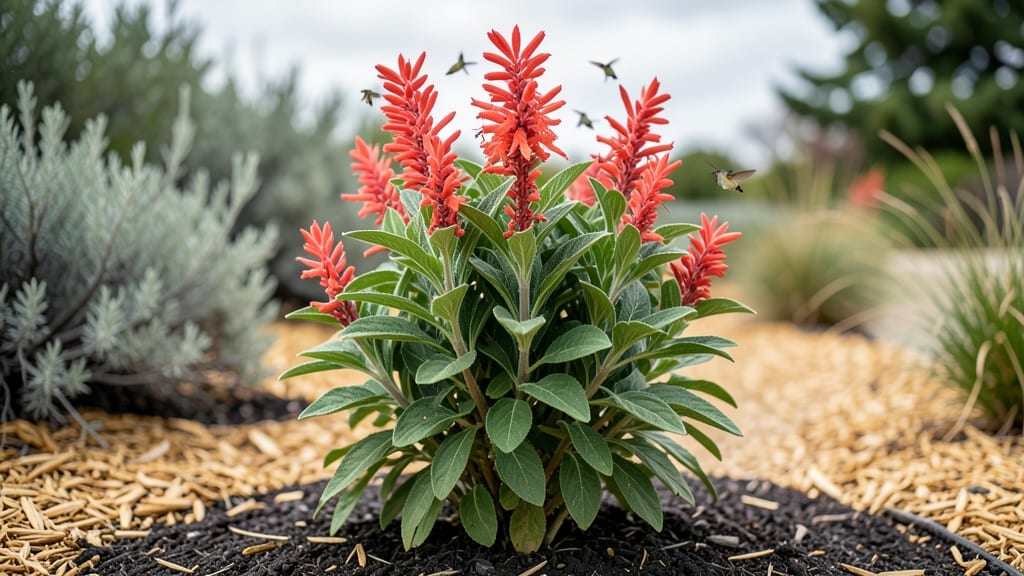
Pineapple sage plants are perennial in USDA zones 8-11, where they can live for 3-5 years with consistent care, though their stems may become woody over time. Annual pruning, frost protection, and well-draining soil are key to maintaining their vigor.
Pineapple sage earns its perennial reputation because it adapts to warm climates by developing a woody base that stores nutrients for regrowth. 🌿 This hardiness means you can enjoy its signature citrusy aroma and edible leaves year after year—if you keep up with seasonal adjustments.
The plant’s ability to rebound from pruning also helps it resist common pests that plague shorter-lived varieties.
What sets pineapple sage apart is its dual nature: it acts like a shrub in ideal conditions but can be coaxed into annual behavior in colder zones with proper winter care.
For example, mulching heavily in late fall or growing it in containers that you can move indoors during freezes extends its lifespan significantly. The trade-off? Neglecting these steps often leads to that telltale woodiness, which reduces leaf production but doesn’t kill the plant outright.
💡 In This Article
- Why Pineapple Sage Thrives as a Perennial in Warm Climates
- Year-Round Care Guide for Extending Pineapple Sage’s Lifespan
Why pineapple sage thrives as a perennial in warm climates
Pineapple sage's perennial nature stems from its deep root system and ability to store nutrients in its woody stems, a survival strategy common in Mediterranean climates. Unlike annual herbs that die back after flowering, pineapple sage develops a semi-woody base that acts like a built-in energy reserve.
This adaptation allows it to regrow each spring from the roots, even after winter dieback in colder zones. The plant's natural range in Mexico and Central America, where temperatures rarely drop below 20°F, explains why it performs best in USDA zones 8-11.
The key to its longevity lies in its growth habit: it produces new growth from the base rather than just extending from the top. This basal growth pattern creates a bushier plant that can withstand light frosts (25-30°F) for short periods.
In contrast, annual varieties would succumb to these same temperatures.
The plant's aromatic leaves also contain essential oils that act as natural antifreeze, protecting cellular structures during brief cold snaps. 🌿 What's fascinating is how the woody stems become more pronounced with age—a sign of maturity rather than decline, though it does reduce leaf production over time.
Temperature plays a critical role in pineapple sage's perennial behavior. During the growing season, it thrives in 60-80°F ranges, producing its signature pineapple-scented leaves. However, when nights dip below 50°F for extended periods, growth slows dramatically.
This is why gardeners in zone 8 often see reduced vigor compared to those in zones 9-11. The plant's ability to photosynthesize efficiently in lower light conditions (unlike many tropical herbs) also contributes to its resilience in partial shade situations common in warmer climates.
Comparing pineapple sage to its annual cousin, common sage (Salvia officinalis), reveals key differences in survival strategies. While common sage focuses on rapid leaf production during its single growing season, pineapple sage invests energy in developing a sturdy woody framework.
This structural difference means pineapple sage can often recover from 20-30% leaf loss from pests or pruning, whereas annual sages would struggle to regenerate. The trade-off?
Pineapple sage's woody stems become more prominent after 3-4 years, which is why many gardeners replace it every few seasons for more abundant foliage.
One often-overlooked factor is how pineapple sage's flowering habit affects its perennial nature. Unlike many perennials that flower annually, pineapple sage produces red tubular flowers primarily in its second year. These flowers attract hummingbirds but divert energy from leaf production.
Strategic pruning to remove flower spikes before they form can extend the plant's leaf-producing lifespan by 1-2 years, demonstrating how human intervention can mimic its natural growth patterns in colder microclimates.
For gardeners pushing the limits in zone 7 or colder, understanding these botanical adaptations explains why pineapple sage often behaves as an annual. The plant simply can't maintain its woody structure through repeated freeze-thaw cycles.
However, with container growing and winter protection, even zone 6 gardeners can coax 2-3 years of growth from a single plant—proving that with the right conditions, pineapple sage's perennial nature isn't just for warm climates. ✨