
Planting
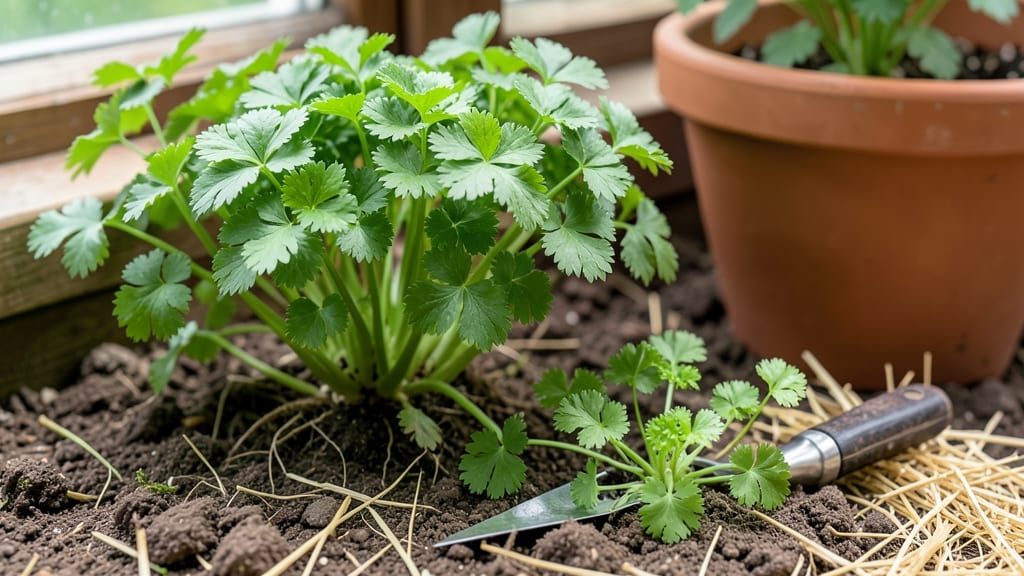
Here are parsley planting tips—soaking seeds overnight speeds germination from weeks to days. 🌱 I’ve planted parsley for years, and this one step cuts my waiting time in half while ensuring those signature fluffy curls appear reliably. Start by soaking seeds in warm water for 8-12 hours before planting.
Use well-draining soil with compost, and plant seeds just ¼ inch deep in rows spaced 12 inches apart. Keep the soil consistently moist but not soggy, and place in full sun for the fastest growth. Within 2-3 weeks, you’ll see those first tender leaves—no more store-bought parsley!
Bonus tip: Parsley thrives in cool weather, so spring and fall are ideal planting times. For indoor growing, use a sunny windowsill or grow light, and harvest leaves from the outer stems to encourage bushier growth.
The secret to fluffy parsley? Patience and consistent care—your kitchen (and garden) will thank you.
📚 In This Guide
- What you need
- Instructions
- Tips and common mistakes
- Wrapping up and next steps
What you need
- ● Parsley seeds: Choose between flat-leaf or curly varieties (about 1–2 grams per planting, or roughly 200–400 seeds). Opt for organic or heirloom seeds for best results!
- ● Seed-starting mix or potting soil: A lightweight, well-draining mix (e.g., 50% peat moss, 30% perlite, 20% vermiculite). Avoid garden soil—it’s too dense for tiny seeds!
- ● Containers or seed trays: For indoor starts: Small pots (3–4 inches deep) or seed trays with drainage holes.
- ● For direct sowing: Shallow trays or a prepared garden bed (6–12 inches deep).
- ● Drainage trays or saucers: To catch excess water and prevent root rot.
- ● Spray bottle or watering can with a fine nozzle: For gentle watering (overhead watering can displace seeds!).
- ● Plastic wrap or humidity dome: Keeps moisture in while seeds germinate (critical for parsley!).
- ● Grow lights or sunny windowsill: A south-facing window or LED grow lights (12–16 hours/day) for indoor starts.
- ○ Fertilizer (optional but helpful): A balanced, water-soluble fertilizer (5-5-5 or 10-10-10) diluted to half-strength for seedlings.
- ● Heat mat: Speeds up germination (parsley loves warmth—aim for 70–75°F).
- ● Seedling heating pad: Doubles as a humidity tray when covered.
- ● Compost or worm castings: Mix into soil for extra nutrients.
- ● Twine or small stakes: For supporting taller parsley varieties later.
- ● Mulch (straw or shredded leaves): Helps retain moisture in outdoor beds.
How to plant parsley for fast, fluffy growth
Here's the method I swear by for breaking parsley's notoriously slow germination—get those tender greens growing in half the usual time.
🌱 Step 1: Pre-Treat Seeds for Faster Sprouting
Parsley seeds need a little help to break their tough outer shell. Start by soaking ¼ cup of seeds in warm water for 24 hours—this softens their protective coating and jumpstarts germination. I use a small glass jar with a lid, giving it a gentle shake every few hours to keep them submerged.
After soaking, spread the seeds on a damp paper towel and fold it over. Place the towel in a sealed plastic bag and keep it in a warm spot (around 70°F) for 3-5 days. Check daily for moisture—if the towel feels dry, mist it lightly. You'll see tiny white sprouts peeking through the paper in just a few days. This pre-treatment cuts germination time from 3 weeks to just 7-10 days.
🪴 Step 2: Prepare Containers and Soil
Use 4-inch deep containers with drainage holes—parsley roots need room to spread without getting waterlogged. Fill them with a light, well-draining mix (I blend equal parts potting soil and perlite). The soil should feel like a damp sponge when squeezed—neither bone-dry nor dripping wet.
Make small furrows ¼ inch deep in the soil, spacing them 2 inches apart. Gently place the pre-sprouted seeds in the furrows, spacing them 1 inch apart. Cover lightly with a thin layer of soil—just enough to hide the seeds but not bury them too deep. Press down lightly to ensure good seed-to-soil contact, which helps roots anchor quickly.
💧 Step 3: Water and Maintain Ideal Conditions
Water the soil gently until it's evenly moist but not soggy. Use a spray bottle for the first few days to avoid disturbing the seeds. Place the containers in a warm, bright spot (like a sunny windowsill) but avoid direct midday sun until sprouts appear—this prevents the soil from drying out too quickly.
Keep the soil consistently moist by checking the top inch daily. If it feels dry, water lightly again. Once seedlings emerge (you'll see tiny green leaves in 7-10 days), move them to a spot with 4-6 hours of sunlight daily
When seedlings reach 2 inches tall and have 2-3 true leaves, thin them to 4 inches apart in the container. Use scissors to snip unwanted seedlings at soil level—this prevents disturbing the roots of the plants you're keeping. If you're transplanting outdoors, wait until nighttime or an overcast day to reduce stress on the plants. Hardening off is key for parsley. Start by placing the container outside in a shaded spot for 1 hour the first day, gradually increasing time over 5-7 days. Once seedlings tolerate 6+ hours of sunlight without wilting, they're ready for their permanent spot. Parsley thrives in partial shade, so a location with morning sun and afternoon shade works best. You can start harvesting parsley 6-8 weeks after planting, but don't take more than ⅓ of the plant at once. Snip leaves from the outer stems first, leaving the inner growth intact. This encourages bushier, fluffier regrowth. For flat-leaf parsley, cut just above a set of leaves, while curly parsley responds well to a clean snip above the lowest set of leaves. After harvesting, water the soil to 1 inch deep to help the plant recover. With proper care, parsley will keep producing tender leaves for 6-8 months. If the plant bolts (sends up a flower stalk), snip the stalk immediately—this redirects energy back to leaf production and keeps your parsley lush and green.☀️ Step 4: Thin and Transplant for Strong Growth
✂️ Step 5: Harvest and Encourage Regrowth
Tips & tricks for perfect parsley growth
These simple tricks will help you grow parsley faster than you thought possible—no more waiting weeks for those fresh greens.
Germination Boost: Don't skip the warm spot during the 3-5 day pre-sprouting phase—parsley seeds need consistent warmth around 70°F to break dormancy. I place my sealed bag on top of my fridge (not inside) where it stays reliably warm. If your kitchen runs cooler, try using a seedling heat mat for just this phase—it cuts germination time even further.
Soil Secret: The 50/50 potting soil and perlite mix is worth repeating—parsley roots need that perfect drainage to prevent rot. Pro tip: Add a handful of compost to the mix for extra nutrients, but keep it light. Too much organic matter can compact and suffocate those delicate roots. Press the soil gently after planting to eliminate air pockets, which helps seeds make immediate contact with moisture.
Light Management: Those 4-6 hours of sunlight after sprouting are crucial—too much direct sun too soon can scorch tender seedlings. I use a sheer curtain to diffuse harsh afternoon light while still providing plenty of brightness. Watch for seedlings leaning toward light (etiolation)—this means they need repositioning or more even light exposure.
Harvest Hack: When harvesting, always cut just above a leaf set rather than pulling leaves directly. This encourages the plant to branch out and grow fuller. For continuous harvests, I snip the outer leaves first, then work my way inward—this keeps the plant producing new growth while you enjoy fresh parsley all season.
Pro Tips for Parsley Planting Tips
- These simple tricks will help you grow parsley faster than you thought possible—no more waiting weeks for those fresh greens.
- Germination Boost: Don't skip the warm spot during the 3-5 day pre-sprouting phase—parsley seeds need consistent warmth around 70°F to break dormancy.
- Soil Secret: The 50/50 potting soil and perlite mix is worth repeating—parsley roots need that perfect drainage to prevent rot.
Frequently asked questions
Got questions about growing parsley? You’re not alone! Here are answers to the most common concerns—from germination tricks to troubleshooting—so you can grow lush, flavorful parsley with confidence.
Why does parsley take so long to germinate?
Parsley seeds are slow starters—often taking 2–4 weeks to sprout. This is normal! To speed things up, soak seeds in warm water for 24 hours before planting and keep soil consistently moist (but not soggy) in a warm, sunny spot. Patience pays off with fluffy, vibrant growth!
When is the best time to plant parsley?
For fastest germination, plant parsley seeds 2–3 weeks before your last frost date in spring or 6–8 weeks before the first fall frost. Avoid planting in extreme heat (above 85°F), as it can reduce germination rates. Biennial varieties thrive in cool weather, making early spring or late summer ideal.
Can I grow parsley indoors?
Use a sunny windowsill (6+ hours of light) or a grow light for 12–14 hours daily. Plant seeds in a shallow container with well-draining soil, keep it moist, and thin seedlings to 2–3 inches apart. Dwarf varieties like ‘Moss Curled’ work best indoors. Just watch for leggy growth—rotate the pot for even light exposure!
What should I do if my parsley seeds won’t sprout?
Try these fixes:
- Check seed viability: Test a few seeds in damp paper towels—if none sprout in 2 weeks, they may be old (store-bought seeds lose viability after 1–2 years).
- Adjust soil conditions: Parsley prefers loamy, well-draining soil with a pH of 6.0–7.0. Mix in compost if your soil is heavy or clay-like.
- Use a heat mat: Place seeds on a 70–75°F heat mat to encourage faster germination.
- Try a scarification trick: Lightly nick seeds with sandpaper before planting to break dormancy.
Can I grow parsley from store-bought stems?
Yes! Place a 3–4 inch parsley stem in a glass of water, changing the water every 2 days. Once roots form (after 1–2 weeks), transplant it into soil. This works best with flat-leaf parsley (curly varieties regrow less reliably). For faster results, trim the stem at an angle and remove lower leaves to encourage root growth.
Wrapping up and next steps
Growing parsley from seed might seem tricky at first, but with these parsley planting tips, you’ll be well on your way to a thriving herb garden! 🌱 The key?
Patience, proper preparation, and a little know-how—like soaking seeds and maintaining consistent moisture. Now that you’re armed with the best practices, there’s no better time to start planting.
Ready to take the next step? Grab your seeds, prep your soil, and dive in—your kitchen (and taste buds) will thank you! For extra inspiration, check out our guide on parsley care to keep those fluffy greens growing strong all season.