
Planting
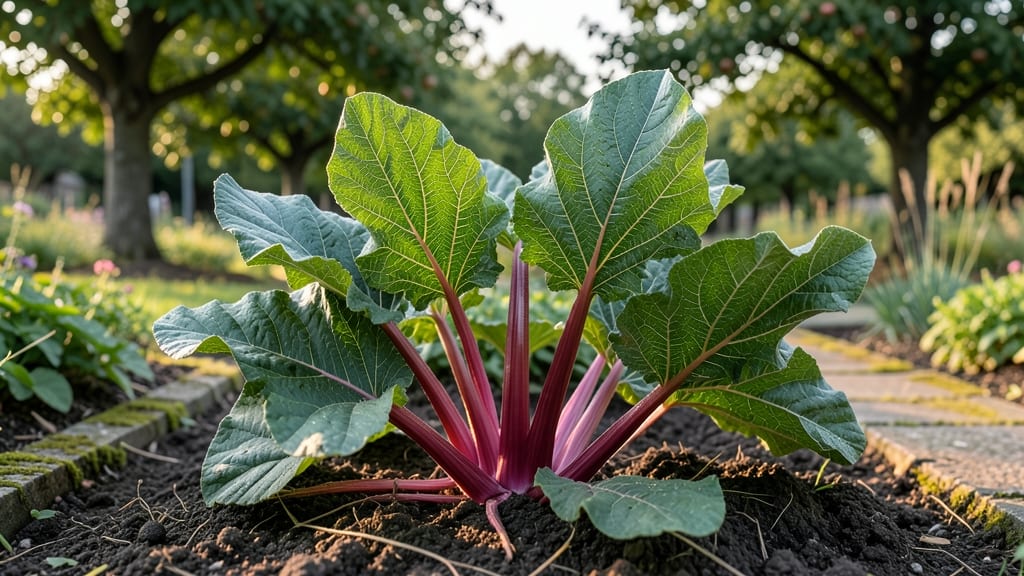
A large rhubarb plant starts with patience and the right conditions—this cold-hardy perennial rewards you with decades of harvests if you get the early steps right. 🌱 I’ve watched mine grow from a small crown to a sprawling, productive monster after just three years, and the secret lies in the soil, spacing, and timing.
Rhubarb thrives in cool climates, so plant it in early spring or fall when soil temperatures are below 60°F. Amend heavy clay with compost to improve drainage (rhubarb hates soggy roots), and space plants 3 feet apart—they’ll spread slowly but steadily.
The first year focuses on root establishment, not harvests, but by year two, you’ll have thick, vibrant stalks ready to pick. Pruning is key to size: cut stalks at the base after harvest, but never remove more than one-third in a season.
In late summer, trim back any flower stalks—they drain energy from growth. With proper care, a mature plant can produce 5-10 pounds of harvest per season, and it keeps growing bigger every year. This plant is the ultimate low-maintenance workhorse.
Once established, it handles drought better than most perennials and even survives light frosts. The only real enemy? Over-harvesting in early years. Let it build strength first—your future harvests depend on it.
📚 In This Guide
- What you need
- Instructions
- Tips and common mistakes
- Wrapping up and next steps
What you need
- ● Rhubarb crowns: 1–2 healthy, disease-free crowns (choose varieties like Victoria or Strawberry for larger plants).
- ● Well-draining soil: Mix 1 part compost with 2 parts garden soil (rhubarb thrives in slightly acidic, fertile soil, pH 6.0–6.8).
- ● Organic mulch: Straw or wood chips (2–3 inches thick) to retain moisture and suppress weeds.
- ● Balanced fertilizer: 10-10-10 or 5-10-10 (apply 1–2 tbsp per plant in early spring).
- ● Watering can or hose: With a gentle spray nozzle for deep watering (1–2 inches per week).
- ● Garden trowel or shovel (for planting and dividing).
- ● Garden fork (to loosen soil before planting).
- ● Pruning shears (for harvesting stalks and removing dead leaves).
- ● Gloves (to protect hands from thorns and soil).
- ● Measuring tape or ruler (to monitor plant growth and spacing).
- ● Row cover or frost cloth (for early spring protection).
- ● Plant support stakes (if stalks become top-heavy).
- ● Soil pH test kit (to ensure optimal growing conditions).
- ● Compost tea or seaweed extract (for a nutrient boost).
How to grow a large, productive rhubarb plant
Rhubarb thrives with patience—give it a few years, and you'll harvest stalks for decades.
🌱 Step 1: Choose the Right Location and Prepare the Soil
Rhubarb loves full sun but tolerates partial shade—just expect slightly smaller stalks. Pick a spot with at least 6 hours of direct sunlight daily and well-draining soil. I dig in 3-4 inches of compost into the top 12 inches of soil before planting to ensure rich, fertile ground. Rhubarb hates soggy roots, so if your soil drains poorly, mix in sand or perlite to improve aeration.
Test your soil pH—rhubarb prefers 6.0-6.8. If yours is too acidic, add lime to raise the pH. I like to spread a thin layer of wood ash (from untreated wood) around the planting area for a natural boost. Avoid fresh manure—it can burn the roots and cause uneven growth.
☀️ Step 2: Plant Crowns Correctly for Maximum Growth
Buy rhubarb crowns (not seeds) from a reputable nursery—they establish faster and produce larger stalks. Plant in early spring or fall, when temperatures are cool. Dig a hole 2 feet wide and 6 inches deep, placing the crown so the buds (eyes) face upward and the roots spread naturally. Space plants 3-4 feet apart—crowding leads to smaller, weaker stalks.
Cover the roots with 2-3 inches of soil, leaving the top of the crown exposed. Press gently but don’t compact the soil. Water deeply right after planting to settle the roots. Here’s the thing—rhubarb hates disturbance, so don’t move it once planted. Mark the spot with a stake if you forget where you buried it!
💧 Step 3: Water and Mulch for Year-Round Productivity
Rhubarb needs consistent moisture but won’t tolerate soggy soil. Water 1-2 times per week, giving 1 inch of water each time. You’ll know it’s right when the top 2 inches of soil feel damp but not waterlogged. Mulch with 3-4 inches of straw or wood chips to retain moisture, suppress weeds, and protect roots in winter. I add mulch in early spring and again in fall—this keeps the soil temperature stable and encourages steady growth.
Real talk: Overwatering is the #1 killer of rhubarb. If leaves yellow or wilt, it’s usually too much water. Let the soil dry slightly between waterings, especially in rainy seasons. A soaker hose works best—it delivers water directly to the roots without wetting the leaves, which can cause disease.
✂️ Step 4: Harvest Strategically for Long-Term Health
Wait 2-3 years before harvesting—young plants need time to establish strong roots. When ready, pull stalks gently but firmly at the base, twisting slightly to avoid damaging the plant. Harvest in early spring when stalks are 12-18 inches tall and 1 inch thick. Never take more than ⅓ of the stalks in a single harvest—this ensures the plant keeps growing.
Stop harvesting in late summer to let the plant store energy for winter. If you harvest too late, the stalks become tough and woody. I mark my calendar: first harvest in April, last harvest by August. After harvesting, water deeply to replenish moisture lost during stalk removal.
⏰ Step 5: Protect and Prune for Winter Hardiness
Rhubarb is extremely cold-hardy (zones 3-9), but young plants benefit from a thick layer of mulch (6+ inches) in winter. I pile on extra straw or leaves in November to insulate the crown. In early spring, remove the mulch before new growth appears—trapped moisture can rot the crown.
Prune dead or yellowing leaves in early spring to encourage new growth. Never cut into the crown itself—this is where next year’s stalks form. If you see blackened leaves or mold, it’s likely from too much moisture. Trim affected leaves immediately and improve drainage. With proper care, a single rhubarb plant can live 20+ years and produce harvests for decades!
Tips & tricks for growing a thriving rhubarb patch
Here's what nobody tells you about growing rhubarb that makes all the difference between a struggling plant and a prolific harvest.
Location is Everything: That 6 hours of sunlight is non-negotiable for maximum stalk production. I've planted rhubarb in partial shade and while it survives, the stalks are thin and sparse. If your yard only gets 4-5 hours of sun, consider growing it in containers where you can move it to sunnier spots during the growing season. The plant's natural growth habit means it'll still produce, but you won't get those thick, juicy stalks we all love.
Soil Preparation Pays Off: The 3-4 inches of compost and 12 inches of soil amendment I mentioned isn't just about fertility—it's about creating the perfect root environment. I've found that adding a handful of bone meal at planting time gives an extra phosphorus boost that encourages stronger root development. This is especially helpful if your soil tests low in phosphorus, which is common in many garden soils. The roots will thank you with decades of productivity.
Planting Depth Matters: When you're planting those rhubarb crowns, resist the urge to bury them too deeply. The crown should sit just below the soil surface with the buds facing upward. I've seen people bury crowns too deep, and while the plant might survive, it often produces fewer stalks. Think of it like planting potatoes—you want the crown exposed enough to encourage new growth while still providing stability.
Watering Wisdom: That 1-2 times per week watering schedule is a guideline, not a rule. In hot summers, you might need to water every other day, while in cooler months, once a week could be sufficient. The key is to check that top 2 inches of soil—it should feel like a wrung-out sponge, not a swamp. I've learned this the hard way after losing plants to root rot from overwatering. A simple moisture meter makes this check effortless and prevents guesswork.
Pro Tips for Large Rhubarb Plant
- Here's what nobody tells you about growing rhubarb that makes all the difference between a struggling plant and a prolific harvest.
- Location is Everything: That 6 hours of sunlight is non-negotiable for maximum stalk production.
- Soil Preparation Pays Off: The 3-4 inches of compost and 12 inches of soil amendment I mentioned isn't just about fertility—it's about creating the perfect root environment.
Frequently asked questions
Got questions about growing a large rhubarb plant? You’re not alone! Here are some of the most common queries—and their answers—to help you cultivate a thriving, productive patch.
How long does it take for a rhubarb plant to mature and produce harvestable stalks?
A newly planted rhubarb crown typically takes 1–2 years to establish and produce edible stalks. Be patient! The first year focuses on root growth, while the second year yields a modest harvest. Once mature (around year 3), a healthy plant can produce 5–10 pounds of stalks per season.
Is rhubarb truly cold-hardy? What zones can it survive in?
Rhubarb is one of the most cold-tolerant perennials, thriving in USDA Zones 3–8. It can handle winter temperatures down to -30°F (-34°C) with proper mulching. In colder climates, its roots act like a natural antifreeze—just protect young plants with a thick layer of straw or leaves.
Can you eat rhubarb leaves? Are they safe or toxic?
No, never eat the leaves!
While the stalks are tart and delicious, rhubarb leaves contain oxalic acid, which is toxic in large amounts. If ingested, they can cause nausea, vomiting, or even kidney damage. Stick to the vibrant red, green, or pink stalks for cooking and baking.
How do I encourage my rhubarb plant to grow larger and produce more stalks?
For a bigger, more productive plant, focus on these tips:
- Full sun (6+ hours/day)—rhubarb loves light!
- Consistent moisture—keep soil evenly damp (not soggy).
- Divide every 3–4 years—overcrowded plants produce fewer stalks.
- Harvest wisely—cut stalks at ground level, leaving the leaf crown intact.
What pests or diseases should I watch for in large rhubarb plants?
Rhubarb is generally pest-resistant, but keep an eye out for:
- Japanese beetles—handpick or use neem oil.
- Fungal diseases (like leaf spot)—improve airflow, avoid overhead watering.
- Rodents—mice may nibble crowns in winter; protect with wire mesh.
Can I grow rhubarb in containers? What’s the best setup?
Yes! Rhubarb adapts well to containers if you choose the right size. Use a 12–18-inch deep pot with drainage holes and a well-draining potting mix. Place in full sun and water consistently. Note: Container-grown rhubarb may produce smaller yields than in-ground plants but works for patios or small spaces.
Wrapping up and next steps
Growing a large rhubarb plant is a rewarding journey—packed with cold-hardy resilience, year-round harvests, and minimal upkeep once established. 🌱 With the right soil, sunlight, and patience, you’ll enjoy vibrant stalks for pies, jams, or fresh eating for decades.
Whether you’re a seasoned gardener or just starting, this perennial gem makes gardening feel like a sweet success!
Ready to dive in? Start by selecting your variety—like ‘Victoria’ or ‘Cherry’—then mark your calendar for early spring planting. Happy growing! 🌿