
Planting
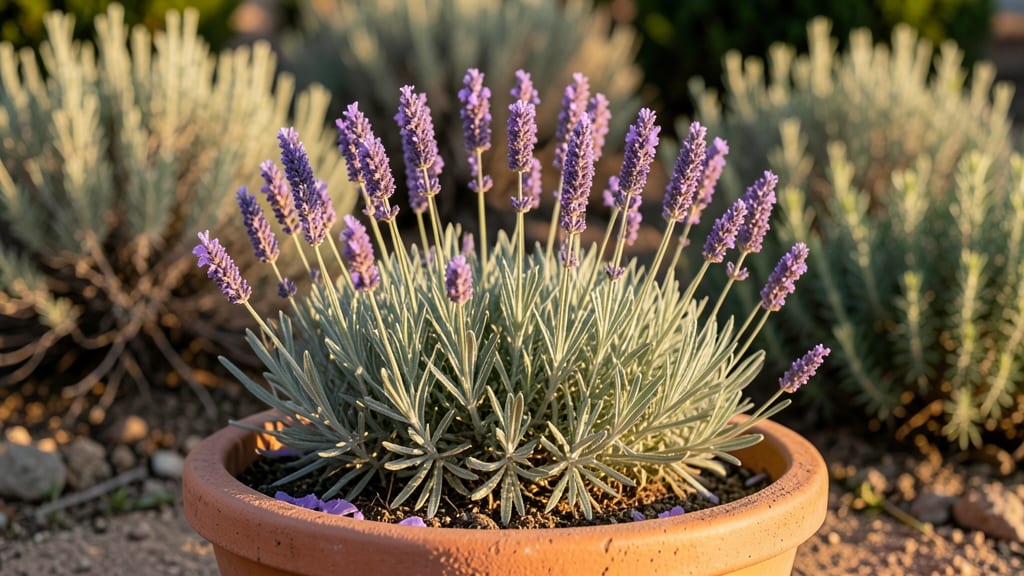
Lavender is a perennial in Zone 6 but requires winter protection, as it thrives best in USDA Zones 5-9 with consistent cold hardiness challenges below 10°F (-12°C). Mulching and microclimate adjustments can improve survival rates.
Lavender's resilience depends on its variety and growing conditions. While it naturally thrives in Zones 5-9, Zone 6's colder winters can damage its woody stems and roots. 🌿 Many gardeners in this zone successfully grow lavender by choosing hardier varieties like English lavender and providing extra insulation during winter months.
The key is protecting the crown and roots from prolonged exposure to freezing temperatures, which can lead to dieback or even plant death.
For best results, I recommend planting lavender in well-draining soil and providing a thick layer of mulch around the base. This helps regulate soil temperature and prevents moisture-related stress.
Additionally, placing lavender near a south-facing wall or using windbreaks can create a more favorable microclimate, shielding it from harsh winter winds.
💡 In This Article
- Understanding Lavender’s Cold Hardiness Limits in Zone 6
- Protecting Lavender in Zone 6: Winter Care Strategies
Understanding lavender’s cold hardiness limits in Zone 6
Lavender's natural hardiness spans USDA Zones 5-9, but its survival in Zone 6 hinges on understanding its biological limits. Most lavender varieties struggle when nighttime temperatures dip below 10°F (-12°C) for extended periods. This is because lavender's woody stems and roots contain moisture that freezes and expands, causing cellular damage.
In Zone 6, where winter lows can reach -10°F to -20°F (-23°C to -29°C), lavender's tender growth points become vulnerable to frost desiccation—a process where ice crystals form in plant tissues, dehydrating and killing cells.
The key difference between lavender varieties lies in their root systems.
English lavender (Lavandula angustifolia) has a deeper root structure that can better withstand cold snaps, while French lavender (Lavandula dentata) has shallower roots that freeze more easily. 🌱 Varieties like 'Munstead' or 'Hidcote' are often recommended for Zone 6 because their genetic makeup allows them to enter dormancy earlier and recover faster in spring.
The critical factor isn't just temperature tolerance, but how quickly the plant can rebound from winter stress.
Zone 6's unpredictable winter patterns—where warm spells can trigger premature growth followed by sudden freezes—create additional challenges. Lavender's foliage can survive temperatures down to 20°F (-7°C), but new growth emerging too early often succumbs to late frosts.
This is why many gardeners in Zone 6 report lavender plants that appear dead in early spring only to regrow from the base. The plant's ability to regenerate depends on protecting the crown (the area where stems meet roots) from prolonged freezing.
Soil composition plays a surprising role in lavender's cold hardiness. Heavy clay soils retain moisture and conduct cold more efficiently than sandy, well-draining soils. In Zone 6, lavender planted in clay-rich areas may experience root rot from winter moisture combined with cold stress.
The ideal soil mix for Zone 6 lavender should contain 60-70% sand, 20-30% loam, and minimal organic matter to prevent waterlogging. This mimics the Mediterranean conditions lavender evolved in, where dry, rocky soils protect against temperature extremes.
What most gardeners overlook is lavender's sensitivity to winter moisture. Wet conditions during dormancy can lead to fungal diseases like root rot, which weakens the plant's ability to survive cold snaps. In Zone 6, where snowmelt and spring rains are common, proper drainage becomes as important as temperature protection.
A well-drained site with a slight slope (about 5-10 degrees) helps water run off quickly, reducing the risk of crown rot during winter thaw cycles.
For visual learners, imagine lavender's growth cycle as a delicate balance: in summer, it thrives in full sun with minimal water; in winter, it needs shelter from wind and moisture.
The plant's silvery-green foliage actually contains tiny hairs that help reflect sunlight in hot climates, but these same hairs can trap moisture in cold, humid Zone 6 winters, creating ideal conditions for fungal growth. This dual adaptation explains why lavender requires such careful winter management in marginal zones.