
Planting
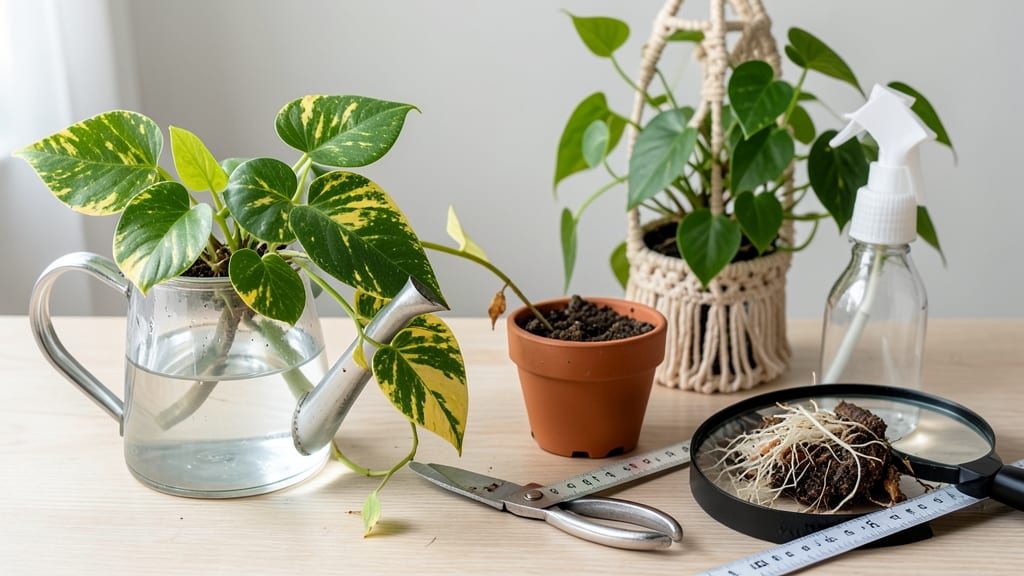
Your pothos plant is telling you something—it’s not dying, it’s just stressed. 🌿 The key to saving it lies in three simple steps that address the real problem: whether it’s thirsty, drowning, or begging for light.
I’ve nursed back more pothos than I’d like to admit, and the fixes are always the same—just different fixes for different symptoms.
Start by checking the soil: if it’s bone-dry, underwatering is the issue; if it’s soggy, you’ve got root rot. Yellow leaves? Too much water or poor drainage.
Brown crispy edges? Not enough humidity. The good news is pothos are tough—they’ll bounce back faster than you think once you correct the problem.
You’ll need basic tools: clean scissors, a new pot (if needed), and fresh potting mix. Within 1-2 weeks of proper care, you’ll see new growth pushing from the stems. The plant will look fuller, leaves will perk up, and you’ll be back to enjoying its lush, trailing beauty.
This method works for any pothos variety, whether it’s variegated, golden, or solid green. The secret is paying attention to what the plant is actually telling you—not guessing. Let’s get it back to thriving.
📚 In This Guide
- What you need
- Instructions
- Tips and common mistakes
- Wrapping up and next steps
What you need
- ● Pothos plant – The star of the show! (1–3 plants, depending on size)
- ● Clean, room-temperature water – 1–2 cups (for watering)
- ● Well-draining potting mix – 1–2 bags (aim for a blend with perlite or orchid bark for aeration)
- ● Medium to large pot – 1 (with drainage holes; 6–12 inches in diameter, depending on plant size)
- ● Pruning shears or clean scissors – 1 (sterilized with rubbing alcohol to prevent disease)
- ● Spray bottle – 1 (for misting, if needed)
- ● Household items for diagnosis: Flashlight (to check roots)
- ● Tweezers (to inspect pests)
- ● Fertilizer – 1 (balanced liquid fertilizer, diluted to half-strength, like 10-10-10 or a gentle organic option)
- ● Rooting hormone – 1 (gel or powder, to encourage regrowth if propagating)
- ● Humidity tray or pebble tray – 1 (to boost moisture levels if your home is dry)
- ● New decorative pot – 1 (for a fresh look once your pothos is revived!)
- ● Aluminum foil or plastic wrap – A small piece (to create a mini greenhouse for cuttings)
Step-by-Step instructions for reviving a struggling pothos
Here's how I bring droopy pothos back to life—no fancy tools, just attention to what it truly needs.
💧 Step 1: Check and Adjust Watering Immediately
Pothos hate soggy roots just as much as they hate thirst. Stick your finger 1-2 inches deep into the soil—if it feels bone dry, water thoroughly until it drains from the bottom. If it's still damp, wait another day before checking again. Overwatering is the #1 killer, and you'll know it's time to water when the soil feels like a wrung-out sponge.
After watering, empty the saucer under the pot. Pothos roots rot in standing water, and you'll see this as yellowing leaves even after fixing the watering. If the soil smells musty, that's your warning sign to hold off on watering for a full week. I like to water mine in the morning so any excess has time to evaporate before nightfall.
☀️ Step 2: Evaluate Light Exposure and Move Accordingly
Droopy pothos often means light stress—either too much or too little. Move your plant to a spot with bright, indirect light (think east or north-facing window). If it's currently in harsh afternoon sun, you'll see crispy brown edges on leaves within days of moving it. Direct sunlight burns pothos leaves faster than you'd think.
For low-light situations, place it within 3-5 feet of a window where it gets filtered light. You'll notice new growth within 2-3 weeks if the light is right—the leaves will perk up and develop that classic pothos heart shape. If the plant stays limp, it might need a stronger light source like a grow bulb.
✂️ Step 3: Prune Damaged Leaves and Encourage New Growth
Use clean, sharp scissors to snip off any yellow or brown leaves at the base of the stem. Don't worry about saving every leaf—removing damaged foliage lets the plant redirect energy to healthy growth. I always prune in the morning when the plant is hydrated, and I never cut more than 25% of the plant at once.
Look for nodes (those little bumps where leaves grow) along the stems. If you see healthy green leaves with visible nodes, you can propagate those cuttings in water—they'll root within 2-3 weeks. This not only revives your main plant but gives you free new pothos babies. Just place the cuttings in water with 2-3 nodes submerged and watch for tiny white roots to appear.
Tips & tricks for reviving a pothos plant
Real talk: These small tweaks make all the difference between a sad, droopy pothos and one that bounces back stronger than ever.
Soil Check Technique: The finger test in Step 1 is your best friend—but here's the secret I learned after overwatering mine twice. Press your finger 1-2 inches deep and hold for 5 seconds. If the soil feels cool and clumps together, it's time to water. Warm, crumbly soil means wait another day. This prevents that "just in case" overwatering that kills pothos faster than anything.
Light Positioning Hack: When moving your pothos in Step 2, don't just pick a window—rotate it 90 degrees every few days. This ensures even growth and prevents lopsided plants. I place mine on a rotating plant stand so I don't have to remember to turn it manually. You'll notice new leaves emerging from all sides within those 2-3 weeks.
Pruning Pro Tip: In Step 3, when you're removing damaged leaves, save those healthy cuttings for propagation. After cutting, place them in a jar of water with just 2-3 nodes submerged. Change the water every 3 days and watch for roots in about 2 weeks. This turns your "fix" into free new plants—it's like getting a discount at the nursery!
Pro Tips for Save A Pothos Plant
- Real talk: These small tweaks make all the difference between a sad, droopy pothos and one that bounces back stronger than ever.
- Soil Check Technique: The finger test in Step 1 is your best friend—but here's the secret I learned after overwatering mine twice.
- Light Positioning Hack: When moving your pothos in Step 2, don't just pick a window—rotate it 90 degrees every few days.
Frequently asked questions
about saving a pothos plant—because even the hardiest plants need a little TLC sometimes!Why are my pothos leaves turning yellow?
Yellow leaves are usually a sign of overwatering or nutrient deficiency. Check the soil—if it’s soggy, let it dry out. If roots look mushy, trim them back and repot in fresh, well-draining mix. Yellowing can also happen if your pothos isn’t getting enough light (but not direct sun!).
How often should I water a struggling pothos?
Pothos thrives on infrequent but deep watering. Stick your finger 1-2 inches into the soil—if it’s dry, water thoroughly until it drains from the bottom. Wait until the top inch is dry again before watering. Overwatering is the #1 killer! In winter, reduce watering to every 2-3 weeks.
Can I save a pothos with only a few brown, crispy leaves?
Trim the brown, crispy leaves with clean scissors—it’s actually helping your plant focus energy on healthy growth. If the damage is severe, propagate the healthy stems in water or soil. Just avoid cutting into green, firm leaves—they’re still salvageable!
Is my pothos getting too much or too little light?
Pothos loves bright, indirect light but can tolerate low light. Signs of too much light: Brown, crispy patches (move to shade). Signs of too little light: Leggy stems and sparse leaves (rotate the plant or add a grow light). A north- or east-facing window is ideal!
What should I do if my pothos roots are rotting?
Act fast! Gently remove the plant from its pot and trim all mushy, black roots with sterilized scissors. Repot in a clean container with fresh, fast-draining soil (add perlite or orchid bark). Hold off on watering for 3-5 days to let roots recover. If roots are beyond saving, propagate the stems!
How can I revive a pothos that’s completely wilted?
Don’t panic! First, check the roots—if they’re still firm and white, your pothos can bounce back. Give it a cool shower to remove dust, then place it in bright, indirect light. Reduce watering temporarily and mist the leaves lightly. Within 1-2 weeks, you should see new growth!
Wrapping up and next steps
Reviving your pothos plant is totally doable—even if it’s looking a little worse for wear! 🌿 With the right care (like pruning, adjusting water, and checking light), you’ll have it thriving in no time. Remember, plants are resilient, and your green thumb is growing stronger with every step.
Now that you’re armed with the know-how, take action! Start with one small change—like trimming those yellow leaves or moving it to a brighter spot—and watch your pothos bounce back. Soon, you’ll be the proud parent of a lush, happy plant! 🌱