
Planting
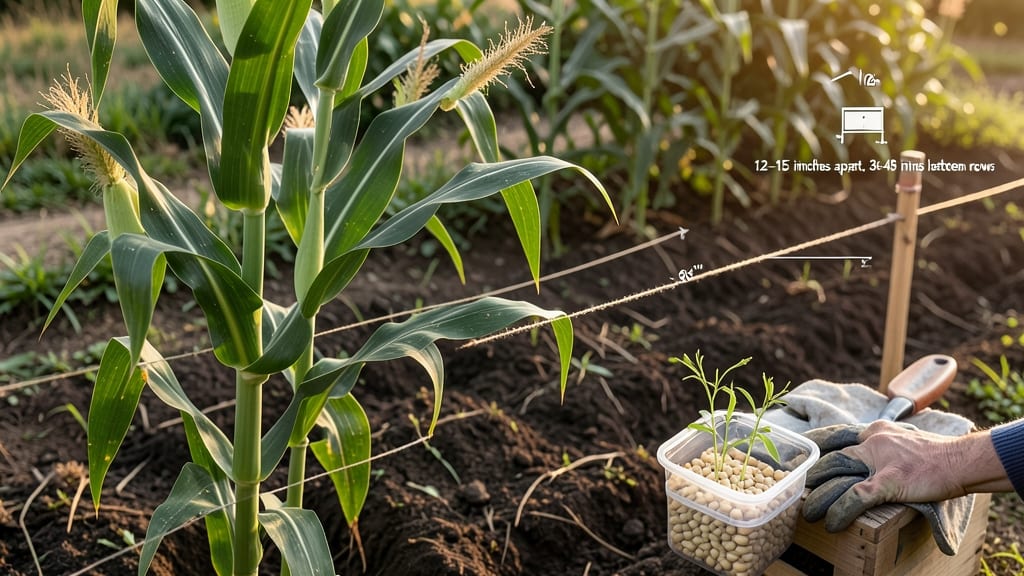
Planting corn rows straight and true means taller stalks, more ears, and a harvest that makes your neighbors jealous. 🌽 The secret isn't just dropping seeds—it's spacing them 12-15 inches apart in rows 30-36 inches wide, with the rows running north-south to catch every ray of summer sun.
I learned this the hard way when my first attempt produced lanky, shaded stalks with half the expected ears.
Start with well-drained soil that's warm and loose to 2 inches deep—corn roots need room to stretch. A pre-planting soil test for nitrogen and phosphorus saves you from midseason scrambling, and a light tilling or raking breaks up compaction.
For beginners, marking rows with a garden hose or string line keeps things straight without guessing.
What you end up with is a stand of corn that towers over your fence, each stalk producing 2-3 ears instead of just one. The plants shade out weeds naturally, and the ears develop uniformly—no small, undersized surprises.
By mid-summer, you'll be harvesting golden cobs that taste sweeter than anything from the store.
Works for backyard gardens, small farms, or even container growing (with dwarf varieties). The same principles apply whether you're planting 10 rows or 100—just scale the spacing. Here's how to do it right the first time.
📚 In This Guide
- What you need
- Instructions
- Tips and common mistakes
- Wrapping up and next steps
What you need
- ● Corn seeds: Choose heirloom or hybrid varieties suited to your climate (e.g., Golden Bantam, Silver Queen, or dent corn). Aim for 12,000–15,000 seeds per acre (or ~1 lb per 100 ft of row for home gardens).
- ● Planting rows: Mark rows with string lines, garden flags, or a simple stick spaced 2.5–4 feet apart (wider for larger varieties).
- ● Soil preparation tools: Garden tiller or rototiller (for large plots)
- ● Hand trowel or broadfork (for smaller gardens)
- ● Rake (to smooth soil after tilling)
- ● Planting tools: Hand planter or corn planter (for precision)
- ● OR a stick or dibble (DIY option)
- ● Gloves (to protect your hands)
- ● Watering supplies: Garden hose with adjustable nozzle
- ● OR watering can (for smaller plots)
- ○ Fertilizer: A balanced 10-10-10 or 5-10-10 fertilizer (apply 1–2 lbs per 100 ft of row at planting). Optional: Compost or aged manure for organic enrichment.
- ○ Mulch (optional but helpful): Straw or grass clippings to retain moisture and suppress weeds.
- ● Soil test: Check pH (ideal: 6.0–6.8) and nutrient levels before planting.
- ● Sunlight: Corn needs full sun (6+ hours daily)—pick a south-facing spot if possible.
- ● Spacing: Plant seeds 1–1.5 inches deep and 6–12 inches apart in rows (closer spacing for bush varieties).
- ● Weather watch: Aim to plant when soil temps reach 60°F+ and after the last frost date.
- ● Pollination plan: For home gardens, plant at least two rows (20+ plants) to ensure cross-pollination.
Step-by-step instructions for planting corn in rows
Here's how to plant corn with the precision spacing that guarantees strong stalks and bumper harvests.
🌱 Step 1: Prepare the Soil and Mark Planting Rows
Corn thrives in well-drained, fertile soil with a pH between 6.0 and 6.8. Work in 2-3 inches of compost or aged manure into the top 6 inches of soil two weeks before planting. This gives microbes time to break it down and won't leave clumps that choke young roots.
Use a garden rake to create 36-inch wide planting beds—this gives you 12 inches between rows for easy access and proper airflow. Mark the edges of each row with a wooden stake or string line to maintain straight, even spacing. Corn roots love depth, so loosen the soil to 12 inches deep with a broadfork to prevent compaction that restricts growth.
🌱 Step 2: Plant Seeds at Proper Depth and Spacing
Plant seeds 1 inch deep and 4-6 inches apart within the row. I like to use a corn planter or a small hand-held dibble to create uniform holes—this prevents uneven germination that leads to patchy stands. For 4 rows, you'll need about 1 quart of seeds (roughly 120-150 seeds).
Drop 2-3 seeds per hole since germination rates vary. Cover lightly with soil and tap gently to settle. Space rows 30-36 inches apart—this gives each plant room to develop strong stalks without competing for sunlight. If you're planting in blocks rather than single rows, space blocks 24-30 inches apart for wind resistance and better pollination.
☀️ Step 3: Water Immediately and Maintain Moisture
Water the seeds deeply right after planting to settle the soil and trigger germination. Corn seeds need consistent moisture—keep the soil evenly damp (not soggy) until seedlings emerge, which typically takes 7-14 days depending on temperature. Use a soaker hose to water at the base rather than overhead to prevent fungal diseases.
Once seedlings reach 6 inches tall, reduce watering slightly but maintain 1 inch of water per week. You'll see strong growth when the lowest leaves stay green—yellowing means the soil is either too dry or waterlogged. Mulch with 2-3 inches of straw after germination to retain moisture and suppress weeds.
✂️ Step 4: Thin Seedlings and Monitor for Pests
When seedlings are 4-6 inches tall and have 2-3 true leaves, thin to the strongest 2 plants per hill (or 1 plant every 4-6 inches if you didn't initially plant multiple seeds). Use scissors to snip weak stems at soil level—this prevents disturbing roots of the remaining plants. Strong seedlings will have thick stems and deep green leaves with no yellowing.
Watch for corn earworms and cutworms after thinning. Handpick larvae at night when they're most active, or use row covers for early planting. If you notice silky threads (tassel development) on the top of plants, that's normal—but if you see brown spots on leaves, it could be leaf blight, which thrives in wet conditions. Space rows wider if your area gets heavy rain to improve airflow.
🌿 Step 5: Fertilize and Support for Maximum Yield
When plants reach 12 inches tall, side-dress with ½ cup of 10-10-10 fertilizer per plant, working it into the soil 2 inches away from the stalk. This gives them a mid-season nutrient boost without burning tender roots. Corn is heavy feeders, so repeat this 2-3 weeks later if your soil isn't exceptionally rich. Organic options like fish emulsion work too—just follow label rates.
Tall varieties may need staking or trellising in windy areas. Drive a 6-foot stake into the ground 6 inches from the plant and tie the stalk loosely with soft twine as it grows. This prevents lodging (falling over) and ensures even sunlight exposure. Harvest when silks turn brown and kernels dent when pressed firmly—usually 60-90 days after planting, depending on the variety.
Tips & tricks for perfect corn row planting
These precision-focused strategies will help you avoid common gardening pitfalls and maximize your corn harvest.
Soil Preparation Secret: The two-week composting window before planting is non-negotiable—it's the difference between clumpy soil that stunts roots and a perfect growing environment. I like to mix in a bit of perlite or vermiculite (about 10% by volume) when amending the soil to improve drainage without losing nutrients. This creates tiny air pockets that corn roots absolutely thrive in, especially in heavier clay soils.
Planting Equipment Game-Changer: While a simple hand dibble works, I've found that using a corn planter attachment for your tiller creates perfectly spaced holes with minimal effort. If you don't have one, a small hand-held dibble with a 4-inch spacing guide marked on the handle works just as well. The key is consistency—every hole should be the same depth (1 inch) and spacing (4-6 inches) to prevent uneven competition between plants.
Watering Wisdom: That first deep watering after planting isn't just about settling the soil—it's about creating a moisture reservoir that triggers germination. I've learned to water again 3 days later to maintain consistent dampness without over-saturating. Think of it like setting up a hydration station for your seeds rather than just giving them a one-time drink. The soil should feel like a wrung-out sponge, not a swamp.
Thinning Technique: When it's time to thin seedlings, I've found that using a pair of clean, sharp scissors is gentler than pulling by hand. Cut just above soil level to avoid disturbing the roots of remaining plants. Pro tip: Thin on a cloudy day or in the late afternoon to reduce stress on the plants. You'll notice the remaining seedlings perk up noticeably within 24 hours of proper thinning.
Pro Tips for Plant Corn Rows
- These precision-focused strategies will help you avoid common gardening pitfalls and maximize your corn harvest.
- Soil Preparation Secret: The two-week composting window before planting is non-negotiable—it's the difference between clumpy soil that stunts roots and a perfect growing environment.
- Planting Equipment Game-Changer: While a simple hand dibble works, I've found that using a corn planter attachment for your tiller creates perfectly spaced holes with minimal effort.
Frequently asked questions
Got questions about planting corn rows? You’re not alone—growing corn takes precision, timing, and a few tricks of the trade. Below, we’ve answered the most common questions to help you plant with confidence and avoid costly mistakes.
What’s the ideal spacing between corn rows for home gardens?
For home gardens, plant corn rows 2 to 4 feet apart, depending on your variety and space. Taller varieties (like sweet corn) need wider spacing (3–4 ft) to prevent shading, while shorter types (like popcorn) can thrive in tighter rows (2–3 ft). Always check seed packet guidelines!
When is the best time to plant corn rows?
Corn loves warmth—wait until soil temperatures reach 60°F (15°C) or higher and all frost risk has passed. In most regions, this means late spring (April–June). If planting early, use row covers to protect seedlings from cold snaps. Pro tip: Plant after the last frost date to avoid stunted growth!
Can I plant corn rows in the same spot every year?
No—corn is a heavy feeder and depletes soil nutrients. Rotate crops annually to prevent disease and nutrient depletion. Pair it with legumes (like beans or peas) the next year to replenish nitrogen. Avoid planting corn in the same spot for 3+ years without amending soil.
Do I need a tractor to plant corn rows properly?
Not at all! For small gardens, a hand tiller or broadfork works great for loosening soil and creating rows. Use a stick or string line to mark straight rows, or try a no-till planter for precision. Larger plots may benefit from a tractor with a corn planter attachment for efficiency.
What should I do if my corn seedlings look weak or wilted after planting?
Weak seedlings often signal poor soil contact, overwatering, or pests. Check for:
- Damping-off fungus: Thin seedlings to improve airflow and avoid overhead watering.
- Cutworms: Use collars (toilet paper rolls) around stems or apply diatomaceous earth.
- Underwatering: Keep soil consistently moist (1–1.5 inches of water per week).
Wrapping up and next steps
Planting corn rows with precision spacing isn’t just about technique—it’s about harvesting success. By following the right spacing, soil prep, and timing, you’ll give your corn the best shot at thriving, whether you’re a backyard gardener or a small-scale farmer. 🌱
Now that you’re armed with the know-how, roll up your sleeves and get planting! Start small if you’re new, track your progress, and soon you’ll be reaping golden ears of corn. Happy growing! 🌽