
Planting
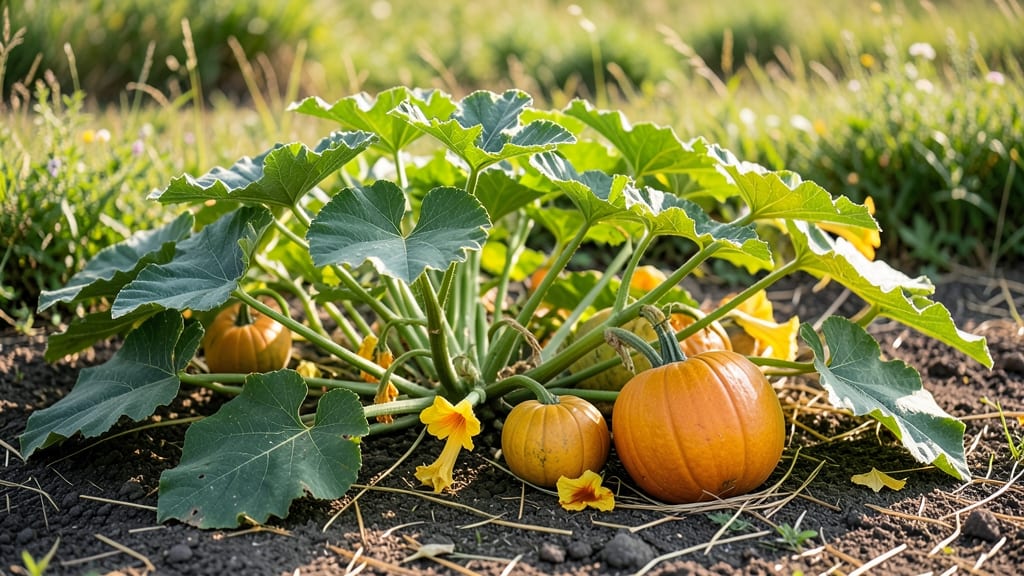
Identifying pumpkin plants starts with those bold, lobed leaves that look like tiny maples. 🌿 I used to confuse them with squash until I noticed how pumpkin vines sprawl aggressively—some varieties stretch 30+ feet—while squash vines stay more compact.
The key is in the leaf veins too: pumpkin leaves have deep indentations between lobes, almost like a jagged star shape. Once you spot the first yellow trumpet-shaped flowers (male and female), you’ll know for sure.
The female flowers have a tiny pumpkin forming at their base, while males just have a stem. Ornamental pumpkins might have ruffled edges or unusual colors, but their leaf structure stays the same—just bigger or more intricate.
Growth stages matter too: seedlings have round cotyledons, then develop those classic lobed leaves within 2-3 weeks. Pruning becomes easier once you recognize the plant’s natural sprawl, and pest control shifts when you know whether you’re dealing with edible or ornamental varieties. Confusion with gourds?
Look at the stems: pumpkin stems are hairy and ridged, while gourd stems are smoother. Now you’ll spot them anywhere—even in your neighbor’s yard!
📚 In This Guide
- What you need
- Instructions
- Tips and common mistakes
- Wrapping up and next steps
What you need
- ● Pumpkin plants or seedlings – Healthy, mature specimens (or young plants for observation).
- ● Garden gloves – A pair (nitrile or cotton) to protect your hands while handling vines or leaves.
- ● Hand lens or magnifying glass – A 2x–5x magnification tool to inspect leaf details up close.
- ● Measuring tape or ruler – A flexible 12-inch or 24-inch tape for measuring vine length and leaf size.
- ● Notebook and pen – To record observations like leaf shape, vine patterns, and growth stages.
- ● Camera or smartphone – For capturing images of leaves, vines, and flowers for later reference.
- ○ Pruning shears (optional but helpful) – Small, sharp shears for trimming vines or leaves if needed.
- ● Garden twine or stakes – To support vines if you’re growing pumpkins and want to track growth patterns.
- ● Field guide or plant ID app – Like iNaturalist or PlantNet for cross-referencing your findings.
- ● Garden journal with labeled sections – For tracking specific pumpkin varieties over time.
- ● UV flashlight – To check for subtle vein patterns on leaves under ultraviolet light.
- ● Reference photos of pumpkin varieties – Printed or digital for side-by-side comparisons.
How to identify pumpkin plants: key visual and growth clues
Spotting pumpkin plants early saves you from confusion with squash or vines—and here’s how to recognize them instantly.
🌿 Step 1: Examine the Leaves for Classic Lobed Patterns
Pumpkin leaves are your first clue—they’re deeply lobed, almost like tiny maple leaves, with 5-7 jagged points per leaf. Start by comparing them to squash leaves: pumpkin leaves are lighter green and more delicate, while squash leaves are broader with fewer, rounder lobes. Run your fingers along the leaf edges—the serrated, almost saw-toothed texture is unmistakable.
I always check the first true leaves (the second set after the initial seed leaves) because they’re the most reliable for identification. If you see hairy stems along with the lobed leaves, that’s another pumpkin telltale sign—many squash varieties lack this fuzziness. Hold the leaf up to light: the veins radiate outward in a palmate pattern (like fingers spreading from a hand), which is distinctive.
🌱 Step 2: Observe Vine Growth Habits and Tendrils
Pumpkin vines grow aggressively horizontal, spreading outward in a fan shape rather than climbing vertically like cucumbers. Look for tendrils—the curly, thread-like growths that wrap around supports—but pumpkin tendrils are shorter and stouter than cucumber tendrils. These tendrils help distinguish them from melons, which often have smoother, non-tendril vines.
Here’s the thing—pumpkin vines root where they touch soil, creating additional anchor points. If you see secondary roots forming at vine nodes, that’s a dead giveaway. I’ve seen beginners mistake pumpkin vines for morning glory or even ivy because of this habit, but the lobed leaves rule them out instantly.
☀️ Step 3: Check for Male vs. Female Flowers (The Ultimate Test)
Once vines mature, flowers confirm the ID. Male pumpkin flowers have long, slender stems and no swelling at the base, while female flowers (the ones that develop into pumpkins) have a small pumpkin-shaped bulb at the base. Wait until late morning to check—flowers close by afternoon, and you’ll miss the key details.
Real talk: if you see yellow blossoms with no bulb, it’s likely a male flower, but don’t dismiss it. Pollination requires both, so keep an eye out for female flowers. The bulb at the base of female flowers starts pea-sized and grows rapidly—this is when you’ll see tiny pumpkins forming within 5-7 days of pollination. That’s your definitive proof.
⏰ Step 4: Time the Growth Stages for Confidence
Pumpkin plants follow a predictable timeline. Germination happens in 5-10 days at 70-85°F soil temps, and the first true leaves appear within 7-10 days after sprouting. By 3-4 weeks, vines should be 12-18 inches long with those telltale lobed leaves. If your plants are growing slower, check for adequate sunlight—pumpkins need full sun (6-8 hours daily) to thrive.
Don’t skip this step: if your plants are leggy with pale leaves, they’re light-starved. Move them to a sunnier spot immediately. Leggy growth is a common mistake when starting indoors—pumpkins hate being transplanted too early. Wait until all danger of frost has passed and soil is at least 60°F before moving them outside.
Tips & tricks for perfect pumpkin plant identification
Here's what nobody tells you about spotting pumpkins before they're obvious—these tricks will save you from garden mix-ups.
Leaf Inspection Pro Tip: Hold a pumpkin leaf up to a bright window and look for the palmate vein pattern—it should look like fingers radiating from a hand. The 5-7 jagged lobes are your best clue, but don't overlook the hairy stems. Many squash varieties have smooth stems, while pumpkin stems often have fine, fuzzy hairs. I've seen gardeners confuse pumpkin leaves with morning glory vines because they focus only on the leaf shape, but those vines lack the distinctive palmate veins.
Vine Growth Secret: The horizontal spread is your best friend—pumpkin vines grow outward in a fan shape, never climbing like cucumbers. Watch for those stout tendrils that are thicker than cucumber tendrils. Here's the thing: if you see vines rooting where they touch soil, that's your definitive sign. I once had a neighbor swear their "morning glory" was a pumpkin vine because it looked similar, but the lobed leaves gave it away instantly.
Timing is Everything: Those 5-10 days for germination at 70-85°F soil temps are critical—if your seeds aren't sprouting in that window, check your soil temperature. First true leaves should appear within 7-10 days after sprouting, and by 3-4 weeks, you should see those distinctive 12-18 inch vines. I always check for the pea-sized bulb at the base of female flowers—this is your ultimate confirmation test and happens within 5-7 days after pollination.
Sunlight Strategy: Pumpkins need full sun (6-8 hours daily), but here's what nobody warns you about: if your plants develop leggy growth with pale leaves, they're light-starved. Move them immediately to a sunnier spot—pumpkins hate being transplanted early, so wait until soil reaches at least 60°F and all frost danger has passed. I've seen gardeners give up on pumpkin plants too soon because they didn't realize the plants just needed more light.
Pro Tips for Identify Pumpkin Plant
- Here's what nobody tells you about spotting pumpkins before they're obvious—these tricks will save you from garden mix-ups.
- Leaf Inspection Pro Tip: Hold a pumpkin leaf up to a bright window and look for the palmate vein pattern—it should look like fingers radiating from a hand.
- Vine Growth Secret: The horizontal spread is your best friend—pumpkin vines grow outward in a fan shape, never climbing like cucumbers.
Frequently asked questions
Got questions about spotting pumpkin plants? You’re not alone! Here are answers to the most common queries—so you can confidently tell a pumpkin vine from its lookalikes (like squash or gourds).
How do I tell a pumpkin plant apart from a squash plant?
Pumpkin plants and squash plants share similar vines, but their leaves and flowers differ. Pumpkin leaves are lobed with 3-5 deep indentations (like a jagged star), while squash leaves are broader with shallower lobes. Also, pumpkin vines grow longer and more sprawling (up to 20 feet!), while squash vines stay shorter. Check the fruit too—pumpkins have stems that curve away from the vine, while squash stems stay attached.
When is the best time to identify pumpkin plants in the garden?
The ideal time to ID pumpkin plants is 4-6 weeks after germination, when leaves are fully unfurled but before vines get too tangled. Early identification helps you prune suckers (side shoots) for better fruit growth. If you’re unsure, wait until flowers appear—pumpkin blooms are yellow with a prominent spur at the base, while squash flowers lack this feature.
What if my pumpkin plant looks diseased? How can I tell?
Healthy pumpkin plants have vibrant green leaves and sturdy vines. Watch for these red flags:
- Yellowing leaves (could mean powdery mildew or nutrient deficiency).
- Holes or chewed edges (pests like cucumber beetles or squash bugs).
- Wilted or blackened stems (fungal diseases like downy mildew or bacterial wilt).
Can I grow pumpkins from seeds if I don’t have a mature plant to identify?
Start with reliable pumpkin seeds (like ‘Jack Be Little’ or ‘Howden’) from a nursery or seed catalog. If you’re salvaging seeds from store-bought pumpkins, save only heirloom or organic varieties—hybrid seeds won’t grow true. For a foolproof ID, label your plants early or grow them in separate beds to avoid cross-pollination with squash or gourds.
Are there pumpkin lookalikes I should watch out for?
Yes! Here’s a quick guide to common imposters:
Plant
Key Differences
Butternut squash
Leaves are wider with fewer lobes; vines are bushier. Fruit grows upright.
Zucchini
Leaves are smooth-edged or lightly lobed; flowers are all female (no male blooms).
Winter squash (e.g., acorn)
Vines are shorter and more compact; leaves are hairy.
Gourds (e.g., apple or turkey gourd)
Leaves are thicker and waxy; vines are woody and persistent.
Wrapping up and next steps
Identifying pumpkin plants is all about paying attention to the leaf shape, vine growth, and flower patterns—and now, you’ve got the expert tips to spot them like a pro! 🌱 Whether you’re a seasoned gardener or just starting out, recognizing these key features will help you grow thriving pumpkins with confidence.
Ready to put your new knowledge to work? Head to your garden (or a local nursery) and start observing those vines—you’ll be an identification whiz in no time! Happy planting! 🎉