
Planting
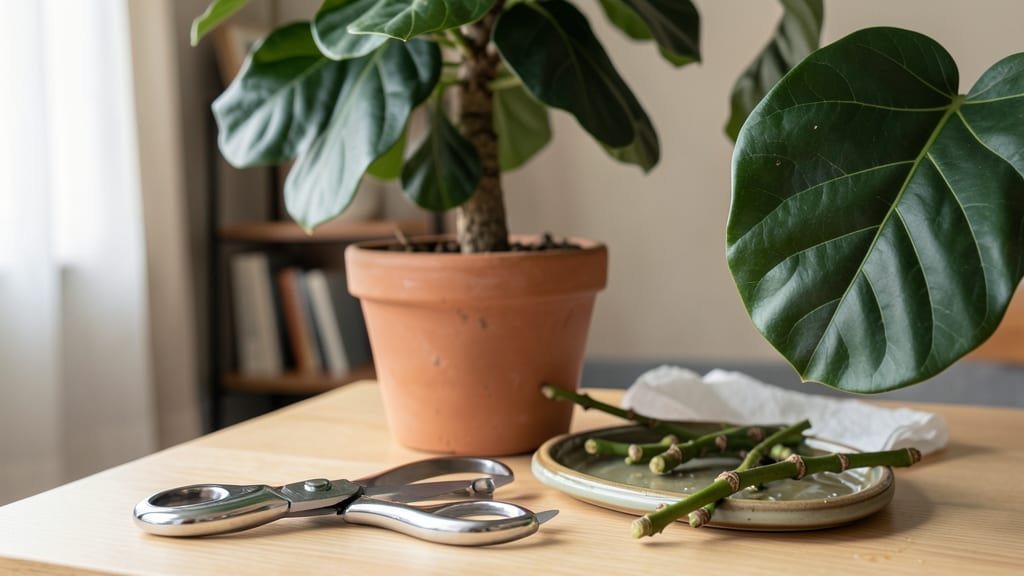
Cutting a fiddle leaf fig isn’t just about trimming—it’s about waking up that dormant energy hiding in the stems. ✂️ I’ve turned leggy, sparse plants into lush, bushy giants with just a few strategic cuts, and you can too.
The key is knowing where and when to cut, not how much to remove.
Spring and early summer are your prime windows because the plant’s growing fast and can recover quickly. Grab clean, sharp pruners (sterilize with rubbing alcohol first!) and target stems with yellow leaves, bare spots, or those stretching too far between leaves.
Never cut right at a node—leave about an inch above where new growth could sprout.
After trimming, give your plant a drink (but don’t drown it) and move it to bright, indirect light for a few weeks. You’ll see new shoots pushing from the nodes within 4-6 weeks, and those leggy stems will transform into a fuller, more vibrant plant.
The best part? You’ll have more cuttings to propagate for free plants!
Mistake alert: Over-pruning leads to shock, so start small—remove no more than 20-30% of the plant at once. And skip winter pruning; the plant’s resting and won’t bounce back as well. Your fiddle leaf fig will thank you with glossier leaves and a bushier silhouette by summer.
Root Causes of Overgrowth
Fiddle leaf figs (Ficus lyrata) are stunning houseplants, but their rapid growth can quickly turn from charming to chaotic—especially if you’re left wondering why your plant suddenly needs a haircut. Understanding the why behind overgrowth is the first step to mastering the art of pruning.
Below, we break down the science and scenarios that trigger your fiddle leaf fig’s need for a trim.
When a fiddle leaf fig’s roots become too dense in their pot, they compete aggressively for nutrients, water, and oxygen. This root-bound stress manifests in stunted growth, yellowing leaves, or leggy stems—all signals that the plant is struggling to support itself.
- Why it happens: Roots grow faster than the pot can accommodate, leading to a closed-loop system where the plant can’t expand. Without intervention, the root mass restricts water uptake, causing stress.
- Actionable sign: If you see roots circling the drainage holes or the soil dries out too quickly, it’s time to repot and prune.
- Pro tip: 💡 Pruning before repotting reduces transplant shock by limiting the plant’s immediate resource demands.
Fiddle leaf figs are light-lovers, but inconsistent or insufficient light triggers a survival mechanism: etiolation. This is when stems stretch unnaturally to reach light, leaving you with weak, sparse foliage and a "leggy" appearance.
| Light Condition | Plant Response | Pruning Fix |
|---|---|---|
| Low light (e.g., dim corners) | Stems elongate, leaves grow small/pale | Cut back leggy stems to encourage bushier regrowth from lower nodes. |
| Direct harsh sun (e.g., south-facing windows) | Leaves scorch, growth slows | Trim damaged leaves and move to bright, indirect light. |
| Sudden light changes (e.g., moving from shade to sun) | Growth stalls, leaves drop | Prune to reduce stress and acclimate gradually. |
While fiddle leaf figs dislike soggy soil, overwatering or erratic watering can paradoxically fuel rapid (but unhealthy) growth. Excess moisture forces the plant to prioritize leaf production over root development, leading to weak stems and a top-heavy structure.
- Why it happens:
- Overwatering: Roots suffocate, but the plant still photosynthesizes, producing lush (but unsupported) foliage.
- Underwatering: The plant compensates by growing fast when watered again, then crashes.
- Actionable sign: Check soil moisture 1 inch below the surface—if it’s damp, hold off on watering. Prune to remove water-stressed leaves and redirect energy to roots.
- Pro tip: 🌡️ Use a moisture meter to avoid guesswork. Aim for 60% moisture in summer, 40% in winter.
Even with perfect care, fiddle leaf figs eventually hit a maturity threshold where older stems become woody, leaves yellow, or the plant grows in uneven directions. This isn’t a failure—it’s a signal to rejuvenate the plant.
- Why it happens:
- Hormonal shifts: As the plant ages, auxin (a growth hormone) redistributes, slowing top growth and encouraging lateral buds.
- Energy redistribution: The plant invests in flowering or seed production (rare in houseplants, but possible), diverting resources from foliage.
- Actionable sign: Look for bare stems, large gaps between leaves, or downward-growing branches. Prune these to stimulate new growth from lower nodes.
- Pro tip: ✨ Propagate cuttings from mature stems—many will root easily, giving you free baby fiddle leaf figs!
Now that you know the root causes (pun intended), you’re ready to prune with purpose. The key is observation: watch for these signs, and your fiddle leaf fig will reward you with denser, healthier growth—not just more leaves, but better leaves.
Revive and Rejuvenate Your Fiddle Leaf Fig
When your fiddle leaf fig (Ficus lyrata) starts looking leggy, yellowed, or overgrown, it’s time to step in with a little precision pruning. The good news? Most issues can be fixed with the right cuts—and a few simple adjustments to its care routine.
Below, we’ll map out the most common problems, how to address them with clean, strategic trims, and how to keep your plant thriving long after the snips.
Cause: Overwatering, underwatering, or root rot can cause leaves to yellow or turn brown and crispy. If the damage is isolated to a few lower leaves, pruning can help redirect energy to healthier growth.
Fix It:
- 🔪 Trim the Damaged Leaves
- Use sterilized pruning shears (wipe with rubbing alcohol) to cut just above the leaf stem where it meets the branch. Avoid leaving stubs—clean cuts prevent disease.
- If the entire branch is brown and mushy (a sign of rot), cut it back to a healthy node (a bump where leaves grow).
- 🌱 Propagate the Cuttings
- Place healthy cuttings in water or moist potting mix to root. Fiddle leaf figs root easily in water—just change it weekly to avoid bacteria.
- Pro tip: 💡 Use a clear container to monitor root growth (you’ll see tiny white roots in 2–4 weeks!).
- 💧 Adjust Your Watering
- Overwatered? Let the top 2–3 inches of soil dry out before watering again. Ensure the pot has drainage holes.
- Underwatered? Water thoroughly when the soil is dry, but avoid soggy roots. A moisture meter helps!
Prevent It:
- ✨ Check soil moisture by sticking your finger 1–2 inches deep—if it’s damp, wait.
- 🌡️ Keep humidity high (40–50%) with a pebble tray or humidifier, especially in dry climates.
- 🍃 Repot every 2–3 years to refresh the soil and prevent root-bound stress.
Cause: Stretching toward light or lack of pruning leads to long, bare stems with sparse leaves. This is your cue to prune for fuller growth!
Fix It:
- 🍳 Prune the Top for Branching
- Cut just above a leaf node (the bump where leaves grow) on the tallest stems. This encourages the plant to branch out from side buds.
- Pro tip: 🎯 Aim to cut 1/3 of the plant’s height to stimulate bushier growth without shocking it.
- 👨🍳 Trim Back Overly Long Stems
- If a stem is bare for more than 6 inches, cut it back to a lower leaf node. The plant will send out new growth from there.
- For multiple stems, alternate cuts to maintain balance.
- 🌞 Rotate for Even Light
- Turn your plant quarter-turns weekly so all sides get equal light. Fiddle leaf figs lean toward light sources—consistent rotation prevents lopsided growth.
Prevent It:
- 🔥 Prune regularly (every 6–12 months) to maintain shape and density.
- 💪 Use a growth regulator (like seaweed extract) to slow stretching if light is limited.
- 🌿 Avoid over-fertilizing—too much nitrogen promotes leafy growth over bushiness.
Cause: Roots circling the pot or compacted soil restrict growth. If your plant has outgrown its home, it’s time to upgrade!
Fix It:
- 🔪 Prune Overcrowded Roots
- Gently remove the plant from its pot and trim any roots that are tightly coiled or more than ½ inch thick. Use clean shears and dip cuts in cinnamon powder (natural antifungal).
- 🌱 Repot with Fresh Soil
- Choose a pot 2 inches wider than the current one (only 1–2 inches at a time—too big causes water retention).
- Mix well-draining soil (cactus/succulent mix + perlite) to prevent soggy roots.
- 🌿 Trim Back Top Growth Too
- If the plant looks top-heavy after repotting, lightly prune a few stems to balance it out.
Prevent It:
- ⏰ Repot every 2–3 years or when roots emerge from drainage holes.
- 🥗 Use a chunky, airy soil mix to prevent compaction.
- 💪 Avoid fertilizing right after repotting—wait 4–6 weeks to let roots adjust.
Cause: Spider mites, mealybugs, or scale can weaken your fiddle leaf fig, causing yellowing or sticky residue. Pruning infested areas helps contain the problem.
Fix It:
- 🔪 Remove Heavily Infested Leaves
- Snip off leaves with visible pests (white webbing, cottony bugs, or brown bumps). Dispose of them in sealed bags.
- 🌿 Wipe Down Remaining Leaves
- Use a neem oil solution (1 tsp neem oil + 1 tsp mild soap per quart of water) to spray or wipe leaves. Repeat every 5–7 days for 2 weeks.
- 🐞 Isolate the Plant
- Keep your fiddle leaf fig away from other plants until pests are gone. Check nearby plants for hitchhikers!
Prevent It:
- 🌡️ Keep humidity high (mites thrive in dry air).
- 🍃 Inspect new plants before bringing them home (quarantine for 2 weeks).
- 💡 Dust leaves regularly with a damp cloth to deter pests.
With the right cuts and care tweaks, your fiddle leaf fig will bounce back stronger—and busher—than ever. Remember, less is more when pruning: focus on healthy growth, not drastic haircuts. Happy trimming! 🌿✂️
Frequently asked questions
Can I cut a fiddle leaf fig in winter?
It's best to avoid pruning during winter when the plant is dormant. Winter cuts can stress the plant and slow recovery. Wait until spring or early summer when your fiddle leaf fig is actively growing. This gives it energy to heal and sprout new growth from the nodes.
How do I know where to make the cut?
Always cut just above a leaf node (the bump where leaves grow) at a 45-degree angle. For bushier growth, aim for the top third of the plant. Never cut right at the node—leave about 1 inch above it. This ensures new shoots can emerge from the remaining stem.
What should I do with the cuttings?
Place healthy cuttings in water with just the nodes submerged. Change the water weekly to prevent bacteria. In 2-4 weeks, you'll see white roots forming! Once roots reach 1-2 inches, transplant them into well-draining soil. Keep humidity high during this process.
Will pruning my fiddle leaf fig make it bushier?
Yes! Cutting back leggy stems encourages the plant to send out new growth from lower nodes. Focus on cutting the tallest stems back by 1/3 to stimulate branching. Rotate the plant regularly after pruning to ensure even light exposure, which helps maintain a balanced shape.
How often should I prune my fiddle leaf fig?
Light maintenance pruning every 6-12 months keeps your plant healthy. Only remove dead or yellow leaves between pruning sessions. Avoid over-pruning—never remove more than 20-30% of the plant at once. This prevents shock and allows for steady, bushy regrowth.