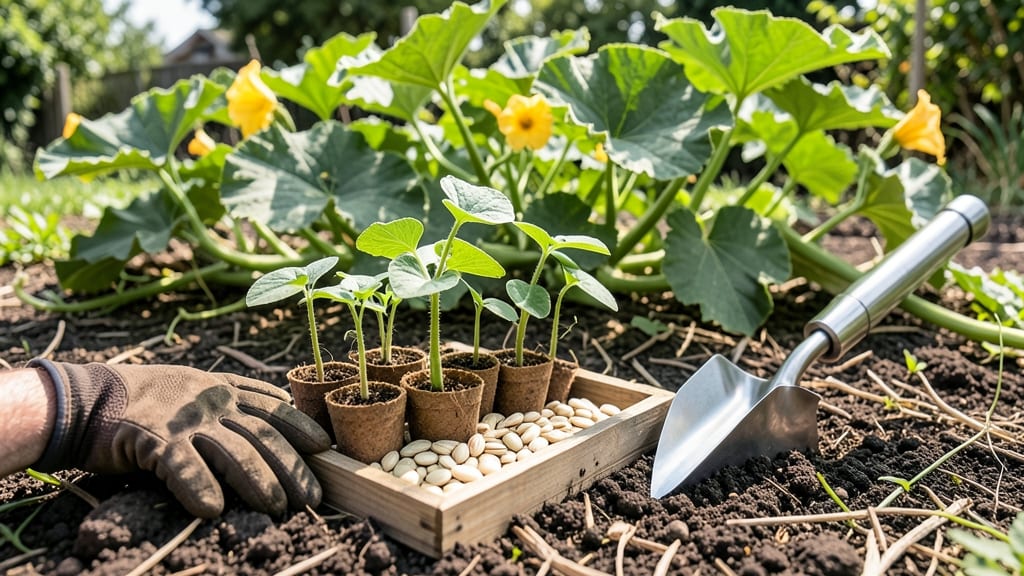
You can plant pumpkin seeds surprisingly late in the season — as long as you account for your region’s frost dates and the 90-day minimum maturity time for most varieties.
Missed the spring planting window for pumpkins? Don’t toss those seeds yet—pumpkins are surprisingly flexible about timing, but your region’s frost dates and growing season length determine your last chance for a successful harvest.
In USDA Zone 6a, for example, you’ve got until early June to get seeds in the ground, but in warmer zones like 9 or 10, you might squeeze in a late planting as late as July.
The key is balancing soil warmth and daylight length. Pumpkins need at least 60°F soil to germinate, and they thrive on long summer days. Plant too late, and you risk vines struggling to mature before frost—or worse, rot from prolonged dampness.
But with the right tricks—like row covers or cold-hardy varieties—you can push those deadlines even further.
Below, I’ll break down the exact last planting dates by zone, share my top strategies for extending the season, and warn you about the three mistakes that turn late plantings into flops. No more guessing—just data-driven deadlines for your 🎃 harvest.
Pumpkin planting deadlines by USDA growing zones (with frost date rules)
Pumpkins are one of the most forgiving summer crops when it comes to planting timing, but your USDA growing zone and last frost date set hard deadlines for success.
Unlike frost-tender plants, pumpkins can handle cooler soils, but they need 90-120 days to mature—so late plantings risk immature harvests before winter sets in. The key is balancing soil warmth (ideal: 60°F+) with your region’s frost-free window.
For example, gardeners in Zone 3 (like Minnesota or Maine) have just 90-100 frost-free days, while those in Zone 10 (Florida or Southern California) enjoy 300+ days. This means your last planting window shifts dramatically—from early June in cold climates to September in warm ones.
Let’s break down the exact deadlines by zone, including frost-sensitive varieties and extended-season tricks to push your limits.
Pro Tip: Always check your local frost dates (not just USDA averages) using tools like the National Oceanic and Atmospheric Administration (NOAA) or your local cooperative extension. A late spring frost can wipe out even late plantings if vines aren’t established.
| USDA Zone |
Last Frost Date (Avg.) |
Last Pumpkin Planting Deadline |
Frost-Free Days |
Notes |
| Zone 3 (e.g., Duluth, MN) |
May 15 |
Early June (June 1-10) |
90-100 days |
Use fast-maturing varieties (e.g., Jack Be Little, 75 days) or start indoors. |
| Zone 4 (e.g., Chicago, IL) |
May 1 |
Mid-June (June 15) |
110-120 days |
Black plastic mulch warms soil; avoid large varieties like Atlantic Giant. |
| Zone 5 (e.g., Denver, CO) |
April 20 |
Late June (June 20-25) |
130-140 days |
Row covers extend season; transplant seedlings (not seeds) for later plantings. |
| Zone 6 (e.g., Kansas City, MO) |
April 10 |
Early July (July 1-5) |
150-160 days |
Standard varieties (e.g., Howden) work; avoid winter squash confusion. |
| Zone 7 (e.g., Nashville, TN) |
March 25 |
Mid-July (July 10-15) |
180-190 days |
Try heirloom varieties (e.g., Cinderella) for late harvests. |
| Zone 8 (e.g., Dallas, TX) |
February 20 |
Late July (July 20-25) |
210-220 days |
Plant directly in warm soil; avoid transplant shock. |
| Zone 9 (e.g., Los Angeles, CA) |
January 15 |
August 1-15 |
How to extend your pumpkin growing season for late plantings
Don’t let missed spring planting dates discourage you—pumpkins can thrive even with late starts! With the right strategies, you can push your growing season well beyond the traditional window. The key lies in soil warmth, cold protection, and selecting fast-maturing varieties that can handle shorter seasons.
My Zone 6a garden has produced pumpkins planted as late as June 15 using these techniques.
First, focus on soil temperature—pumpkin seeds need soil at least 60°F (15°C) to germinate. If your soil is cooler, use black plastic mulch or straw bales to warm it faster.
Another trick is to start seeds indoors 4-6 weeks before your last frost date, then transplant hardened-off seedlings when soil is ready. This buys you critical time in shorter seasons.
Here’s how to maximize your late-season pumpkin harvest with proven strategies:
- 1. Choose fast varieties: Opt for 75-90 day pumpkins like 'Jack Be Little' or 'Small Sugar'—they mature quickly even with late starts.
- 2. Use row covers: Protect seedlings with floating row covers until soil warms; remove when flowers appear for pollination.
- 3. Warm soil first: Lay black plastic mulch 2 weeks before planting to raise soil temps by 10-15°F.
4. Transplant seedlings: Start seeds indoors 4-6 weeks early and move to garden when soil hits 60°F+.
5. Water deeply: Give 1-2 inches of water weekly to prevent stress during critical growth stages.
6. Prune vines: Focus energy on 2-3 main vines per plant to speed fruit development.
For extreme late plantings (after July), consider mini pumpkins like 'Minnesota Midget'—they tolerate cooler temps better and mature in 70-80 days. Always monitor first frost dates and plan to harvest before temperatures drop below 50°F (10°C).
My Zone 5 garden once yielded 3 small pumpkins from seeds planted July 1 using these methods!
Don’t forget to hand-pollinate flowers if bees are scarce—use a paintbrush to transfer pollen from male to female blooms. This ensures fruit set even in cooler late-season conditions. With these strategies, you can extend your pumpkin season by 4-6 weeks beyond traditional deadlines.
Pro tip: Mark your planting dates and track growth progress with a garden journal. This helps you refine timing for future years. Happy late-season gardening—your pumpkins will thank you! 🎃
★★★★★4.9(4 reviews)
|