
Planting
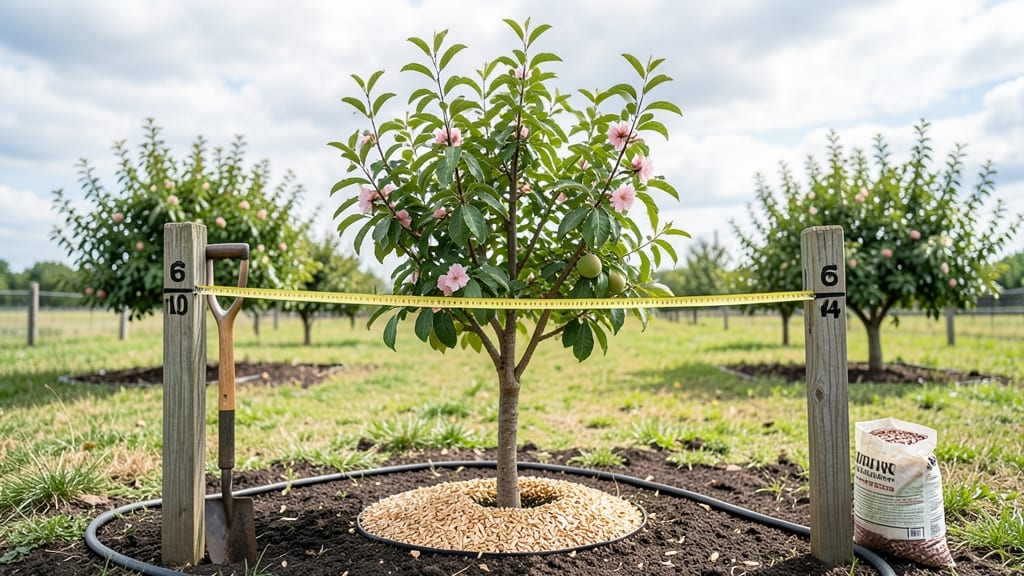
To space peach trees properly, aim for 15 to 25 feet apart for standard varieties—this ensures airflow, sunlight, and room for their mature canopies to thrive.
Picture this: your 🍑 trees struggling under crowded branches, fruit rotting from poor airflow, or weak growth from competing roots. That’s the reality when spacing is off, and it’s a mistake I’ve seen too many gardeners make—even with the best intentions.
Peach trees aren’t just about pretty blossoms; they need the right distance to produce healthy fruit, resist disease, and live long enough to reward you with harvests for years.
Whether you’re planting in a home orchard or mixing them into your garden, getting this right is the foundation of success.
In this guide, I’ll break down the exact spacing you need based on your tree’s size, climate, and even whether you’re growing them in containers. You’ll learn how to arrange them for maximum yield, avoid common pitfalls, and keep your orchard thriving from spring planting to fall harvest.
Peach tree spacing guidelines by variety and climate
Getting your peach tree spacing right is one of the most important decisions for a productive harvest. Too close, and you’ll struggle with disease spread and smaller fruit. Too far apart, and you waste valuable garden space.
The right spacing ensures optimal airflow, sunlight penetration, and root development—all critical for juicy, abundant peaches. Let’s break down the science-backed spacing for dwarf, semi-dwarf, and standard varieties, plus climate-specific adjustments.
Peach trees thrive when planted with enough room to grow their canopy and root systems without competing for resources. Standard varieties need the most space, while dwarf varieties are perfect for small gardens or containers.
Even within these categories, warm climates (like USDA Zones 7-9) allow for slightly tighter spacing than cool climates (like Zones 5-6). Let’s explore the exact measurements and why they matter.
For dwarf varieties, spacing them 10-12 feet apart in-ground allows their compact canopies to develop without shading each other.
In containers, use one large pot (24"+ diameter) per tree to prevent root binding. Warm climates let you tighten spacing slightly because trees grow faster and mature sooner, while cool climates require extra room for slower growth and winter protection.
Semi-dwarf peach trees strike a balance with 15-20 feet of spacing. This gives them room to grow taller than dwarfs but still fits well in home orchards. If growing in containers, use 2-3 large pots per tree to accommodate their larger root systems.
In warm climates, you can reduce spacing to 12-15 feet, but in cool climates, stretching to 20-25 feet prevents overcrowding during slower growing seasons.
Standard peach trees are the most space-hungry, needing 20-25 feet apart in-ground. Their wide canopies and deep roots demand ample room to avoid competition. Containers aren’t ideal for standard varieties due to their size, but if you’re determined, consider a very large raised bed with 3-4 feet of depth and wide spacing between trees. In warm climates, you might squeeze them into 18-20 feet, but cool climates require 25-30 feet for healthy growth.
Spacing also affects fruit size and quality. Trees with too little space produce smaller, lower-quality peaches due to stress and poor airflow. Conversely, over-spaced trees may yield fewer fruits because they focus energy on growth rather than fruiting.
The key is finding the sweet spot where trees can compete for sunlight but still share resources efficiently.
If you’re planting multiple varieties, consider pollination needs. Many peach trees are self-pollinating, but spacing them 15-20 feet apart ensures cross-pollination for better fruit set. For container growing, choose dwarf varieties and place them near a south-facing wall to maximize sunlight exposure.
Always use well-draining soil and mulch heavily to retain moisture and regulate root temperature.
Pro tip: Use trellising or espalier techniques for dwarf varieties to save space while maintaining airflow. This works especially well in small gardens or urban settings, where traditional spacing isn’t feasible.
Just ensure your trellis allows for at least 6 feet of horizontal space between trees to prevent disease spread.
Remember, proper spacing isn’t just about the numbers—it’s about creating an optimal growing environment. With the right distance, your peach trees will thrive, produce bigger, healthier fruits, and resist
How spacing affects airflow, sunlight, and disease prevention
Proper spacing between peach trees isn't just about giving them room to grow—it's a health insurance policy for your orchard. When trees are too close, they compete for sunlight and nutrients, creating a perfect storm for fungal diseases like brown rot.
I've seen firsthand how crowded trees develop weak branches and smaller fruit due to stress.
Good airflow is your first line of defense against peach tree diseases. When branches rub together or moisture lingers between leaves, spores spread like wildfire. A well-spaced orchard lets sunlight dry the foliage faster, reducing humidity where fungi thrive.
This simple adjustment can mean the difference between a thriving tree and one fighting for its life every summer.
Standard peach trees need 15-20 feet apart—any closer and you risk:
- ✖ Stunted growth from root competition
- ✖ Brown rot outbreaks (fungal spores love crowded trees)
- ✖ Poor fruit quality from uneven sunlight
Let me show you what happens when spacing fails. A neighbor once planted peach trees 10 feet apart to save space. By year 5, their trees were producing tiny, misshapen peaches and had brown rot every summer.
The branches were so crowded that pruning became nearly impossible. After widening the spacing to 18 feet, their yield doubled within two seasons.
Sunlight distribution is another game-changer. Trees on the orchard perimeter often get more sun than those in the center. Proper spacing ensures even ripening across your entire harvest. I recommend arranging trees in a grid pattern if space allows—this creates natural airflow channels while maximizing sunlight exposure for every branch.
For dwarf varieties, you can reduce spacing to 8-10 feet, but never less. These trees still need room for their root systems to expand. I've successfully grown dwarf peach trees in my backyard using 6-foot spacing between rows, with 10 feet between trees in the row.
The key is monitoring their growth and adjusting pruning to maintain that open center.
Remember: Spacing isn't static. As your trees mature, their canopy will expand. Plan for their mature size (15-25 feet for standard trees) and leave extra room if you want to add more trees later. A well-spaced orchard now saves you years of frustration and chemical treatments later.