
Planting
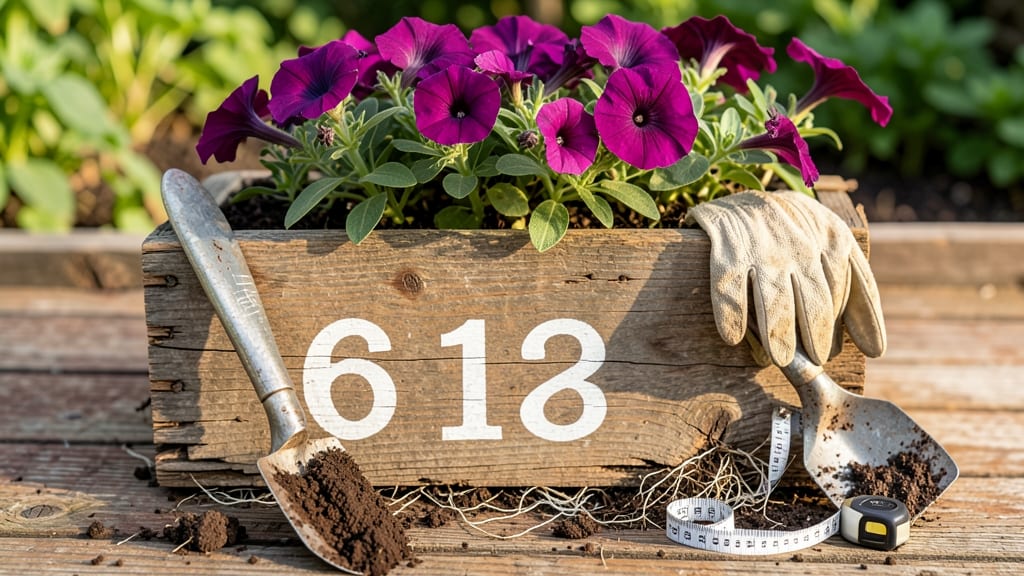
To determine how deep a planter box should be for flowers, aim for 6 to 12 inches for most annuals and perennials, while shrubs and trees need 18 to 24 inches. Shallow-rooted flowers like pansies thrive in 6-inch containers, while bulbs require at least 12 inches of soil depth.
A planter box's depth directly impacts root development and overall plant health. 🌱 Shallow containers may work for delicate annuals like marigolds, but deeper boxes prevent root binding and encourage stronger growth in perennials. For example, lavender—known for its woody stems—needs at least 12 inches to establish properly.
The key is matching the box depth to the plant's mature root zone, which often extends beyond what you'd expect from the plant's height above ground.
Material choice also plays a role—wooden boxes with 12+ inches of depth let you layer soil types for better drainage, while fabric grow bags may require more frequent monitoring to prevent overwatering in shallow setups.
Always account for drainage holes, as 2-3 inches of space between the bottom of the roots and the drainage layer is ideal for airflow and moisture control.
💡 In This Article
- Root Depth Requirements for Different Flower Types
- Choosing the Right Planter Box Depth for Your Garden
Root depth requirements for different flower types
Root systems vary dramatically between flower types, and this directly impacts how deep your planter box needs to be. Annuals like petunias and marigolds have shallow root zones—typically extending only 4-6 inches deep—because they complete their life cycle in a single season.
Their roots focus on rapid surface absorption rather than deep penetration. In contrast, perennials such as coneflowers develop taproots that can reach 12-18 inches deep, allowing them to store nutrients and moisture for multiple growing seasons.
The science behind this lies in soil compaction and oxygen availability. Shallow-rooted plants thrive in loose, well-aerated soil where roots can spread horizontally. 🌱 When confined to a 6-inch box, these plants may show stunted growth or yellowing leaves due to restricted root expansion.
For bulbs like tulips or daffodils, the rule of thumb is 3x the bulb's height in soil depth—so a 2-inch bulb needs at least 6 inches of soil above it to prevent premature flowering or rot.
Perennials with woody stems, such as lavender or Russian sage, require even more depth because their root systems need space to establish before the plant matures. A 12-inch box provides adequate room for these plants to develop strong root networks without becoming root-bound.
The key is understanding that root depth often exceeds the plant's above-ground height—lavender might only grow 18-24 inches tall, but its roots can extend 3 feet deep in ideal conditions.
For shrubs or small trees planted in containers, the depth requirement jumps to 18-24 inches to accommodate their extensive root systems. These plants often have lateral roots that spread outward as much as they grow downward, so wider planters (with sufficient depth) are ideal.
The added depth also prevents the roots from circling the container—a common issue in shallow planters that can strangle the plant over time.
Soil composition plays a critical role too. Sandy soils drain quickly but offer little resistance for roots to anchor, while clay soils can become compacted, limiting root growth.
A 12-inch box allows for better soil layering—topsoil for nutrients, a middle layer of compost, and a drainage layer at the bottom—to create an optimal growing environment. Without adequate depth, roots may suffocate or dry out, leading to poor plant performance.
Consider this real-world example: pansies, with their shallow roots, thrive in 6-inch containers, while peonies—known for their massive, fragrant blooms—require 18 inches of depth to support their robust root systems. Matching the planter depth to the plant's natural rooting habits ensures healthier, more vibrant flowers throughout the growing season.